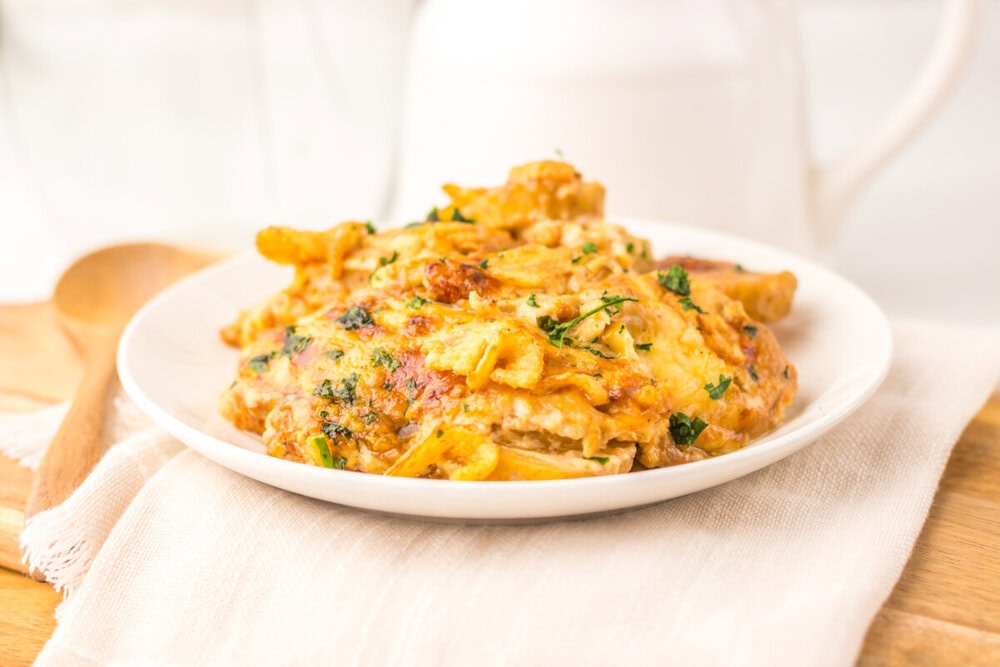
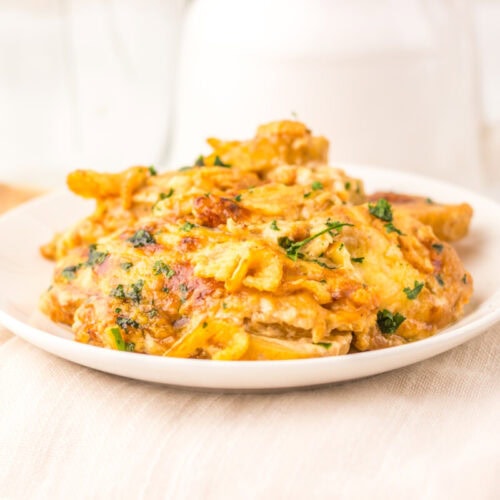
Cheesy French Onion Potato Casserole

Some meals make the whole house feel settled before anyone takes a bite. On evenings when homework covers the table, someone cannot find a clean water bottle, and I am running on the last bit of patience in the tank, that comfort matters.
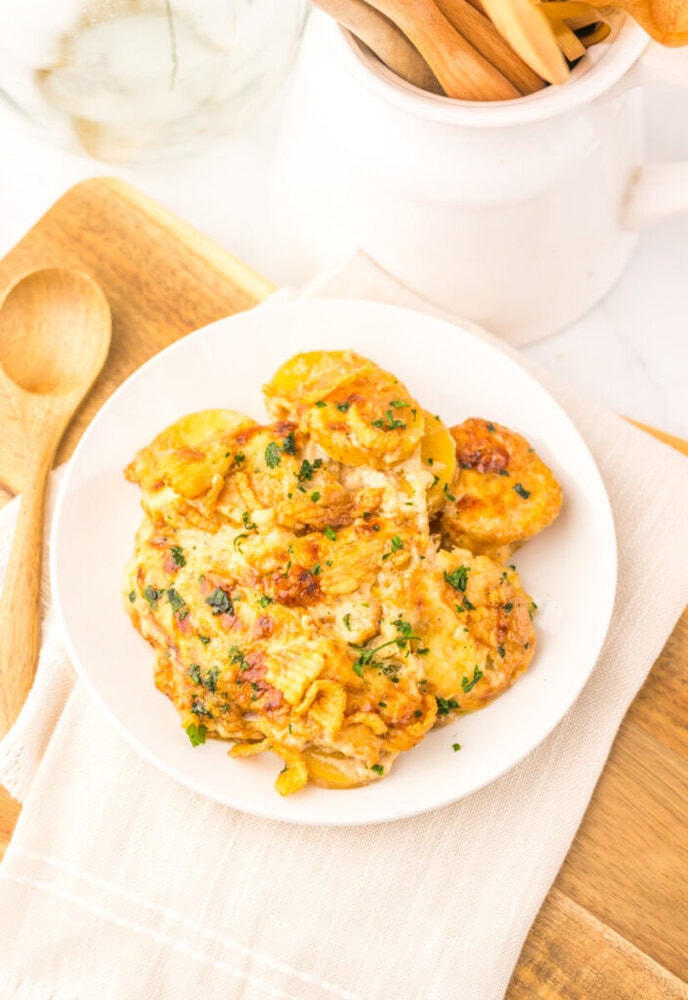
Then the oven opens, warm onion and toasted cheese drift through the kitchen, and a bubbling golden dish lands on the table.
Cheesy French Onion Potato Casserole joined our rotation during a busy stretch when the kids were tired, I was tired, and nobody had energy for a fussy side. I wanted something hearty, familiar, hands off, and special enough for Thanksgiving or Sunday dinner.
This recipe takes everything you love about French onion soup and creamy scalloped potatoes and turns it into one generous side dish. Yukon Gold potatoes bake until tender, savory cream sauce wraps around every slice, and Gruyère, Swiss, sharp cheddar, and Parmesan melt into silky layers under a crackly fried onion topping.
It tastes like a holiday, but works on a random Tuesday night.
You whisk the sauce, layer everything, cover the dish, and let the oven handle the hard part. After a short rest, every scoop holds together beautifully and tastes like you tried a whole lot harder than you did.
I think it will earn a permanent spot in your rotation.
What Is Cheesy French Onion Potato Casserole?
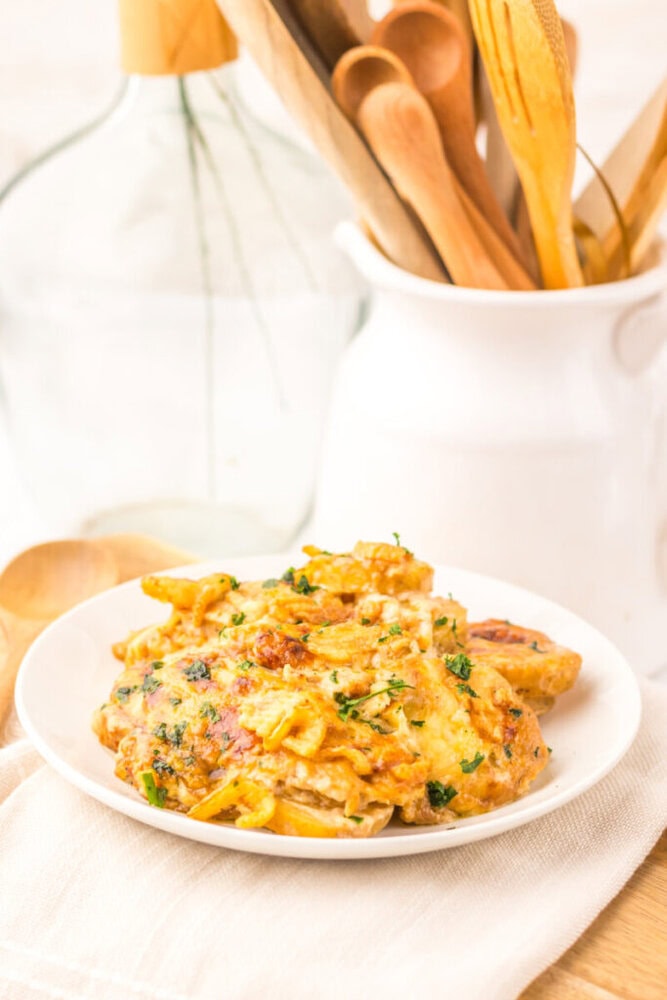
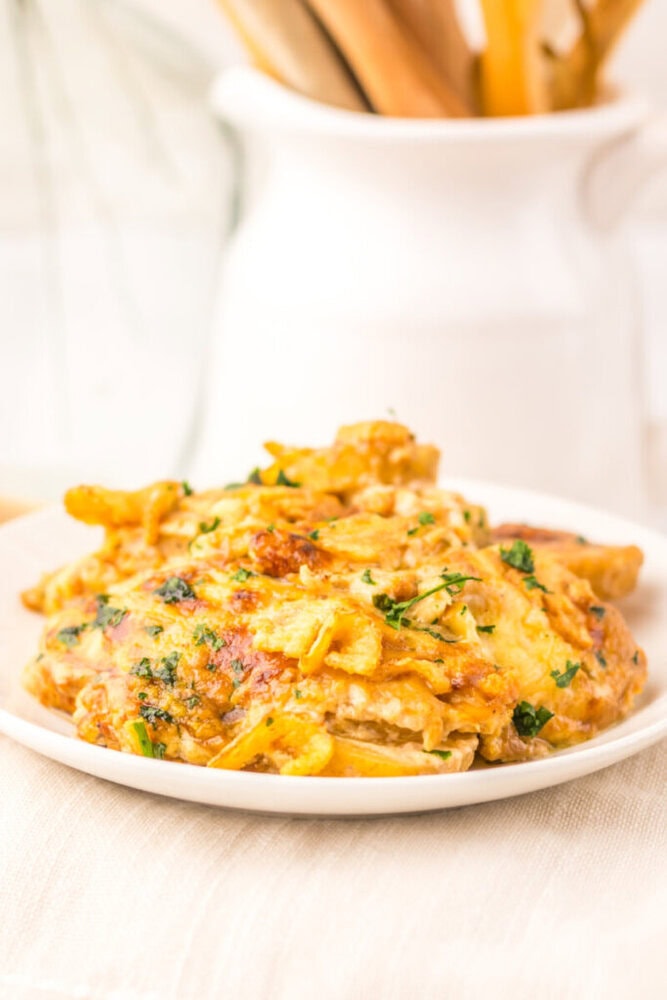
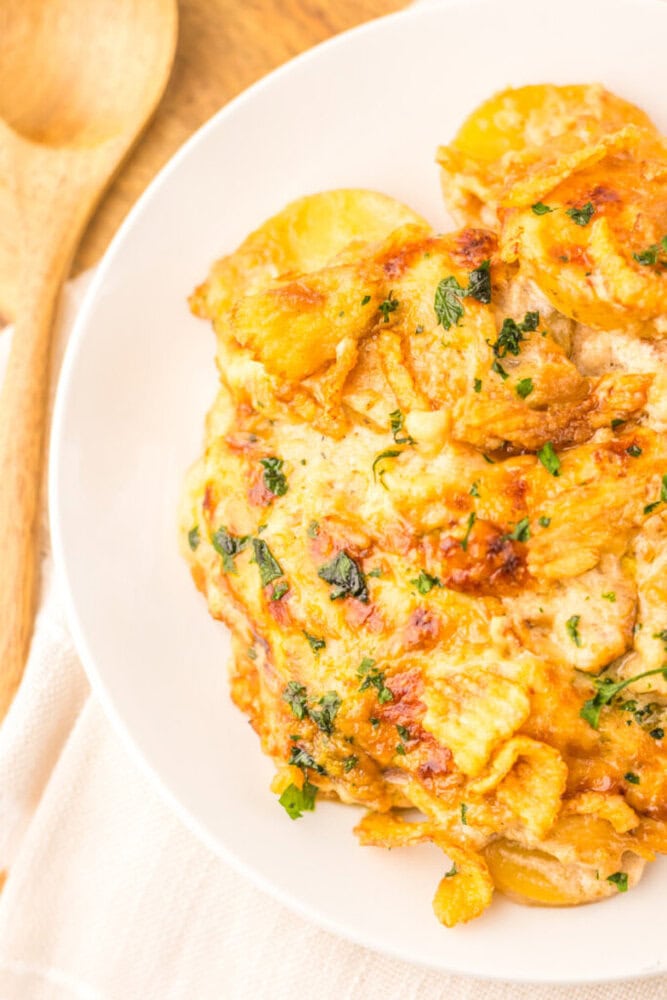
Cheesy French Onion Potato Casserole is a rich baked potato side dish inspired by the deep, savory taste of French onion soup. Thin slices of Yukon Gold potatoes are layered with a creamy sauce made from condensed French onion soup, onion soup mix, heavy cream, sour cream, Worcestershire sauce, and four cheeses.
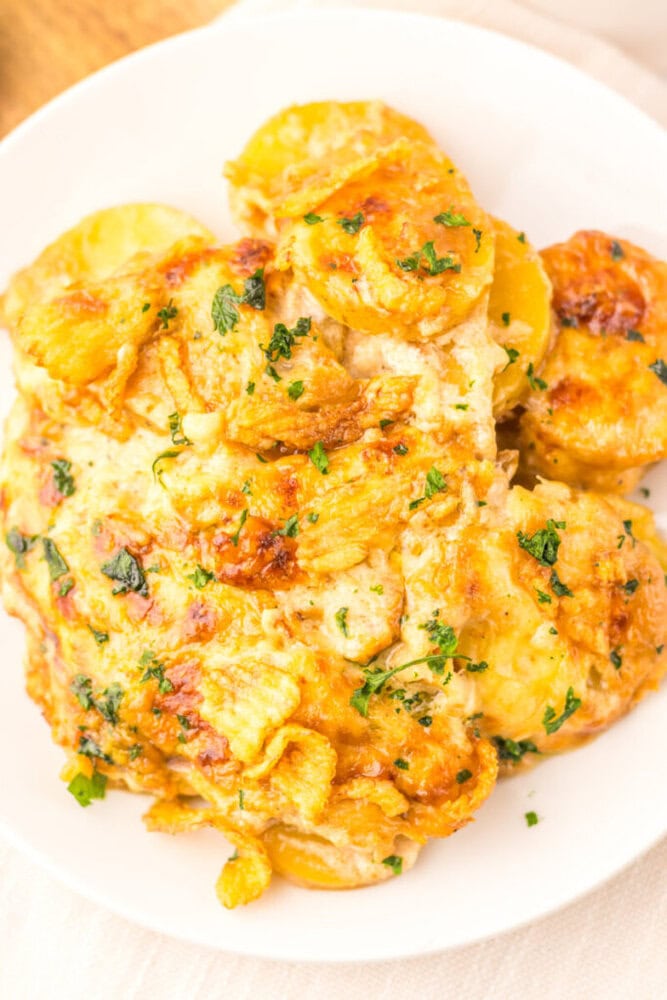
The long covered bake gives the potatoes time to soften while they soak up all that onion flavor. Once the foil comes off, the top gets another layer of sharp cheddar and a shower of crispy fried onions.
The result sits somewhere between scalloped potatoes, potatoes au gratin, and a cozy French onion casserole.
I like this one because it feeds a full table without asking me to stand at the stove. A 9 by 13 inch dish makes about 10 to 12 servings, which is enough for a holiday meal, a church supper, or a family dinner with leftovers for tomorrow.
You need about 15 minutes for prep, then you can plan on about 1 hour and 30 minutes of baking plus 15 minutes of resting time.
Why You’ll Love This Recipe
- Big comfort with familiar ingredients: Potatoes, cream, onion soup, and melted cheese come together in a way that feels cozy from the very first bite.
- Mostly hands off baking: Once the casserole is layered and covered, the oven does the slow work of turning firm potato slices into a tender, creamy side.
- Plenty for a crowd: One 9 by 13 inch dish serves about 10 to 12 people, so you can put it on a holiday table without worrying that the serving bowl will be empty too soon.
- A crisp and creamy contrast: The soft potatoes and smooth cheese sauce get a welcome crunch from the fried onions scattered over the top.
- Make ahead friendly: You can assemble the casserole up to a day early, which is a real gift when the kitchen is already busy.
- Easy to turn into a full meal: Add chicken, ham, bacon, or mushrooms and the side dish becomes something hearty enough to anchor dinner.
When to Serve This Recipe
- Thanksgiving dinner: This casserole brings the rich potato comfort everyone expects, while the French onion flavor gives the table something a little different.
- Christmas lunch or dinner: It pairs beautifully with ham, roast beef, turkey, or a simple baked chicken.
- Sunday family supper: I love setting this beside a roast and letting everyone help themselves to a generous scoop.
- Potlucks and church meals: The large yield, sturdy texture, and familiar flavors make it easy to carry, serve, and share.
- Cold weather dinners: On a chilly evening, creamy potatoes and browned cheese make the kitchen feel warmer.
- Celebration meals: Birthdays, anniversaries, and family visits all feel a little more special when this bubbling casserole comes out of the oven.
Ingredients
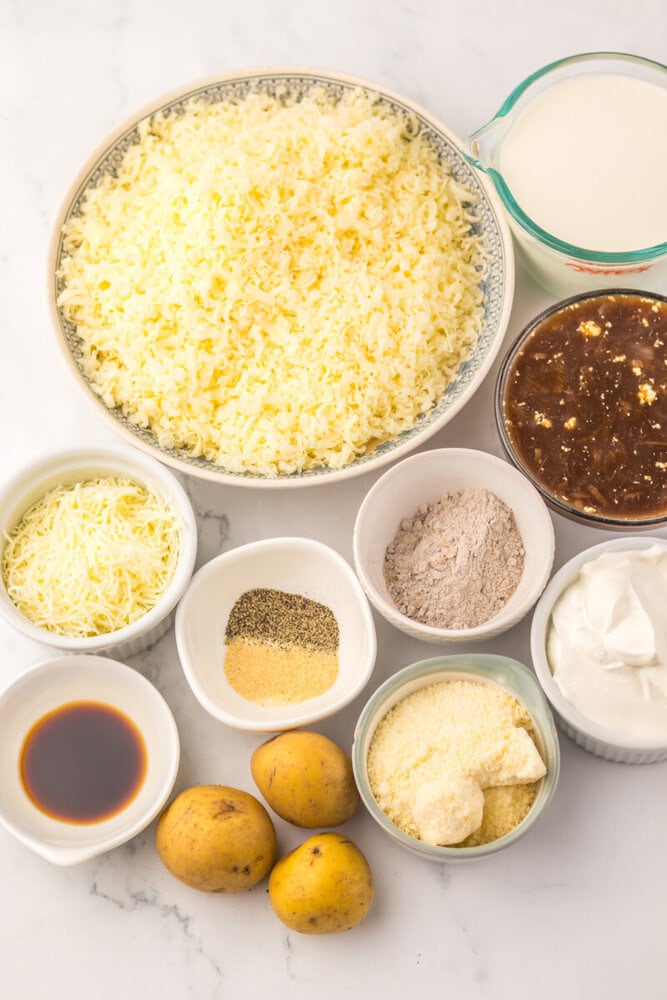
- Butter or nonstick cooking spray for the baking dish: A well greased dish keeps the creamy edges from sticking and makes serving easier.
- 1 can, 10.5 ounces, condensed French onion soup: This gives the sauce its concentrated onion base and deep savory character.
- 1 packet Lipton Recipe Secrets Onion Soup Mix: The dry mix boosts the onion flavor and seasons the potatoes all the way through.
- 1½ cups heavy cream: Heavy cream creates the richest sauce and helps it stay smooth during the long bake.
- 1 cup sour cream: Sour cream adds body and a gentle tang that balances the cheese.
- 1 teaspoon Worcestershire sauce: A small amount adds savory depth without making the casserole taste strongly of Worcestershire.
- 1 teaspoon garlic powder: Garlic rounds out the onion flavor and keeps the sauce tasting full.
- ½ teaspoon black pepper: Pepper adds warmth without overpowering the creamy potatoes.
- 1 cup shredded Gruyère cheese: Gruyère melts smoothly and brings the nutty flavor that works so well with French onion dishes.
- 1 cup shredded Swiss cheese: Swiss adds a mellow, buttery cheese layer and helps the sauce become stretchy and creamy.
- 2 cups shredded sharp cheddar cheese, divided: Use 1½ cups in the sauce and save ½ cup for the bubbling top.
- ½ cup grated Parmesan cheese: Parmesan adds saltiness and a deeper aged cheese flavor.
- 3 pounds Yukon Gold potatoes, peeled and sliced ⅛ inch thick: Yukon Gold potatoes stay creamy and tender while still holding their shape.
- 1½ cups crispy fried onions, optional: Add them near the end so they stay crisp and golden instead of getting too dark.
- Chopped parsley, optional: A little parsley adds fresh color just before serving.
How to Make Cheesy French Onion Potato Casserole
Step 1: Heat the Oven and Prepare the Dish
Preheat your oven to 350°F. Grease a 9 by 13 inch baking dish with butter or nonstick cooking spray, making sure to coat the bottom and corners. This casserole has plenty of cheese, so a well greased dish makes serving and cleanup much easier. I usually set the prepared dish beside my cutting board before I start mixing so everything is ready when the potatoes are sliced.
Step 2: Whisk the Creamy French Onion Sauce
Add the condensed French onion soup, onion soup mix, heavy cream, sour cream, Worcestershire sauce, garlic powder, and black pepper to a large mixing bowl. Whisk until the sour cream is fully incorporated and the mixture looks smooth and evenly colored. Take a moment to scrape around the bottom of the bowl because dry onion mix likes to hide down there. You want those seasonings distributed throughout the sauce so every layer of potatoes gets the same savory flavor.
Step 3: Stir in the Cheese Blend
Add the Gruyère, Swiss, 1½ cups of the sharp cheddar, and all of the Parmesan to the sauce. Stir until the shredded cheese is evenly coated. The mixture will be thick, and that is exactly what you want. As it heats, the potatoes release a little moisture and the cheeses melt, loosening the sauce enough to settle between the slices without turning watery.
Step 4: Slice the Potatoes Evenly
Peel the Yukon Gold potatoes and slice them about ⅛ inch thick. A mandoline makes this quick, but a sharp knife works well when you take your time. Even slices matter more than absolute perfection because potatoes of similar thickness will finish cooking together. If some slices are very thick and others are paper thin, you may end up with a few firm pieces mixed into otherwise tender layers.
Step 5: Build the First Potato Layer
Arrange one third of the sliced potatoes across the bottom of the prepared baking dish. Slightly overlap the slices so there are no large empty spaces, but do not press them into a tight brick. Spoon one third of the cheese sauce over the potatoes and gently spread it toward the corners. It does not have to look flawless. The sauce will melt and move as the casserole bakes.
Step 6: Repeat the Creamy Layers
Add another third of the potatoes, followed by another third of the sauce. Repeat once more with the remaining potatoes and sauce, ending with the creamy cheese mixture across the top. Try to cover the upper potato slices as completely as you can. Any exposed edges may brown faster, while the covered slices stay moist and tender.
Step 7: Cover and Bake Until Nearly Tender
Cover the baking dish tightly with foil and bake for 70 minutes. The tight cover is important because it traps steam, and that steam helps cook the potato slices all the way through. When the time is up, carefully pull back one corner of the foil and test a potato near the center with a fork or thin knife. It should be nearly tender but may still offer a little resistance.
Step 8: Add the Cheddar Topping
Remove the foil and sprinkle the remaining ½ cup of sharp cheddar evenly over the casserole. Return the dish to the oven without the foil and bake for another 10 to 15 minutes. During this time, the top will begin bubbling and the sauce around the edges will thicken. Check the potatoes again before moving to the final topping. They should now be completely tender.
Step 9: Finish with Crispy Fried Onions
Scatter the crispy fried onions over the melted cheddar and bake for about 5 more minutes. Keep an eye on them because they are already cooked and only need enough oven time to warm and deepen in color. When the top is golden, the cheese is bubbling, and a knife slides easily through the center potatoes, the casserole is ready.
Step 10: Rest Before Serving
Remove the casserole from the oven and let it rest for 15 minutes. I know that is difficult when everyone is already asking when dinner will be ready, but the resting time gives the sauce a chance to settle and thicken around the potatoes. Sprinkle chopped parsley over the top, then serve warm with a wide spoon or flexible spatula that can reach through all those creamy layers.
Substitutions
- Russet potatoes: Russets can replace Yukon Gold potatoes, though their softer, starchier texture may make the casserole slightly fluffier.
- Monterey Jack cheese: Monterey Jack can replace the Swiss cheese when you want a milder flavor that still melts smoothly.
- Mozzarella cheese: Low moisture mozzarella can replace the sharp cheddar for a gentler cheese flavor and a stretchier texture.
- Half and half: Use half and half instead of heavy cream for a lighter sauce, though the finished casserole may be a little less rich.
- Cream of onion soup: Condensed cream of onion soup works when condensed French onion soup is not available.
- Regular cheddar cheese: Mild or medium cheddar can replace sharp cheddar when cooking for children who prefer a softer cheese flavor.
Variations
- Bacon French onion potato casserole: Stir 8 slices of cooked and crumbled bacon into the cheese sauce before building the layers.
- Ham and potato casserole: Add 2 cups of diced cooked ham between the potato layers to turn the side dish into a hearty main meal.
- Steakhouse potato casserole: Add 8 ounces of sautéed mushrooms between the layers and finish the baked casserole with plenty of chopped parsley.
- Loaded French onion potato casserole: Top each serving with crumbled bacon, sliced green onions, and a small spoonful of sour cream.
- French onion chicken potato casserole: Layer 2 cups of cooked shredded chicken with the potatoes for a comforting complete dinner.
- Herb and onion potato casserole: Add chopped thyme or rosemary to the cream sauce for an earthy flavor that pairs especially well with roast beef.
Tips and Tricks
- Slice the potatoes evenly: Potatoes with a consistent thickness cook at the same pace and give the casserole a soft, uniform texture.
- Shred the cheese yourself: Freshly shredded cheese usually melts more smoothly because it does not contain the same coating used to keep packaged shreds separate.
- Cover the dish tightly: A snug layer of foil traps the steam needed to soften the potatoes during the first part of baking.
- Test the center potatoes: The center takes the longest to cook, so check there rather than testing only the soft slices near the edge.
- Allow extra time for thicker slices: Potatoes thicker than ⅛ inch may need another 10 to 15 minutes of covered baking before you add the final cheese.
- Rest the finished casserole: A 15 minute rest helps the sauce thicken, making the casserole creamier and much easier to serve.
- Watch the onion topping: Crispy fried onions can darken quickly, so add them during the last few minutes instead of at the beginning.
- Place the dish on a sheet pan: If your baking dish is very full, setting it on a rimmed pan will catch any sauce that bubbles over.
FAQs
Can I leave the skins on the potatoes?
Yes, especially when using Yukon Gold potatoes, which have thin and tender skins. Scrub the potatoes well and remove any rough spots before slicing. Leaving the skins on saves a little preparation time and gives the casserole a more rustic appearance. My kids tend to prefer peeled potatoes, but both versions cook well.
Why are my potatoes still firm?
The most common reason is that the slices were thicker than ⅛ inch or the foil was not sealed tightly enough. Cover the casserole again and continue baking for 10 to 15 minutes before checking the center. Oven temperatures can also vary, so use tenderness rather than the clock as your final guide.
Can I prepare this casserole the night before?
Yes. Assemble the casserole through the layering step, cover it tightly, and refrigerate it for up to 24 hours. Let the baking dish sit on the counter while the oven preheats, then bake as directed. Because the casserole starts cold, it may require an additional 10 to 15 minutes of covered baking.
Do I need a mandoline to slice the potatoes?
No. A mandoline is convenient and creates very even slices, but a sharp chef’s knife will do the job. Cut a thin piece from one side of each potato to create a stable base, then slice carefully. The goal is consistency, not restaurant level precision.
Can I make this without crispy fried onions?
Absolutely. The casserole will still have plenty of French onion flavor from the soup and seasoning mix. You can leave the top covered with melted cheddar, or add buttered breadcrumbs for a different kind of crunch. The fried onions are delicious, but they are not necessary for the casserole to work.
How do I know when the casserole is done?
Insert a thin knife into the center of the casserole. It should pass through the potato layers with very little resistance. You should also see bubbling sauce around the edges and melted cheese across the top. If the topping is browning before the potatoes are tender, loosely cover the dish with foil and continue baking.
Serving Ideas
- Roast turkey: The creamy potatoes and savory onion sauce fit naturally beside turkey, gravy, stuffing, and green beans.
- Glazed ham: Salty, slightly sweet ham balances the rich cheese and deep onion flavor in the casserole.
- Roast chicken: A simple roast chicken and a green vegetable turn this potato casserole into a cozy Sunday dinner.
- Beef tenderloin: The Gruyère and French onion flavors make the casserole a strong partner for a special beef dinner.
- Pork chops: Serve it with pan seared or baked pork chops and steamed broccoli for a filling family meal.
- Green salad: A crisp salad with a bright vinaigrette helps balance the richness of the cream and cheese.
- Roasted vegetables: Brussels sprouts, asparagus, carrots, and green beans all bring color and freshness to the plate.
Storage and Make Ahead Tips
- Refrigerating leftovers: Cover the baking dish or transfer leftovers to an airtight container and refrigerate for up to 4 days.
- Reheating in the oven: Cover the casserole and warm it in a 325°F oven until hot throughout, adding a few fresh fried onions near the end if you want more crunch.
- Reheating individual servings: Microwave single portions in short intervals until heated through, pausing to check the center so the edges do not overcook.
- Assembling ahead: Build the casserole up to 24 hours before baking, cover it tightly, and keep it refrigerated.
- Freezing before baking: Assemble the casserole without the fried onion topping, wrap it securely, and freeze for up to 2 months.
- Thawing a frozen casserole: Move it to the refrigerator the night before you plan to bake it, then add extra covered baking time if the center is still very cold.
- Refreshing the topping: Leftover fried onions soften in the refrigerator, so add a small handful of fresh onions during reheating for renewed crunch.
Cheesy French Onion Potato Casserole
Ingredients
- 1 10.5-ounce can condensed French onion soup
- 1 packet Lipton Recipe Secrets Onion Soup Mix
- 1½ cups heavy cream
- 1 cup sour cream
- 1 teaspoon Worcestershire sauce
- 1 teaspoon garlic powder
- ½ teaspoon black pepper
- 3 pounds Yukon Gold potatoes peeled and sliced ⅛-inch thick
- 1 cup shredded Gruyère cheese
- 1 cup shredded Swiss cheese
- 2 cups shredded mozzarella divided
- ½ cup grated Parmesan cheese
Topping
- 1½ cups crispy fried onions optional
- Parsley optional
Instructions
- Step 1: Heat the Oven and Prepare the Dish – Preheat your oven to 350°F. Grease a 9 by 13 inch baking dish with butter or nonstick cooking spray, making sure to coat the bottom and corners. This casserole has plenty of cheese, so a well greased dish makes serving and cleanup much easier. I usually set the prepared dish beside my cutting board before I start mixing so everything is ready when the potatoes are sliced.
- Step 2: Whisk the Creamy French Onion Sauce – Add the condensed French onion soup, onion soup mix, heavy cream, sour cream, Worcestershire sauce, garlic powder, and black pepper to a large mixing bowl. Whisk until the sour cream is fully incorporated and the mixture looks smooth and evenly colored. Take a moment to scrape around the bottom of the bowl because dry onion mix likes to hide down there. You want those seasonings distributed throughout the sauce so every layer of potatoes gets the same savory flavor.
- Step 3: Stir in the Cheese Blend – Add the Gruyère, Swiss, 1½ cups of the sharp cheddar, and all of the Parmesan to the sauce. Stir until the shredded cheese is evenly coated. The mixture will be thick, and that is exactly what you want. As it heats, the potatoes release a little moisture and the cheeses melt, loosening the sauce enough to settle between the slices without turning watery.
- Step 4: Slice the Potatoes Evenly – Peel the Yukon Gold potatoes and slice them about ⅛ inch thick. A mandoline makes this quick, but a sharp knife works well when you take your time. Even slices matter more than absolute perfection because potatoes of similar thickness will finish cooking together. If some slices are very thick and others are paper thin, you may end up with a few firm pieces mixed into otherwise tender layers.
- Step 5: Build the First Potato Layer – Arrange one third of the sliced potatoes across the bottom of the prepared baking dish. Slightly overlap the slices so there are no large empty spaces, but do not press them into a tight brick. Spoon one third of the cheese sauce over the potatoes and gently spread it toward the corners. It does not have to look flawless. The sauce will melt and move as the casserole bakes.
- Step 6: Repeat the Creamy Layers – Add another third of the potatoes, followed by another third of the sauce. Repeat once more with the remaining potatoes and sauce, ending with the creamy cheese mixture across the top. Try to cover the upper potato slices as completely as you can. Any exposed edges may brown faster, while the covered slices stay moist and tender.
- Step 7: Cover and Bake Until Nearly Tender – Cover the baking dish tightly with foil and bake for 70 minutes. The tight cover is important because it traps steam, and that steam helps cook the potato slices all the way through. When the time is up, carefully pull back one corner of the foil and test a potato near the center with a fork or thin knife. It should be nearly tender but may still offer a little resistance.
- Step 8: Add the Cheddar Topping – Remove the foil and sprinkle the remaining ½ cup of sharp cheddar evenly over the casserole. Return the dish to the oven without the foil and bake for another 10 to 15 minutes. During this time, the top will begin bubbling and the sauce around the edges will thicken. Check the potatoes again before moving to the final topping. They should now be completely tender.
- Step 9: Finish with Crispy Fried Onions – Scatter the crispy fried onions over the melted cheddar and bake for about 5 more minutes. Keep an eye on them because they are already cooked and only need enough oven time to warm and deepen in color. When the top is golden, the cheese is bubbling, and a knife slides easily through the center potatoes, the casserole is ready.
- Step 10: Rest Before Serving – Remove the casserole from the oven and let it rest for 15 minutes. I know that is difficult when everyone is already asking when dinner will be ready, but the resting time gives the sauce a chance to settle and thicken around the potatoes. Sprinkle chopped parsley over the top, then serve warm with a wide spoon or flexible spatula that can reach through all those creamy layers.
Notes
Substitutions
- Russet potatoes: Russets can replace Yukon Gold potatoes, though their softer, starchier texture may make the casserole slightly fluffier.
- Monterey Jack cheese: Monterey Jack can replace the Swiss cheese when you want a milder flavor that still melts smoothly.
- Mozzarella cheese: Low moisture mozzarella can replace the sharp cheddar for a gentler cheese flavor and a stretchier texture.
- Half and half: Use half and half instead of heavy cream for a lighter sauce, though the finished casserole may be a little less rich.
- Cream of onion soup: Condensed cream of onion soup works when condensed French onion soup is not available.
- Regular cheddar cheese: Mild or medium cheddar can replace sharp cheddar when cooking for children who prefer a softer cheese flavor.
Variations
- Bacon French onion potato casserole: Stir 8 slices of cooked and crumbled bacon into the cheese sauce before building the layers.
- Ham and potato casserole: Add 2 cups of diced cooked ham between the potato layers to turn the side dish into a hearty main meal.
- Steakhouse potato casserole: Add 8 ounces of sautéed mushrooms between the layers and finish the baked casserole with plenty of chopped parsley.
- Loaded French onion potato casserole: Top each serving with crumbled bacon, sliced green onions, and a small spoonful of sour cream.
- French onion chicken potato casserole: Layer 2 cups of cooked shredded chicken with the potatoes for a comforting complete dinner.
- Herb and onion potato casserole: Add chopped thyme or rosemary to the cream sauce for an earthy flavor that pairs especially well with roast beef.
Tips and Tricks
- Slice the potatoes evenly: Potatoes with a consistent thickness cook at the same pace and give the casserole a soft, uniform texture.
- Shred the cheese yourself: Freshly shredded cheese usually melts more smoothly because it does not contain the same coating used to keep packaged shreds separate.
- Cover the dish tightly: A snug layer of foil traps the steam needed to soften the potatoes during the first part of baking.
- Test the center potatoes: The center takes the longest to cook, so check there rather than testing only the soft slices near the edge.
- Allow extra time for thicker slices: Potatoes thicker than ⅛ inch may need another 10 to 15 minutes of covered baking before you add the final cheese.
- Rest the finished casserole: A 15 minute rest helps the sauce thicken, making the casserole creamier and much easier to serve.
- Watch the onion topping: Crispy fried onions can darken quickly, so add them during the last few minutes instead of at the beginning.
- Place the dish on a sheet pan: If your baking dish is very full, setting it on a rimmed pan will catch any sauce that bubbles over.
Serving Ideas
- Roast turkey: The creamy potatoes and savory onion sauce fit naturally beside turkey, gravy, stuffing, and green beans.
- Glazed ham: Salty, slightly sweet ham balances the rich cheese and deep onion flavor in the casserole.
- Roast chicken: A simple roast chicken and a green vegetable turn this potato casserole into a cozy Sunday dinner.
- Beef tenderloin: The Gruyère and French onion flavors make the casserole a strong partner for a special beef dinner.
- Pork chops: Serve it with pan seared or baked pork chops and steamed broccoli for a filling family meal.
- Green salad: A crisp salad with a bright vinaigrette helps balance the richness of the cream and cheese.
- Roasted vegetables: Brussels sprouts, asparagus, carrots, and green beans all bring color and freshness to the plate.
Storage and Make Ahead Tips
- Refrigerating leftovers: Cover the baking dish or transfer leftovers to an airtight container and refrigerate for up to 4 days.
- Reheating in the oven: Cover the casserole and warm it in a 325°F oven until hot throughout, adding a few fresh fried onions near the end if you want more crunch.
- Reheating individual servings: Microwave single portions in short intervals until heated through, pausing to check the center so the edges do not overcook.
- Assembling ahead: Build the casserole up to 24 hours before baking, cover it tightly, and keep it refrigerated.
- Freezing before baking: Assemble the casserole without the fried onion topping, wrap it securely, and freeze for up to 2 months.
- Thawing a frozen casserole: Move it to the refrigerator the night before you plan to bake it, then add extra covered baking time if the center is still very cold.
- Refreshing the topping: Leftover fried onions soften in the refrigerator, so add a small handful of fresh onions during reheating for renewed crunch.
Private Notes
Final Thoughts
There are nights when I enjoy taking my time in the kitchen, chopping and stirring while everybody wanders in to see what smells good. Then there are nights when I need dinner to cooperate.
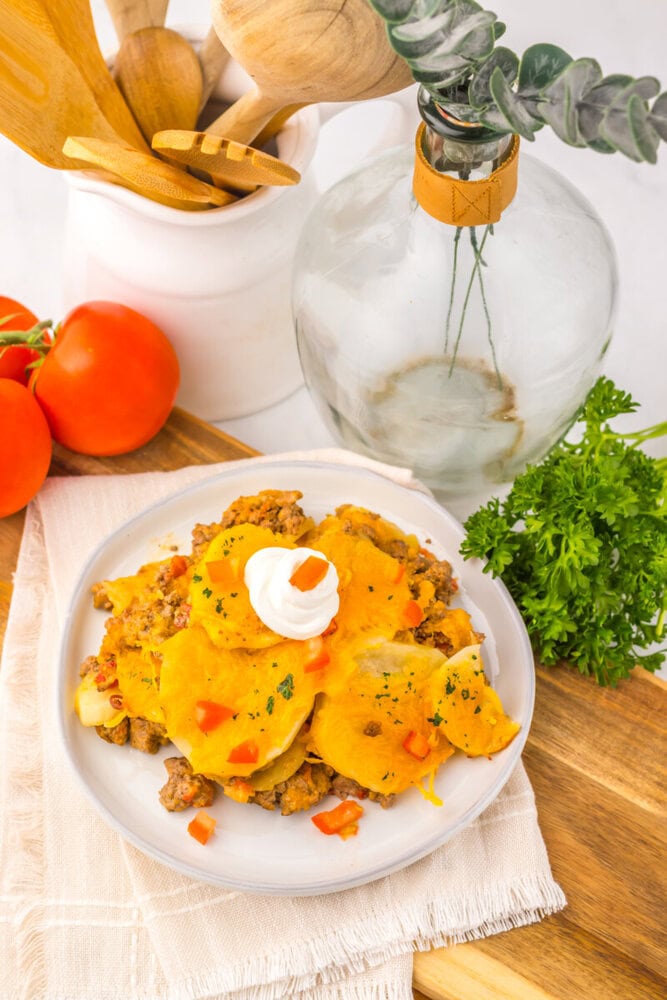
This Cheesy French Onion Potato Casserole cooperates.
You stir together one big bowl of creamy sauce, layer it with sliced potatoes, and let the oven carry the heavier part of the job. By the time it reaches the table, the potatoes are tender, the cheese is bubbling, and those crisp onions on top make every spoonful feel a little more special.
What I love most is how naturally it fits into family life. It can sit proudly beside the Thanksgiving turkey, but it is just as welcome next to a grocery store rotisserie chicken on a busy weeknight. It feeds plenty of people, reheats well, and gives you that quiet moment at the table when everyone is too busy eating to complain about anything.
That is a win in my house.