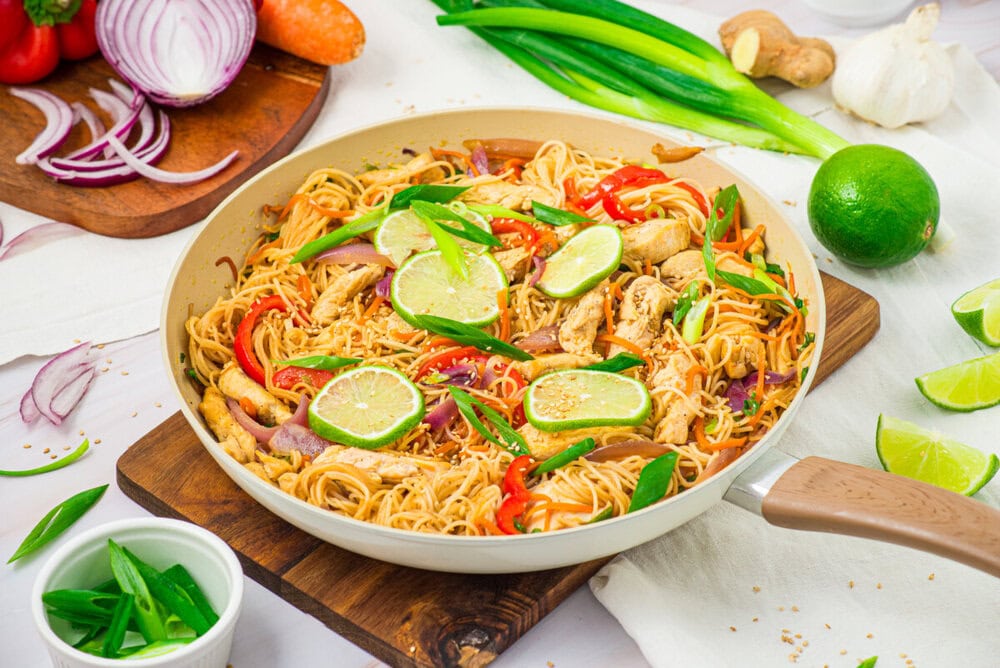
Chicken Stir Fry with Rice Noodles
There is something wonderful about a dinner that fills the kitchen with a mouthwatering smell before anyone even makes it to the table.
On those evenings when the kids are hungry, everyone is tired, and you are running out of ideas, a hot skillet full of familiar flavors can turn the whole mood around.
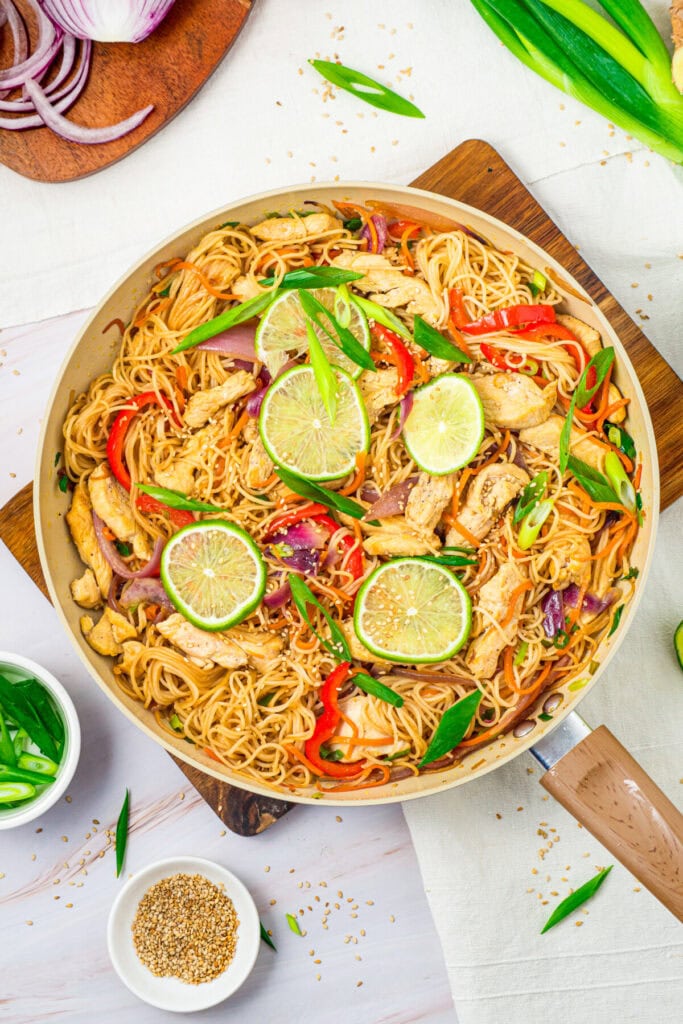
You hear that gentle sizzle, smell the garlic and ginger warming in the pan, and see colorful vegetables getting glossy around the edges.
✉ Never miss a recipe — grab Chicken Recipes Cookbook free
Drop your email and we’ll take care of the rest
Get It NowI started making this Chicken Stir Fry with Rice Noodles during one of those busy stretches when getting a homemade dinner on the table felt like another job on an already long list. I wanted something hearty enough to satisfy everyone, packed with vegetables, and quick enough that I would not spend the entire evening standing over the stove.
Something that felt a little like our favorite takeout, only made right in our own kitchen.
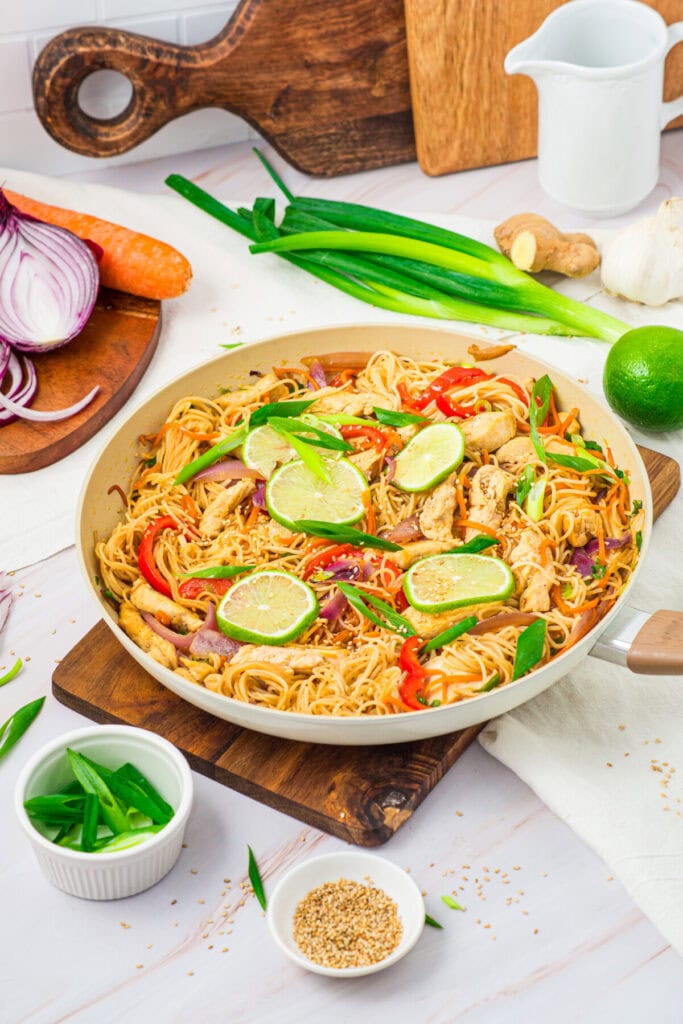
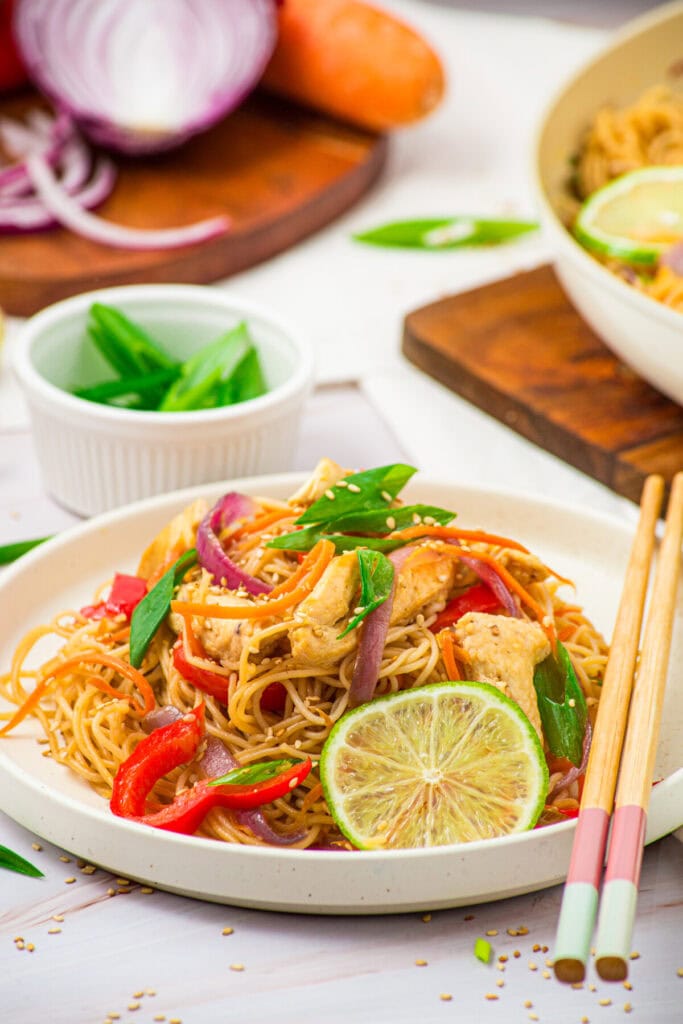
This chicken stir fry with rice noodles brings together everything I love about a good noodle bowl and turns it into a complete family dinner. The chicken is tender with lightly golden edges, the vegetables keep a pleasant little crunch, and the soft rice noodles soak up that savory soy sauce and bright lime dressing.
Every forkful has a little bit of everything. It tastes like a special takeout night but fits comfortably into an ordinary Tuesday.
What keeps me coming back is how quickly the whole thing comes together once the chopping is finished. You cook the chicken, soften the vegetables, toss everything with the noodles, and dinner is ready before the evening gets away from you.
It looks colorful, smells incredible, and tastes like you put in a whole lot more effort than you actually did. I have a feeling it will earn a permanent spot in your family dinner rotation, too.
What Is Chicken Stir Fry with Rice Noodles?
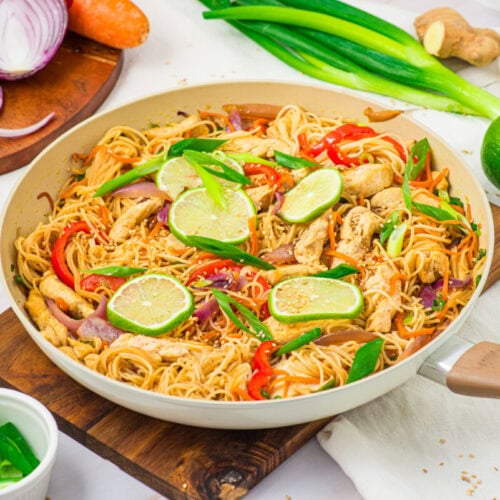
Chicken Stir Fry with Rice Noodles is a quick, satisfying skillet dinner made with thinly sliced chicken breast, tender rice noodles, colorful vegetables, and a simple dressing of soy sauce and fresh lime juice.
The beauty of this dish is how a handful of everyday ingredients come together into something that feels like a proper meal. You get protein from the chicken, freshness from the vegetables, and plenty of satisfying noodles to bring everything together.
The garlic and ginger give the dish that wonderful aroma you recognize from your favorite stir fry dinners, while the soy sauce provides a deep savory flavor. A squeeze of lime brightens everything up and keeps the noodles from tasting too heavy.
One of my favorite things about this recipe is that you do not need an elaborate sauce or a long list of specialty ingredients. It is straightforward cooking with fresh ingredients, a hot skillet, and just enough seasoning to make every bite enjoyable.
Recipe at a glance:
Prep: 15 minutes
Cook: 20 minutes
Serves 3
Total time: 35 minutes
It is a particularly good choice when you want something fresh and homemade without committing your entire evening to cooking.
Why You’ll Love This Recipe
- Ready in 35 minutes: From preparing the ingredients to serving dinner, this meal fits nicely into a busy weeknight when everyone wants to eat sooner rather than later.
- A complete family dinner: Chicken, vegetables, and rice noodles all come together in one satisfying dish, so you do not need to prepare several separate sides.
- Simple everyday ingredients: Most of what you need is easy to find at your regular grocery store, and you might already have several ingredients in your kitchen.
- Wonderful textures: Tender chicken, soft noodles, and slightly crisp vegetables make every bite interesting without being complicated.
- Easy to customize: You can swap vegetables, adjust the seasoning, or add a little heat for the adults while keeping the kids’ portions mild.
- Less cleanup: Most of the cooking happens in one large skillet, which means fewer dishes waiting for you after dinner.
- Family friendly flavors: The savory soy sauce and fresh lime give the noodles plenty of character without making the dish overly spicy.
When to Serve This Recipe
- Busy school nights: When homework, activities, and bedtime routines are all competing for attention, this quick chicken dinner makes life easier.
- Casual family dinners: Set the skillet in the middle of the table and let everyone help themselves to a warm, colorful serving.
- Takeout cravings: When you are tempted to order noodles, this homemade version gives you those comforting flavors using ingredients you control.
- Weekend lunches: It is filling enough for a relaxed Saturday lunch, especially after a busy morning with the family.
- Meal prep days: Prepare a batch for a few lunches during the week, then reheat individual portions when needed.
- Evenings with picky eaters: You can serve the chicken, vegetables, and noodles separately for younger kids who prefer their foods not mixed together.
Ingredients
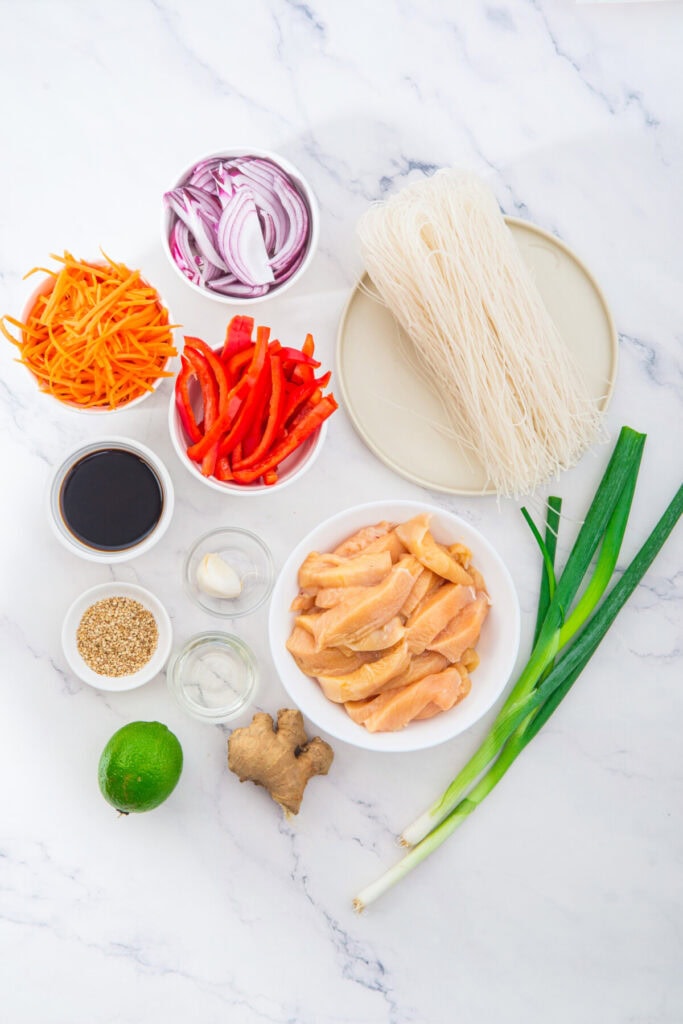
One of the reasons I enjoy making this chicken stir fry with rice noodles is that the ingredient list stays refreshingly simple. You do not need a cupboard full of sauces to make a dinner that tastes good.
Here is everything you will need, listed in the order it goes into the recipe.
- 2 to 3 tablespoons vegetable oil – Use 1 tablespoon to cook the chicken and the remaining oil as needed for the vegetables. Choose a neutral oil that handles relatively high cooking temperatures.
- 1 lb chicken breast, thinly sliced – Chicken breast cooks quickly when cut into even strips and stays tender when you avoid overcooking it.
- 1/3 cup soy sauce, divided – Use 1 tablespoon when cooking the chicken and reserve the rest for the noodle dressing. Regular soy sauce gives the dish its savory base, but a reduced sodium version works well.
- 1/2 red onion, cut into thick strips – Red onion adds a little sweetness and keeps a pleasant bite when cooked briefly.
- 1/2 red bell pepper, thinly sliced – The bell pepper brings natural sweetness, fresh color, and a gentle crunch that works beautifully with the noodles.
- 1 medium carrot, julienned – Cut the carrot into thin matchsticks so it cooks quickly without losing all its texture.
- 1 garlic clove, minced – Fresh garlic adds that familiar savory aroma that makes the kitchen smell wonderful.
- 1 teaspoon fresh ginger, grated – Ginger brings warmth and a slightly peppery freshness that balances the soy sauce.
- 5 to 6 oz rice noodles, approximately 150 grams – These tender noodles soak up the dressing and help turn the chicken and vegetables into a filling meal.
- Juice of 1/2 lime – Fresh lime juice adds brightness and keeps the savory dressing tasting lively.
- Sesame seeds, for serving – A small sprinkle adds a gentle nutty taste and a little texture.
- Sliced green onions, for serving – Fresh green onions give the finished dish a mild onion flavor and a lovely pop of green.
I usually put everything in small bowls before turning on the stove. It might feel like one extra thing to do, but it makes the cooking process much calmer, especially when someone is asking how much longer dinner will take.
How to Make Chicken Stir Fry with Rice Noodles
This is one of those meals where the preparation takes nearly as much attention as the actual cooking. Once the skillet is hot, things move quickly, so having your ingredients ready makes a real difference.
Step 1: Prepare the Chicken and Vegetables
Start by slicing the chicken breast into thin, evenly sized strips. Try to keep the pieces similar in thickness so they cook at roughly the same speed.
Next, slice the red onion and bell pepper, cut the carrot into thin matchsticks, mince the garlic, and grate the fresh ginger. Set everything near your stove in separate bowls or on a large cutting board.
I like to do this before heating the skillet because stir frying is not the kind of cooking where you want to stop halfway through and start searching for a knife. Once everything is prepared, the rest of dinner feels much more manageable.
Step 2: Cook the Chicken Until Golden and Tender
Heat 1 tablespoon of vegetable oil in a large skillet over medium high heat. Add the sliced chicken breast along with 1 tablespoon of soy sauce.
Spread the chicken across the skillet so as many pieces as possible touch the hot surface. Cook for approximately 7 minutes, stirring occasionally, until the chicken develops lightly golden edges and is fully cooked.
The thickest pieces should reach an internal temperature of 165°F. Avoid crowding the skillet too much, since crowded chicken tends to steam instead of brown.
If your skillet is small, cooking the chicken in two batches is worth the extra minute. Transfer the cooked chicken to a plate and set it aside.
Step 3: Stir Fry the Colorful Vegetables
Add a little more vegetable oil to the same skillet if needed. Toss in the red onion, sliced bell pepper, and julienned carrot.
Cook for approximately 4 minutes, stirring occasionally so the vegetables soften evenly without becoming mushy. You want the onion to lose some of its sharpness, the bell pepper to turn slightly tender, and the carrot to keep a little crunch.
This is where the skillet starts looking especially inviting, with all those bright colors mixed together. I always try not to cook the vegetables too long because that fresh, crisp texture is part of what makes the finished noodles so enjoyable.
Step 4: Add the Garlic, Ginger, and Chicken
Add the minced garlic and grated ginger to the vegetables. Stir for about 30 seconds, just until they become fragrant, taking care not to let the garlic burn.

Return the cooked chicken and any juices from the plate to the skillet. Give everything a good stir so the chicken mixes with the vegetables and picks up those wonderful garlic and ginger aromas.
At this point, the kitchen usually smells like dinner is almost ready, which is a welcome moment after a busy day.
Step 5: Prepare the Rice Noodles
While the chicken and vegetables are cooking, prepare the rice noodles according to the package instructions. Different brands and noodle thicknesses can require different soaking or cooking times, so follow the directions on your particular package.
I recommend checking the noodles a little early because rice noodles can go from tender to overly soft surprisingly quickly. You want them flexible and tender but still able to hold their shape when tossed in the skillet.
Once ready, drain them thoroughly. If your noodles finish well before the chicken and vegetables, rinse briefly with cool water to prevent further cooking and set them aside.
Step 6: Toss Everything with the Soy and Lime Dressing
Add the drained rice noodles to the skillet with the chicken and vegetables. Pour in the remaining soy sauce and the juice of half a lime.
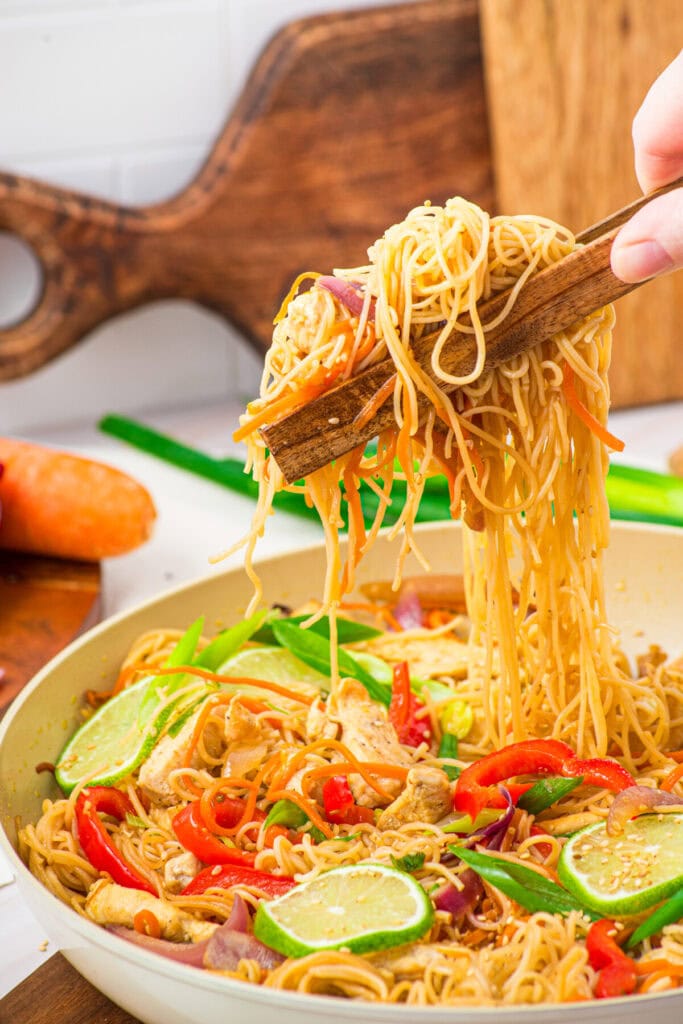
Using tongs or two large spoons, gently toss everything together for 1 to 2 minutes over medium heat until the noodles are evenly coated and warmed through. Be gentle here because rice noodles can break if you stir them too aggressively.
If the mixture looks a little dry or the noodles begin sticking together, add a small splash of water to loosen things up. Taste before adding any extra seasoning because the soy sauce already provides plenty of saltiness.
Step 7: Garnish and Serve Warm
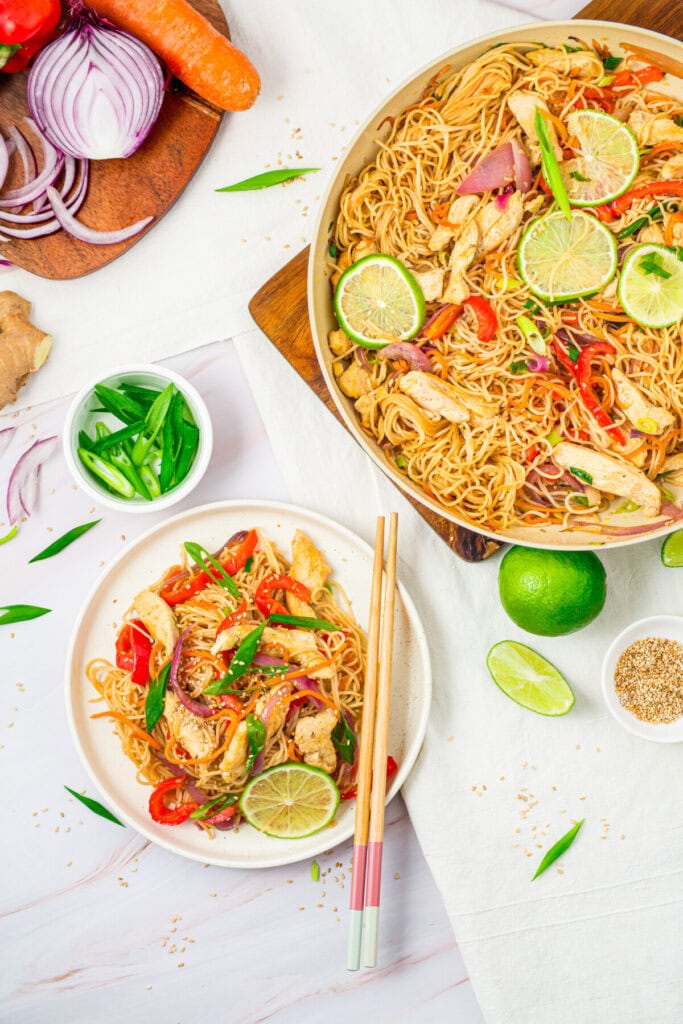
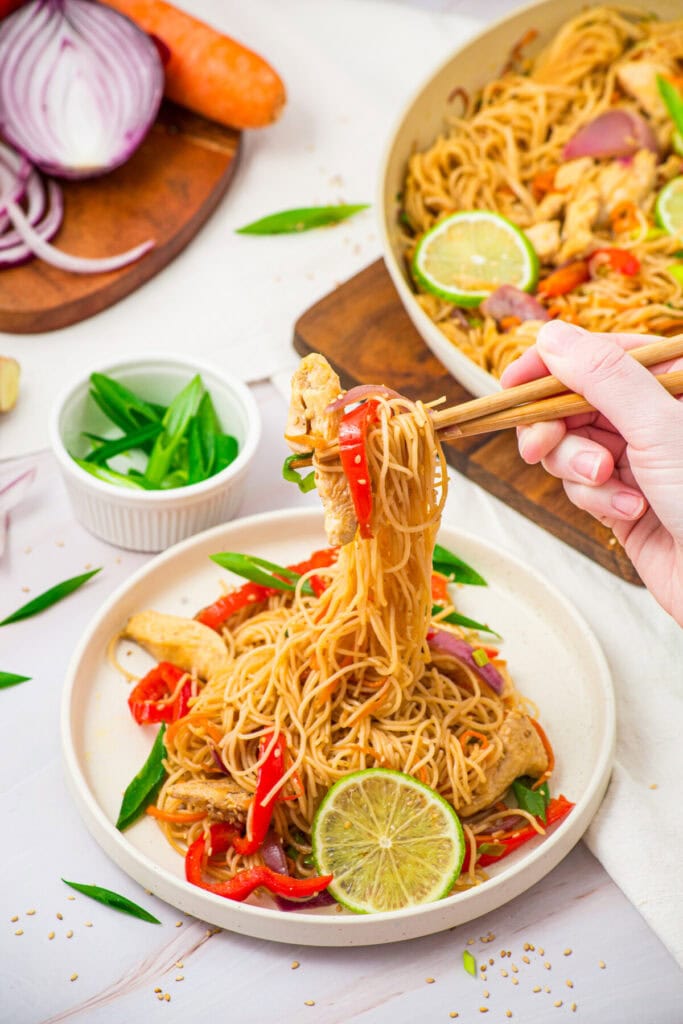
Remove the skillet from the heat once the noodles are tender, glossy, and evenly mixed with the chicken and vegetables. Divide the stir fry among three serving bowls and finish with a sprinkle of sesame seeds and freshly sliced green onions.
The sesame seeds add a nice little crunch, while the green onions bring freshness to every bite. I like serving this immediately while the noodles are warm and the vegetables still have that lovely bit of texture.
There is something satisfying about putting a colorful bowl of homemade noodles in front of your family and watching everyone settle in for dinner.
Substitutions
One thing I have learned from cooking for a family is that you do not always have every ingredient a recipe calls for. Fortunately, this chicken stir fry is forgiving enough to work with several simple substitutions.
- Chicken thighs: Boneless, skinless chicken thighs work beautifully instead of chicken breast and have a slightly richer taste, although they may need a little longer to cook.
- Different noodles: Thin wheat noodles or even spaghetti can work if rice noodles are unavailable, although the texture will be different.
- Tamari instead of soy sauce: Tamari is a useful alternative for a similar savory taste, and a certified gluten free version can help accommodate gluten free diets.
- Yellow onion instead of red onion: A yellow onion softens nicely and brings a slightly sweeter taste once cooked.
- Other cooking oils: Canola oil or avocado oil can replace vegetable oil without changing the overall character of the dish.
- Bottled lime juice: Fresh lime tastes brightest, but bottled lime juice works when you need to get dinner moving with what you have.
- Different vegetables: Broccoli, snow peas, zucchini, or thinly sliced cabbage can replace some of the original vegetables depending on what is in your refrigerator.
Variations
Once you have made the basic chicken stir fry with rice noodles a few times, it becomes fun to make small changes based on what your family enjoys.
- Spicy chicken rice noodles: Add a small spoonful of Sriracha or chili sauce to the dressing for some heat, or put the sauce on the table so everyone can adjust their own portion.
- Extra vegetable stir fry: Add broccoli florets, snap peas, mushrooms, or shredded cabbage to make the meal even more colorful and vegetable packed.
- Sweet and savory version: Stir a teaspoon or two of honey into the dressing if your family enjoys a little sweetness alongside the soy sauce.
- Sesame ginger noodles: Add a small drizzle of toasted sesame oil just before serving for a deeper nutty aroma.
- Chicken and shrimp combination: Replace some of the chicken with peeled shrimp, cooking the shrimp separately until opaque before combining everything.
- Vegetarian rice noodles: Swap the chicken for firm tofu and use the same vegetables and dressing for a meatless family dinner.
Tips and Tricks
These are the little details that make a noticeable difference when I cook rice noodles at home. None of them is difficult, but together they help keep the finished dinner tasting fresh.
- Prepare everything first: Stir frying moves quickly, so slice the chicken, chop the vegetables, and measure the dressing before turning on the stove.
- Slice the chicken evenly: Thin strips cook faster and more consistently, reducing the risk of dry pieces mixed with undercooked ones.
- Use a large skillet: Giving the chicken and vegetables enough room helps them cook properly instead of steaming in a crowded pan.
- Keep the vegetables slightly crisp: A little crunch gives the finished dish a better balance against the tender noodles.
- Watch the rice noodles carefully: Rice noodles soften quickly, and overcooking can leave them sticky or mushy once you toss them with the other ingredients.
- Add water when needed: A tablespoon or two of water can loosen noodles that become dry or begin sticking together.
- Taste before adding salt: Soy sauce already contains a generous amount of sodium, so extra salt is often unnecessary.
- Use fresh garlic and ginger: These two ingredients make a noticeable difference to the aroma and overall taste of the dish.
- Serve immediately: Rice noodles have their nicest texture right after cooking, while the vegetables are still bright and lightly crisp.
FAQs
Can I Make Chicken Stir Fry with Rice Noodles Ahead of Time?
Yes, although I think this dish tastes best when it comes straight from the skillet. If you want to save time, prepare the chicken, chop the vegetables, and mix the soy sauce with the lime juice ahead of time.
Store everything in separate covered containers in the refrigerator, keeping the raw chicken away from the vegetables. When dinnertime comes around, you can start cooking right away.
I prefer making the rice noodles fresh because they tend to soften and stick together after sitting for too long.
How Do I Keep Rice Noodles from Getting Mushy?
The biggest secret is to avoid overcooking them before they reach the skillet. Follow your package instructions, but start checking the noodles slightly earlier than the recommended time.
They should be tender without falling apart. Remember that the noodles will spend another minute or two warming with the chicken, vegetables, and dressing.
If you cook them until very soft beforehand, they may become mushy by the time dinner reaches the table. Gentle tossing also helps preserve their shape.
Can I Use Frozen Vegetables Instead of Fresh?
Absolutely. Frozen stir fry vegetables are a convenient option when you are trying to get dinner on the table with minimal preparation.
Add them directly to the hot skillet and cook until heated through and any excess moisture has evaporated. Depending on the vegetables, you might need a few extra minutes.
The finished texture may be slightly softer than fresh vegetables, but the meal will still be satisfying. I keep a bag of frozen vegetables around for evenings when chopping feels like one task too many.
Is Chicken Stir Fry with Rice Noodles Gluten Free?
Rice noodles are often naturally gluten free because they are made primarily from rice flour, but you should always check the package. The main ingredient to pay attention to is soy sauce, since traditional soy sauce commonly contains wheat.
For a gluten free version, use certified gluten free rice noodles and gluten free tamari or soy sauce. Check any additional sauces or garnishes as well.
With those adjustments, this recipe can be a great option for families avoiding gluten.
Can I Make This Recipe Less Salty?
Yes. One of the simplest adjustments is choosing reduced sodium soy sauce.
You can also start with less than the full amount of soy sauce, then add more a little at a time until the noodles taste right to you. A splash of water can help distribute the dressing without making it overly concentrated.
Fresh lime juice also helps balance the savory flavor. I always recommend tasting the finished dish before reaching for the salt shaker because it may not need any additional salt at all.
What Is the Best Way to Reheat Chicken Stir Fry with Rice Noodles?
I prefer reheating leftovers in a skillet over medium heat with a small splash of water. The water helps loosen the rice noodles and keeps them from becoming too dry as they warm.
Stir gently until the chicken and noodles are heated all the way through to 165°F. You can also use the microwave, covering the bowl loosely and heating in short intervals while stirring between each one.
The noodles may be softer than when freshly cooked, but the flavors are still lovely for a quick lunch.
Serving Ideas
This recipe already makes a complete meal, so I rarely feel the need to prepare anything elaborate alongside it. Still, a few simple additions can make dinner feel a little more special.
- Fresh cucumber salad: Thinly sliced cucumbers with a little lime juice provide a cool, refreshing contrast to the warm savory noodles.
- Steamed broccoli: A bowl of lightly steamed broccoli is a simple way to add extra vegetables, especially when feeding hungry kids.
- Crispy spring rolls: Serve a few vegetable spring rolls on the side when you want to recreate the feeling of a fun takeout dinner at home.
- Extra lime wedges: Put fresh lime wedges on the table so everyone can add a brighter, tangier finish to their own noodles.
- Chili sauce on the side: Keep the main dish mild for the family and let anyone who enjoys heat add their favorite spicy sauce.
- Fresh fruit afterward: Pineapple, orange slices, or fresh mango make a light, refreshing finish after a satisfying noodle dinner.
One little thing I enjoy doing is bringing the garnishes to the table separately. The kids can add their own sesame seeds or green onions, and it makes dinner feel a bit more interactive without creating much extra work.
Storage and Make Ahead Tips
If you are lucky enough to have leftovers, they can make a convenient lunch the following day. Rice noodles do change texture a little after refrigeration, but a few small steps help keep them enjoyable.
- Refrigerator storage: Let the stir fry cool briefly, then transfer it to an airtight container and refrigerate within two hours. Keep for up to 3 to 4 days.
- Reheating on the stove: Warm leftovers in a skillet over medium heat with a splash of water, stirring gently until everything is thoroughly heated.
- Microwave reheating: Place a portion in a microwave safe bowl, add a small splash of water, cover loosely, and heat until the chicken and noodles are hot throughout.
- Freezing leftovers: You can freeze the cooked dish in an airtight freezer safe container, although the rice noodles and vegetables may become softer after thawing.
- Preparing vegetables ahead: Slice the onion, bell pepper, and carrot up to two days ahead and keep them refrigerated in a sealed container.
- Preparing chicken ahead: Cut the raw chicken into strips up to one day before cooking and keep it covered in the refrigerator, separate from other ingredients.
- Preparing the dressing ahead: Mix the reserved soy sauce and lime juice in a small covered container and refrigerate it until you are ready to cook.
- Keeping noodles fresh: For the nicest texture, prepare the rice noodles shortly before serving rather than several days in advance.
For busy evenings, my favorite approach is to prepare the vegetables and chicken earlier in the day. That way, when everyone starts wandering into the kitchen asking about dinner, most of the work is already behind you.
Chicken Stir Fry with Rice Noodles
✉ Never miss a recipe — grab Chicken Recipes Cookbook free
Drop your email and we’ll take care of the rest
Get It NowInstructions
- This is one of those meals where the preparation takes nearly as much attention as the actual cooking. Once the skillet is hot, things move quickly, so having your ingredients ready makes a real difference.
- Step 1: Prepare the Chicken and Vegetables – Start by slicing the chicken breast into thin, evenly sized strips. Try to keep the pieces similar in thickness so they cook at roughly the same speed. Next, slice the red onion and bell pepper, cut the carrot into thin matchsticks, mince the garlic, and grate the fresh ginger. Set everything near your stove in separate bowls or on a large cutting board. I like to do this before heating the skillet because stir frying is not the kind of cooking where you want to stop halfway through and start searching for a knife. Once everything is prepared, the rest of dinner feels much more manageable.
- Step 2: Cook the Chicken Until Golden and Tender – Heat 1 tablespoon of vegetable oil in a large skillet over medium high heat. Add the sliced chicken breast along with 1 tablespoon of soy sauce. Spread the chicken across the skillet so as many pieces as possible touch the hot surface. Cook for approximately 7 minutes, stirring occasionally, until the chicken develops lightly golden edges and is fully cooked. The thickest pieces should reach an internal temperature of 165°F. Avoid crowding the skillet too much, since crowded chicken tends to steam instead of brown. If your skillet is small, cooking the chicken in two batches is worth the extra minute. Transfer the cooked chicken to a plate and set it aside.
- Step 3: Stir Fry the Colorful Vegetables – Add a little more vegetable oil to the same skillet if needed. Toss in the red onion, sliced bell pepper, and julienned carrot. Cook for approximately 4 minutes, stirring occasionally so the vegetables soften evenly without becoming mushy. You want the onion to lose some of its sharpness, the bell pepper to turn slightly tender, and the carrot to keep a little crunch. This is where the skillet starts looking especially inviting, with all those bright colors mixed together. I always try not to cook the vegetables too long because that fresh, crisp texture is part of what makes the finished noodles so enjoyable.
- Step 4: Add the Garlic, Ginger, and Chicken – Add the minced garlic and grated ginger to the vegetables. Stir for about 30 seconds, just until they become fragrant, taking care not to let the garlic burn. Return the cooked chicken and any juices from the plate to the skillet. Give everything a good stir so the chicken mixes with the vegetables and picks up those wonderful garlic and ginger aromas. At this point, the kitchen usually smells like dinner is almost ready, which is a welcome moment after a busy day.
- Step 5: Prepare the Rice Noodles – While the chicken and vegetables are cooking, prepare the rice noodles according to the package instructions. Different brands and noodle thicknesses can require different soaking or cooking times, so follow the directions on your particular package. I recommend checking the noodles a little early because rice noodles can go from tender to overly soft surprisingly quickly. You want them flexible and tender but still able to hold their shape when tossed in the skillet. Once ready, drain them thoroughly. If your noodles finish well before the chicken and vegetables, rinse briefly with cool water to prevent further cooking and set them aside.
- Step 6: Toss Everything with the Soy and Lime Dressing – Add the drained rice noodles to the skillet with the chicken and vegetables. Pour in the remaining soy sauce and the juice of half a lime. Using tongs or two large spoons, gently toss everything together for 1 to 2 minutes over medium heat until the noodles are evenly coated and warmed through. Be gentle here because rice noodles can break if you stir them too aggressively. If the mixture looks a little dry or the noodles begin sticking together, add a small splash of water to loosen things up. Taste before adding any extra seasoning because the soy sauce already provides plenty of saltiness.
- Step 7: Garnish and Serve Warm – Remove the skillet from the heat once the noodles are tender, glossy, and evenly mixed with the chicken and vegetables. Divide the stir fry among three serving bowls and finish with a sprinkle of sesame seeds and freshly sliced green onions. The sesame seeds add a nice little crunch, while the green onions bring freshness to every bite. I like serving this immediately while the noodles are warm and the vegetables still have that lovely bit of texture. There is something satisfying about putting a colorful bowl of homemade noodles in front of your family and watching everyone settle in for dinner.
Notes
Substitutions
One thing I have learned from cooking for a family is that you do not always have every ingredient a recipe calls for. Fortunately, this chicken stir fry is forgiving enough to work with several simple substitutions.- Chicken thighs: Boneless, skinless chicken thighs work beautifully instead of chicken breast and have a slightly richer taste, although they may need a little longer to cook.
- Different noodles: Thin wheat noodles or even spaghetti can work if rice noodles are unavailable, although the texture will be different.
- Tamari instead of soy sauce: Tamari is a useful alternative for a similar savory taste, and a certified gluten free version can help accommodate gluten free diets.
- Yellow onion instead of red onion: A yellow onion softens nicely and brings a slightly sweeter taste once cooked.
- Other cooking oils: Canola oil or avocado oil can replace vegetable oil without changing the overall character of the dish.
- Bottled lime juice: Fresh lime tastes brightest, but bottled lime juice works when you need to get dinner moving with what you have.
- Different vegetables: Broccoli, snow peas, zucchini, or thinly sliced cabbage can replace some of the original vegetables depending on what is in your refrigerator.
Variations
Once you have made the basic chicken stir fry with rice noodles a few times, it becomes fun to make small changes based on what your family enjoys.- Spicy chicken rice noodles: Add a small spoonful of Sriracha or chili sauce to the dressing for some heat, or put the sauce on the table so everyone can adjust their own portion.
- Extra vegetable stir fry: Add broccoli florets, snap peas, mushrooms, or shredded cabbage to make the meal even more colorful and vegetable packed.
- Sweet and savory version: Stir a teaspoon or two of honey into the dressing if your family enjoys a little sweetness alongside the soy sauce.
- Sesame ginger noodles: Add a small drizzle of toasted sesame oil just before serving for a deeper nutty aroma.
- Chicken and shrimp combination: Replace some of the chicken with peeled shrimp, cooking the shrimp separately until opaque before combining everything.
- Vegetarian rice noodles: Swap the chicken for firm tofu and use the same vegetables and dressing for a meatless family dinner.
Tips and Tricks
These are the little details that make a noticeable difference when I cook rice noodles at home. None of them is difficult, but together they help keep the finished dinner tasting fresh.- Prepare everything first: Stir frying moves quickly, so slice the chicken, chop the vegetables, and measure the dressing before turning on the stove.
- Slice the chicken evenly: Thin strips cook faster and more consistently, reducing the risk of dry pieces mixed with undercooked ones.
- Use a large skillet: Giving the chicken and vegetables enough room helps them cook properly instead of steaming in a crowded pan.
- Keep the vegetables slightly crisp: A little crunch gives the finished dish a better balance against the tender noodles.
- Watch the rice noodles carefully: Rice noodles soften quickly, and overcooking can leave them sticky or mushy once you toss them with the other ingredients.
- Add water when needed: A tablespoon or two of water can loosen noodles that become dry or begin sticking together.
- Taste before adding salt: Soy sauce already contains a generous amount of sodium, so extra salt is often unnecessary.
- Use fresh garlic and ginger: These two ingredients make a noticeable difference to the aroma and overall taste of the dish.
- Serve immediately: Rice noodles have their nicest texture right after cooking, while the vegetables are still bright and lightly crisp.
Serving Ideas
This recipe already makes a complete meal, so I rarely feel the need to prepare anything elaborate alongside it. Still, a few simple additions can make dinner feel a little more special.- Fresh cucumber salad: Thinly sliced cucumbers with a little lime juice provide a cool, refreshing contrast to the warm savory noodles.
- Steamed broccoli: A bowl of lightly steamed broccoli is a simple way to add extra vegetables, especially when feeding hungry kids.
- Crispy spring rolls: Serve a few vegetable spring rolls on the side when you want to recreate the feeling of a fun takeout dinner at home.
- Extra lime wedges: Put fresh lime wedges on the table so everyone can add a brighter, tangier finish to their own noodles.
- Chili sauce on the side: Keep the main dish mild for the family and let anyone who enjoys heat add their favorite spicy sauce.
- Fresh fruit afterward: Pineapple, orange slices, or fresh mango make a light, refreshing finish after a satisfying noodle dinner.
Storage and Make Ahead Tips
If you are lucky enough to have leftovers, they can make a convenient lunch the following day. Rice noodles do change texture a little after refrigeration, but a few small steps help keep them enjoyable.- Refrigerator storage: Let the stir fry cool briefly, then transfer it to an airtight container and refrigerate within two hours. Keep for up to 3 to 4 days.
- Reheating on the stove: Warm leftovers in a skillet over medium heat with a splash of water, stirring gently until everything is thoroughly heated.
- Microwave reheating: Place a portion in a microwave safe bowl, add a small splash of water, cover loosely, and heat until the chicken and noodles are hot throughout.
- Freezing leftovers: You can freeze the cooked dish in an airtight freezer safe container, although the rice noodles and vegetables may become softer after thawing.
- Preparing vegetables ahead: Slice the onion, bell pepper, and carrot up to two days ahead and keep them refrigerated in a sealed container.
- Preparing chicken ahead: Cut the raw chicken into strips up to one day before cooking and keep it covered in the refrigerator, separate from other ingredients.
- Preparing the dressing ahead: Mix the reserved soy sauce and lime juice in a small covered container and refrigerate it until you are ready to cook.
- Keeping noodles fresh: For the nicest texture, prepare the rice noodles shortly before serving rather than several days in advance.
Private Notes
✉ Never miss a recipe — grab Chicken Recipes Cookbook free
Drop your email and we’ll take care of the rest
Get It NowFinal Thoughts
Some dinners are memorable because they are elaborate, and others become family favorites because they make ordinary evenings a little easier. For me, this Chicken Stir Fry with Rice Noodles belongs firmly in that second category.
I love that it brings so much to the table without asking for a lot in return. You get tender chicken, colorful vegetables, soft noodles, and a savory dressing that ties everything together.
The garlic and ginger make the kitchen smell wonderful, and the fresh lime gives the whole dish a bright finish that keeps you reaching for another bite.
More importantly, it is the kind of dinner that fits into real family life. You can make it after a long day, adjust it for the picky eater at your table, and still feel good about serving something homemade.
There will always be evenings when dinner feels like another mountain to climb. Having a few dependable recipes like this one makes those moments easier.
So grab your biggest skillet, get the vegetables chopped, and enjoy the simple satisfaction of putting a warm, colorful meal on the table. I hope this recipe brings a little more comfort to your busy evenings and becomes one of those familiar dinners your family is genuinely happy to see.