Chicken Stir Fry with Rice Noodles
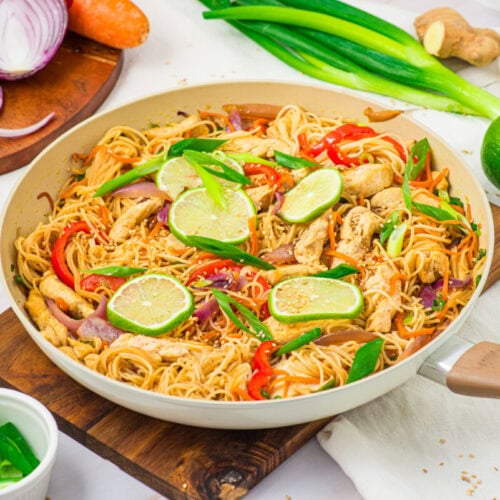
This Chicken Stir Fry with Rice Noodles is a quick and satisfying family dinner featuring tender chicken breast, colorful crisp vegetables, soft rice noodles, and a delicious soy and lime dressing. Ready in just 35 minutes, this homemade chicken noodle stir fry is packed with savory garlic and ginger flavors and makes a wonderful alternative to takeout. It is easy to customize, simple enough for busy weeknights, and a lovely way to bring the family together around a comforting homemade meal.
Print Recipe
Instructions
- This is one of those meals where the preparation takes nearly as much attention as the actual cooking. Once the skillet is hot, things move quickly, so having your ingredients ready makes a real difference.
- Step 1: Prepare the Chicken and Vegetables - Start by slicing the chicken breast into thin, evenly sized strips. Try to keep the pieces similar in thickness so they cook at roughly the same speed. Next, slice the red onion and bell pepper, cut the carrot into thin matchsticks, mince the garlic, and grate the fresh ginger. Set everything near your stove in separate bowls or on a large cutting board. I like to do this before heating the skillet because stir frying is not the kind of cooking where you want to stop halfway through and start searching for a knife. Once everything is prepared, the rest of dinner feels much more manageable.
- Step 2: Cook the Chicken Until Golden and Tender - Heat 1 tablespoon of vegetable oil in a large skillet over medium high heat. Add the sliced chicken breast along with 1 tablespoon of soy sauce. Spread the chicken across the skillet so as many pieces as possible touch the hot surface. Cook for approximately 7 minutes, stirring occasionally, until the chicken develops lightly golden edges and is fully cooked. The thickest pieces should reach an internal temperature of 165°F. Avoid crowding the skillet too much, since crowded chicken tends to steam instead of brown. If your skillet is small, cooking the chicken in two batches is worth the extra minute. Transfer the cooked chicken to a plate and set it aside.
- Step 3: Stir Fry the Colorful Vegetables - Add a little more vegetable oil to the same skillet if needed. Toss in the red onion, sliced bell pepper, and julienned carrot. Cook for approximately 4 minutes, stirring occasionally so the vegetables soften evenly without becoming mushy. You want the onion to lose some of its sharpness, the bell pepper to turn slightly tender, and the carrot to keep a little crunch. This is where the skillet starts looking especially inviting, with all those bright colors mixed together. I always try not to cook the vegetables too long because that fresh, crisp texture is part of what makes the finished noodles so enjoyable.
- Step 4: Add the Garlic, Ginger, and Chicken - Add the minced garlic and grated ginger to the vegetables. Stir for about 30 seconds, just until they become fragrant, taking care not to let the garlic burn. Return the cooked chicken and any juices from the plate to the skillet. Give everything a good stir so the chicken mixes with the vegetables and picks up those wonderful garlic and ginger aromas. At this point, the kitchen usually smells like dinner is almost ready, which is a welcome moment after a busy day.
- Step 5: Prepare the Rice Noodles - While the chicken and vegetables are cooking, prepare the rice noodles according to the package instructions. Different brands and noodle thicknesses can require different soaking or cooking times, so follow the directions on your particular package. I recommend checking the noodles a little early because rice noodles can go from tender to overly soft surprisingly quickly. You want them flexible and tender but still able to hold their shape when tossed in the skillet. Once ready, drain them thoroughly. If your noodles finish well before the chicken and vegetables, rinse briefly with cool water to prevent further cooking and set them aside.
- Step 6: Toss Everything with the Soy and Lime Dressing - Add the drained rice noodles to the skillet with the chicken and vegetables. Pour in the remaining soy sauce and the juice of half a lime. Using tongs or two large spoons, gently toss everything together for 1 to 2 minutes over medium heat until the noodles are evenly coated and warmed through. Be gentle here because rice noodles can break if you stir them too aggressively. If the mixture looks a little dry or the noodles begin sticking together, add a small splash of water to loosen things up. Taste before adding any extra seasoning because the soy sauce already provides plenty of saltiness.
- Step 7: Garnish and Serve Warm - Remove the skillet from the heat once the noodles are tender, glossy, and evenly mixed with the chicken and vegetables. Divide the stir fry among three serving bowls and finish with a sprinkle of sesame seeds and freshly sliced green onions. The sesame seeds add a nice little crunch, while the green onions bring freshness to every bite. I like serving this immediately while the noodles are warm and the vegetables still have that lovely bit of texture. There is something satisfying about putting a colorful bowl of homemade noodles in front of your family and watching everyone settle in for dinner.
Notes
Substitutions
One thing I have learned from cooking for a family is that you do not always have every ingredient a recipe calls for. Fortunately, this chicken stir fry is forgiving enough to work with several simple substitutions.- Chicken thighs: Boneless, skinless chicken thighs work beautifully instead of chicken breast and have a slightly richer taste, although they may need a little longer to cook.
- Different noodles: Thin wheat noodles or even spaghetti can work if rice noodles are unavailable, although the texture will be different.
- Tamari instead of soy sauce: Tamari is a useful alternative for a similar savory taste, and a certified gluten free version can help accommodate gluten free diets.
- Yellow onion instead of red onion: A yellow onion softens nicely and brings a slightly sweeter taste once cooked.
- Other cooking oils: Canola oil or avocado oil can replace vegetable oil without changing the overall character of the dish.
- Bottled lime juice: Fresh lime tastes brightest, but bottled lime juice works when you need to get dinner moving with what you have.
- Different vegetables: Broccoli, snow peas, zucchini, or thinly sliced cabbage can replace some of the original vegetables depending on what is in your refrigerator.
Variations
Once you have made the basic chicken stir fry with rice noodles a few times, it becomes fun to make small changes based on what your family enjoys.- Spicy chicken rice noodles: Add a small spoonful of Sriracha or chili sauce to the dressing for some heat, or put the sauce on the table so everyone can adjust their own portion.
- Extra vegetable stir fry: Add broccoli florets, snap peas, mushrooms, or shredded cabbage to make the meal even more colorful and vegetable packed.
- Sweet and savory version: Stir a teaspoon or two of honey into the dressing if your family enjoys a little sweetness alongside the soy sauce.
- Sesame ginger noodles: Add a small drizzle of toasted sesame oil just before serving for a deeper nutty aroma.
- Chicken and shrimp combination: Replace some of the chicken with peeled shrimp, cooking the shrimp separately until opaque before combining everything.
- Vegetarian rice noodles: Swap the chicken for firm tofu and use the same vegetables and dressing for a meatless family dinner.
Tips and Tricks
These are the little details that make a noticeable difference when I cook rice noodles at home. None of them is difficult, but together they help keep the finished dinner tasting fresh.- Prepare everything first: Stir frying moves quickly, so slice the chicken, chop the vegetables, and measure the dressing before turning on the stove.
- Slice the chicken evenly: Thin strips cook faster and more consistently, reducing the risk of dry pieces mixed with undercooked ones.
- Use a large skillet: Giving the chicken and vegetables enough room helps them cook properly instead of steaming in a crowded pan.
- Keep the vegetables slightly crisp: A little crunch gives the finished dish a better balance against the tender noodles.
- Watch the rice noodles carefully: Rice noodles soften quickly, and overcooking can leave them sticky or mushy once you toss them with the other ingredients.
- Add water when needed: A tablespoon or two of water can loosen noodles that become dry or begin sticking together.
- Taste before adding salt: Soy sauce already contains a generous amount of sodium, so extra salt is often unnecessary.
- Use fresh garlic and ginger: These two ingredients make a noticeable difference to the aroma and overall taste of the dish.
- Serve immediately: Rice noodles have their nicest texture right after cooking, while the vegetables are still bright and lightly crisp.
Serving Ideas
This recipe already makes a complete meal, so I rarely feel the need to prepare anything elaborate alongside it. Still, a few simple additions can make dinner feel a little more special.- Fresh cucumber salad: Thinly sliced cucumbers with a little lime juice provide a cool, refreshing contrast to the warm savory noodles.
- Steamed broccoli: A bowl of lightly steamed broccoli is a simple way to add extra vegetables, especially when feeding hungry kids.
- Crispy spring rolls: Serve a few vegetable spring rolls on the side when you want to recreate the feeling of a fun takeout dinner at home.
- Extra lime wedges: Put fresh lime wedges on the table so everyone can add a brighter, tangier finish to their own noodles.
- Chili sauce on the side: Keep the main dish mild for the family and let anyone who enjoys heat add their favorite spicy sauce.
- Fresh fruit afterward: Pineapple, orange slices, or fresh mango make a light, refreshing finish after a satisfying noodle dinner.
Storage and Make Ahead Tips
If you are lucky enough to have leftovers, they can make a convenient lunch the following day. Rice noodles do change texture a little after refrigeration, but a few small steps help keep them enjoyable.- Refrigerator storage: Let the stir fry cool briefly, then transfer it to an airtight container and refrigerate within two hours. Keep for up to 3 to 4 days.
- Reheating on the stove: Warm leftovers in a skillet over medium heat with a splash of water, stirring gently until everything is thoroughly heated.
- Microwave reheating: Place a portion in a microwave safe bowl, add a small splash of water, cover loosely, and heat until the chicken and noodles are hot throughout.
- Freezing leftovers: You can freeze the cooked dish in an airtight freezer safe container, although the rice noodles and vegetables may become softer after thawing.
- Preparing vegetables ahead: Slice the onion, bell pepper, and carrot up to two days ahead and keep them refrigerated in a sealed container.
- Preparing chicken ahead: Cut the raw chicken into strips up to one day before cooking and keep it covered in the refrigerator, separate from other ingredients.
- Preparing the dressing ahead: Mix the reserved soy sauce and lime juice in a small covered container and refrigerate it until you are ready to cook.
- Keeping noodles fresh: For the nicest texture, prepare the rice noodles shortly before serving rather than several days in advance.
Private Notes
