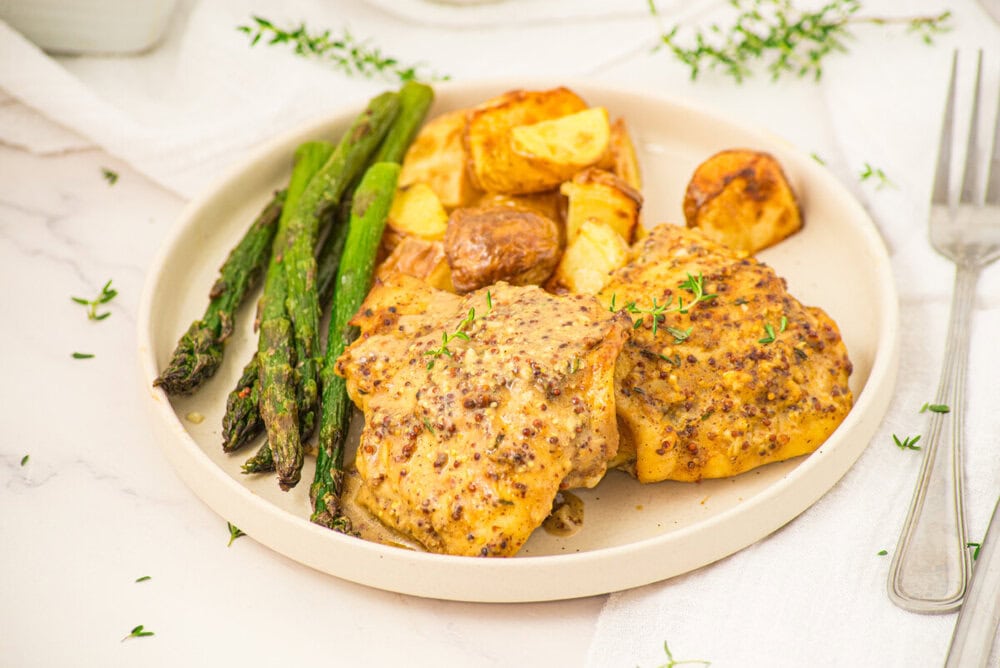
Mustard Chicken Thighs
There is something comforting about a dinner that fills the kitchen with a warm, savory smell before anyone even asks what is cooking. On those evenings when backpacks are still by the door, somebody cannot find a clean water bottle, and you are running on whatever energy is left from the day, that smell feels like a little win.
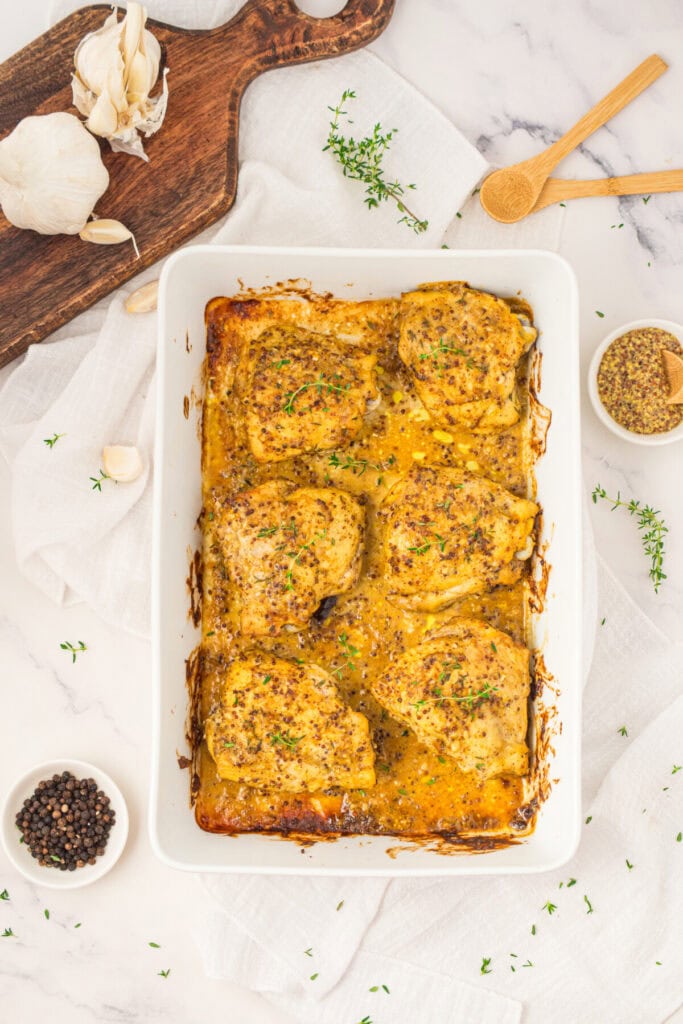
Then you open the oven and see tender chicken glistening under a golden, tangy coating, with those browned edges practically begging you to sneak a bite.
Mustard Chicken Thighs found their way into my regular dinner rotation during one of those stretches when every evening seemed busier than the last. The kids were hungry before I had even figured out dinner, and I wanted something hearty, familiar, and mostly hands off once it went into the oven.
✉ Never miss a recipe — grab Chicken Recipes Cookbook free
Drop your email and we’ll take care of the rest
Get It NowI also wanted ingredients I could keep around without planning my whole week around one meal.
This recipe takes the cozy simplicity of oven baked chicken and gives it a tangy, savory mustard coating that clings to every bite. The chicken stays tender and juicy inside while the mustard, garlic, and olive oil settle into a rich coating with little pops of texture from the whole grain mustard.
It tastes special enough for Sunday dinner but still makes complete sense on a random Tuesday night.
Once the chicken is coated, the oven does nearly all the work for you. You flip the thighs once, brush on a little more of that mustard mixture, and let the heat finish the job while you deal with homework, dishes, or whatever else the evening has handed you.
It is the kind of dinner that tastes like you tried a whole lot harder than you did, and I have a feeling it will earn a permanent spot in your rotation.
What Is Mustard Chicken Thighs?
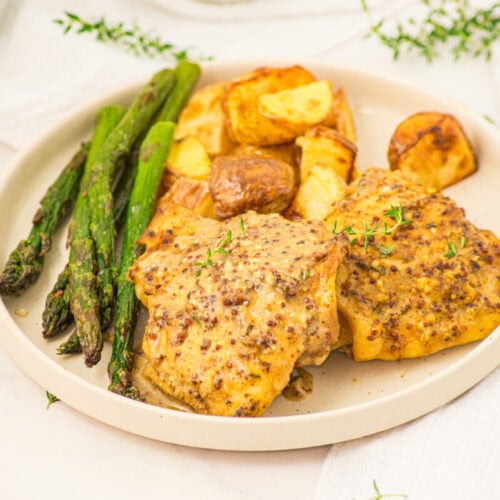
Mustard Chicken Thighs are tender, skinless chicken thighs coated in a simple mixture of Dijon mustard, whole grain Dijon mustard, olive oil, garlic, salt, and black pepper, then baked until juicy and beautifully browned.
What I like most about this dinner is how much character you get from such a short ingredient list. Dijon mustard brings that familiar tang and a little sharpness, while whole grain mustard adds tiny mustard seeds that give the coating extra texture.
Garlic rounds everything out, and the chicken itself provides plenty of richness as it cooks.
There is no complicated sauce to reduce on the stove and no long list of seasonings to measure. You mix the coating in one bowl, toss in the chicken, transfer everything to a casserole dish, and bake.
The recipe makes six chicken thighs, which is a comfortable amount for a family dinner. Depending on appetites, that can mean dinner for everyone with a piece or two left over for lunch the next day.
Around our table, leftover chicken that can be sliced over rice or tucked beside a quick salad is always useful.
Prep takes about 10 minutes, cooking takes roughly 40 to 45 minutes, and the whole meal is ready in about 50 minutes.
Why You’ll Love This Recipe
- Simple ingredients: Everything here is familiar and easy to keep around, which makes this a dependable dinner when you have not planned anything elaborate.
- Juicy chicken thighs: Chicken thighs stay tender and flavorful in the oven, giving you a forgiving cut of meat that works especially well for family dinners.
- Big mustard flavor: Dijon gives the chicken a smooth tang while whole grain mustard adds little pops of texture without making the coating heavy.
- Minimal prep: Most of the work is simply stirring the coating together and tossing it with the chicken before the oven takes over.
- Family friendly: The mustard mellows as it bakes, leaving a savory, gently tangy flavor that pairs well with simple sides kids and adults already know.
- Useful leftovers: Extra chicken reheats well for lunch and can be sliced into salads, rice bowls, sandwiches, or wraps.
When to Serve This Recipe
- Busy weeknights: The short prep time gives you room to get dinner started even when the evening feels crowded.
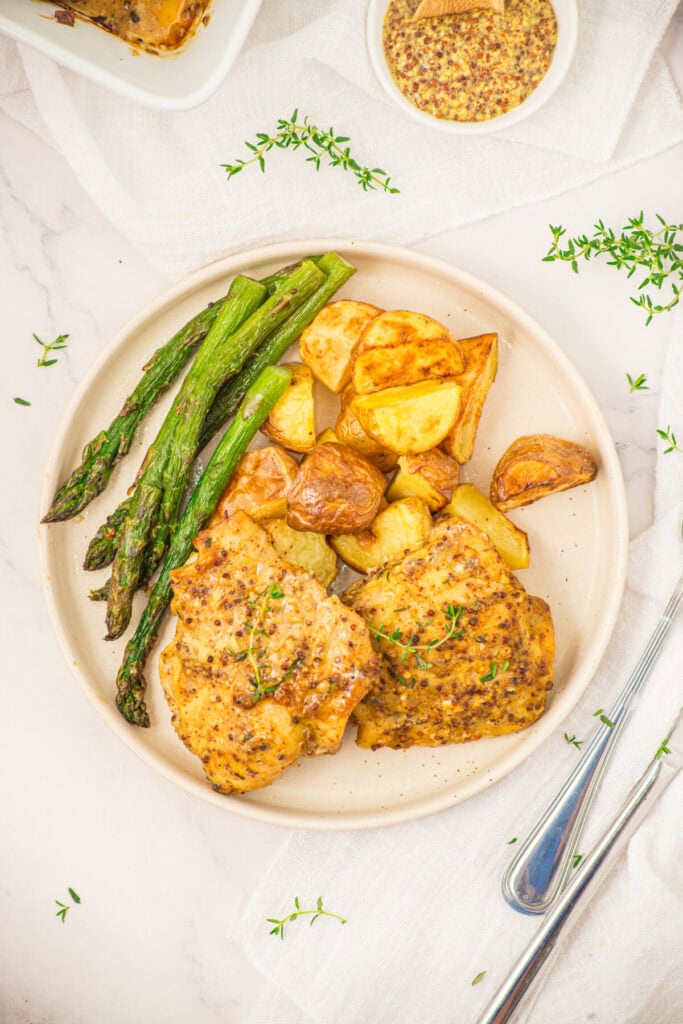
- Sunday family dinner: Add mashed potatoes and roasted vegetables and you have a cozy meal that feels right at home around a full table.
- Casual company: The glossy mustard coating looks impressive on a serving platter even though the preparation is wonderfully straightforward.
- Meal prep days: Bake a batch and portion the chicken with rice, vegetables, or salad for a few ready to go meals.
- Cool weather evenings: The warm garlic and mustard aroma coming from the oven makes this especially comforting when everyone comes home hungry.
Ingredients
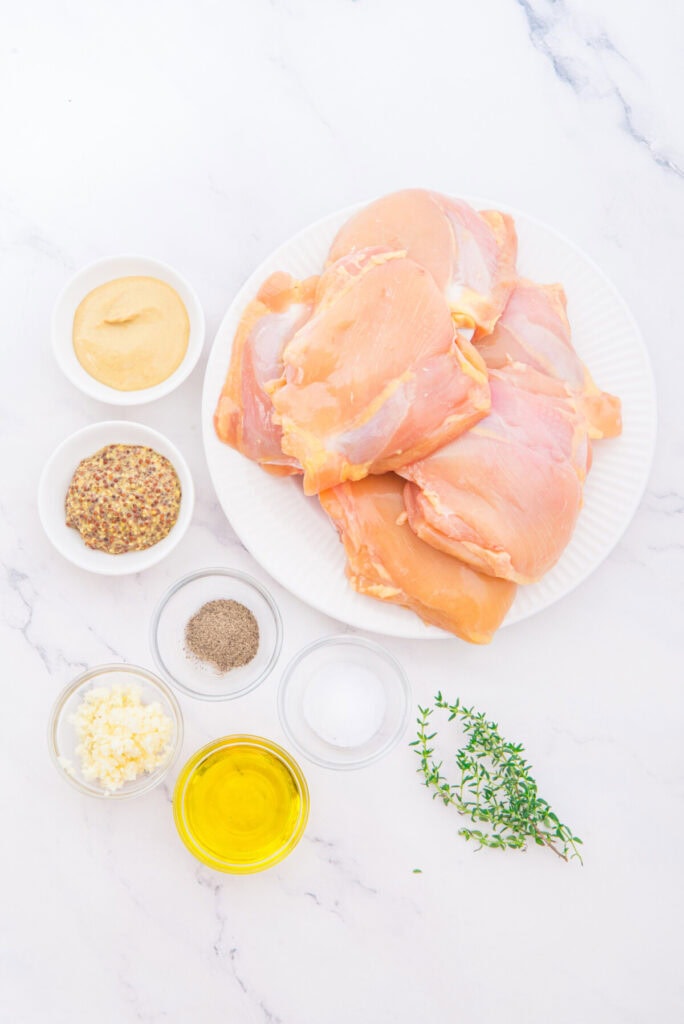
- 3 tablespoons Dijon mustard – This gives the chicken its smooth, tangy base and creates most of the coating.
- 1 tablespoon whole grain Dijon mustard – The mustard seeds add texture and a slightly rustic feel, but regular Dijon can be used instead.
- 1 teaspoon olive oil – A small amount helps loosen the mustard mixture and encourages an even coating on the chicken.
- 1 teaspoon garlic, minced – Freshly minced garlic gives the mustard mixture a mellow savory depth as it roasts.
- ¼ teaspoon salt – A little salt brings the mustard, garlic, and chicken together without overwhelming the natural flavor of the thighs.
- ¼ teaspoon black pepper – Pepper adds gentle warmth and balances the tang of the mustard.
- 2 pounds or 6 skinless chicken thighs – Thighs stay juicy during the longer oven time and absorb the mustard coating beautifully.
- Fresh thyme, for garnish – A few fresh leaves add color and a light herbal aroma right before serving.
How to Make Mustard Chicken Thighs
Step 1: Preheat the Oven
Set your oven to 350°F before you start mixing anything. Giving the oven time to heat fully matters because you want the chicken to begin cooking evenly as soon as the casserole dish goes inside.
While the oven warms, grab a large mixing bowl and a casserole dish big enough to hold all six thighs in one layer. Having everything ready now keeps the rest of the process calm, which I appreciate when dinner hour already feels a little noisy.
Step 2: Mix the Mustard Coating
Add the Dijon mustard, whole grain Dijon mustard, olive oil, minced garlic, salt, and black pepper to the large bowl. Stir everything together until the olive oil and seasonings are evenly worked into the mustard.
You are looking for a thick, spoonable mixture with mustard seeds scattered throughout. Take a few extra seconds here to mix thoroughly because an even coating now means every piece of chicken gets the same tangy, garlicky flavor later.
Step 3: Coat the Chicken Thoroughly
Add the skinless chicken thighs to the bowl with the mustard mixture. Use tongs or clean hands to turn each thigh through the mixture until the chicken is coated on every side.
Do not just spoon mustard over the top and call it done. Getting the coating around the edges and underneath the chicken helps the flavor stay with each bite instead of sitting only on the surface.
If the thighs are different sizes, that is completely normal.
Step 4: Arrange the Chicken in the Dish
Transfer the coated chicken thighs to your casserole dish and arrange them in a single layer with the smoother side facing down. Give each thigh a little room instead of piling or overlapping the pieces.
That space lets hot air move around the chicken and helps it roast instead of steaming. Scrape any useful mustard mixture toward one side of the bowl so you can use a little more after the chicken is flipped.
Step 5: Bake the First Side
Place the casserole dish in the preheated oven and bake the chicken at 350°F for 20 minutes. During this first stretch, the thighs begin releasing their juices and the mustard coating starts settling onto the meat.
The kitchen will gradually pick up that warm garlic and mustard smell, which is usually the moment somebody in my house wanders in to ask when dinner will be ready.
Step 6: Flip and Brush the Chicken
After 20 minutes, carefully pull the casserole dish from the oven and place it on a heat safe surface. Use clean tongs to turn each chicken thigh so the smoother side is now facing up.
Brush the tops with additional mustard mixture. For food safety, only use mixture that has not been saved for serving raw or that will continue cooking with the chicken.
The goal is simply to refresh that coating so the top develops plenty of savory mustard flavor during the final bake.
Step 7: Finish Baking Until Juicy
Return the casserole dish to the oven and bake for about 25 minutes more. Chicken thigh sizes vary, so begin checking the thickest piece near the end of the cooking time.
Insert an instant read thermometer into the thickest part without pressing it against the dish. The chicken is ready when it reaches 165°F.
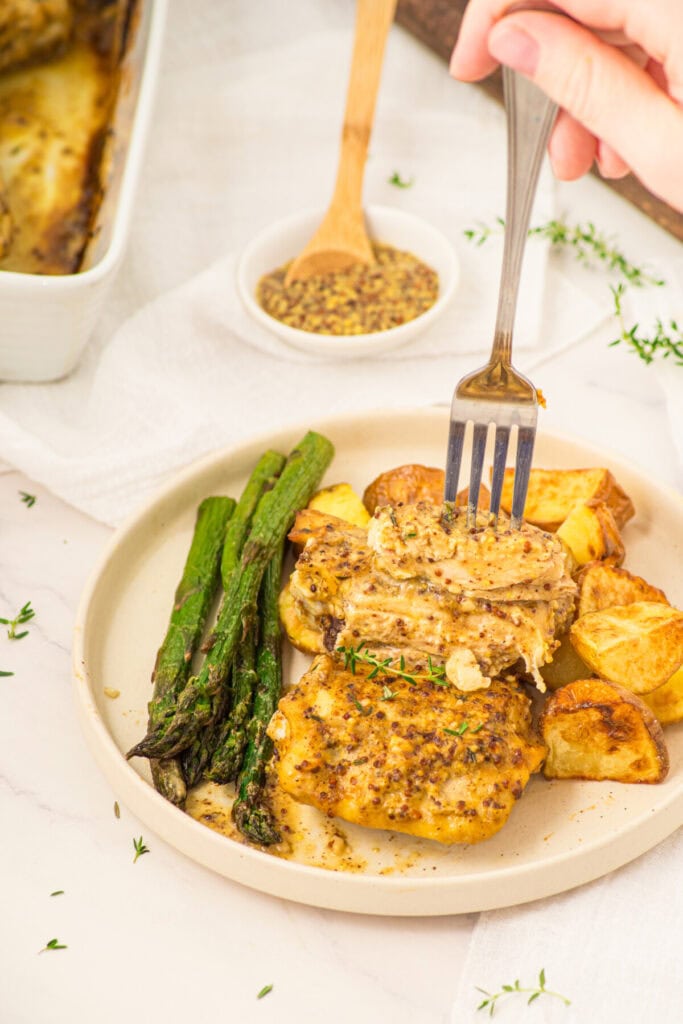
Once it is cooked through, the meat should look juicy and tender, with the mustard coating clinging to the surface.
Step 8: Garnish and Serve
Remove the casserole dish from the oven and let the chicken rest for a few minutes before serving. That short rest gives the juices inside the meat a chance to settle rather than immediately running onto the plate.
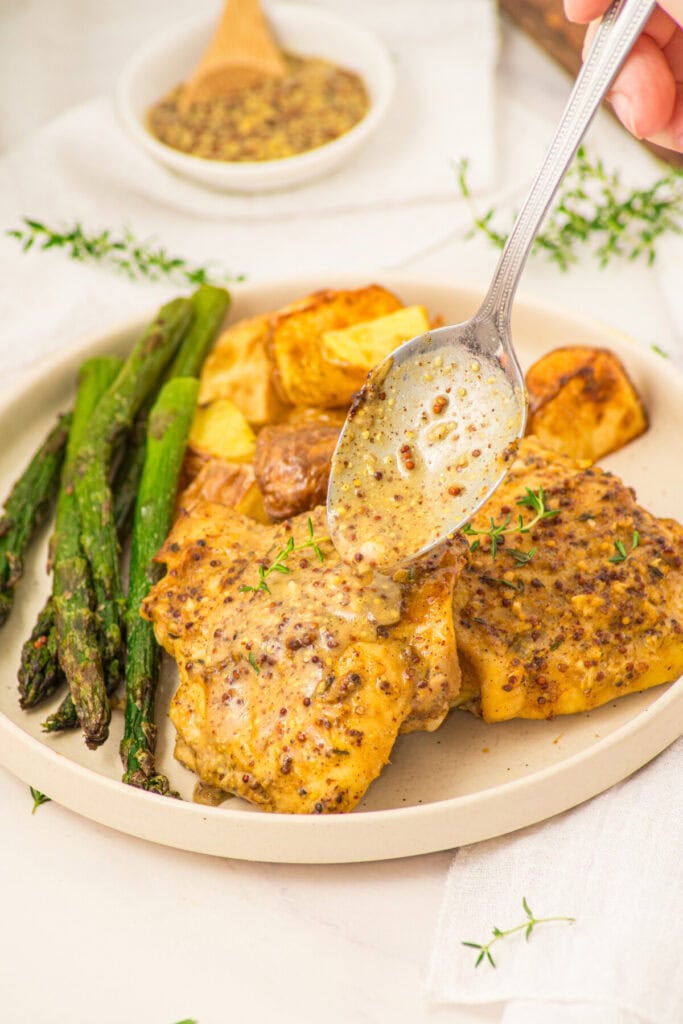
Sprinkle fresh thyme over the top just before bringing it to the table. I like serving the chicken straight from the casserole dish on busy nights because those golden mustard coated thighs already look inviting without any extra fuss.
Substitutions
- Regular Dijon mustard: If you do not have whole grain mustard, use an extra tablespoon of smooth Dijon and the chicken will still have plenty of tangy mustard flavor.
- Yellow mustard: You can replace a small portion of the Dijon with yellow mustard for a milder, more familiar mustard taste, though the final flavor will be less complex.
- Boneless chicken thighs: Boneless thighs can work well, but they may cook faster, so begin checking their internal temperature earlier.
- Chicken breasts: Skinless chicken breasts can be used, although they are leaner and may need a shorter cooking time depending on thickness.
- Dried thyme: If fresh thyme is not available, a light sprinkle of dried thyme can be added to the mustard mixture before baking.
- Avocado oil: Avocado oil can replace the olive oil in the same amount if that is what you normally keep in your pantry.
Variations
- Honey mustard chicken: Stir a tablespoon of honey into the mustard mixture for a sweeter coating that still keeps the tangy Dijon character.
- Herb mustard chicken: Add chopped fresh rosemary or thyme to the mustard mixture before coating the chicken for a more aromatic dinner.
- Garlic lover’s version: Increase the minced garlic to 2 teaspoons if your family enjoys a stronger roasted garlic flavor.
- Smoky mustard chicken: Add a small pinch of smoked paprika to the coating for gentle smokiness and a warmer color.
- Lemon mustard chicken: Add a teaspoon of fresh lemon juice to brighten the coating and give the finished chicken a fresh, lightly citrusy edge.
- Creamy mustard serving sauce: Stir a spoonful of Dijon into warm cream in a separate saucepan and serve a little alongside the cooked chicken for an extra rich dinner.
Tips and Tricks
- Use a roomy casserole dish: Keeping the thighs in one layer helps them roast evenly and keeps them from sitting in too much trapped steam.
- Coat every surface: Turn the chicken thoroughly in the mustard mixture so the seasoning reaches more than just the tops.
- Watch the thermometer: Chicken thigh thickness can vary quite a bit, so internal temperature is more dependable than cooking time alone.
- Check the thickest thigh: The largest piece usually takes the longest, making it the best one to test when you think dinner is ready.
- Give the chicken a brief rest: A few minutes on the counter after baking helps the meat stay juicy when you cut into it.
- Do not crowd the dish: Space between the thighs promotes better roasting and keeps the coating from becoming watery.
- Use clean utensils after handling raw chicken: Wash or replace tongs, brushes, and utensils that touched uncooked chicken before using them with the finished meal.
- Save the pan juices: Spoon a little of the warm juice from the casserole dish over rice or mashed potatoes because there is plenty of mustard and chicken flavor hiding there.
FAQs
Can I use only regular Dijon mustard?
Yes. If whole grain Dijon is not in your refrigerator, simply use 4 tablespoons of regular Dijon mustard in total.
You will lose the little mustard seeds and some of that pleasant texture, but the overall flavor will still be savory, tangy, and delicious with chicken thighs.
How do I know when the chicken thighs are done?
The most reliable method is an instant read thermometer. Insert it into the thickest part of the largest chicken thigh and look for an internal temperature of 165°F.
Since chicken thighs can vary in size, one batch may need a few more minutes than another. A thermometer takes the guesswork out of it and helps you avoid undercooking or leaving the chicken in the oven much longer than necessary.
Can I marinate the chicken ahead of time?
Yes. You can coat the chicken in the mustard mixture, cover it, and refrigerate it for several hours before baking.
This is handy on evenings when you know the dinner hour will be hectic. I like anything that lets me do five or ten minutes of work earlier in the day and feel slightly more organized when everyone starts asking what is for dinner.
Can I make Mustard Chicken Thighs with bone in chicken?
You can, but bone in thighs generally require additional cooking time. Keep the oven at 350°F and cook until the thickest part of the chicken reaches 165°F.
Because size and thickness vary, rely on the thermometer rather than trying to match the exact timing used for skinless thighs in the original recipe.
Is the mustard flavor very strong?
The mustard is definitely noticeable, but baking softens its sharpness. Dijon becomes savory and mellow around the edges as it cooks with the chicken juices and garlic.
If your family is cautious about mustard, using all smooth Dijon instead of whole grain can give the coating a more uniform texture while keeping the same general character.
Can I double this recipe?
Yes, as long as you have enough baking space to keep the chicken in a single layer. Use two casserole dishes if necessary rather than crowding a large amount of chicken into one pan.
You want the heat to circulate around the thighs so they roast nicely and cook evenly.
Serving Ideas
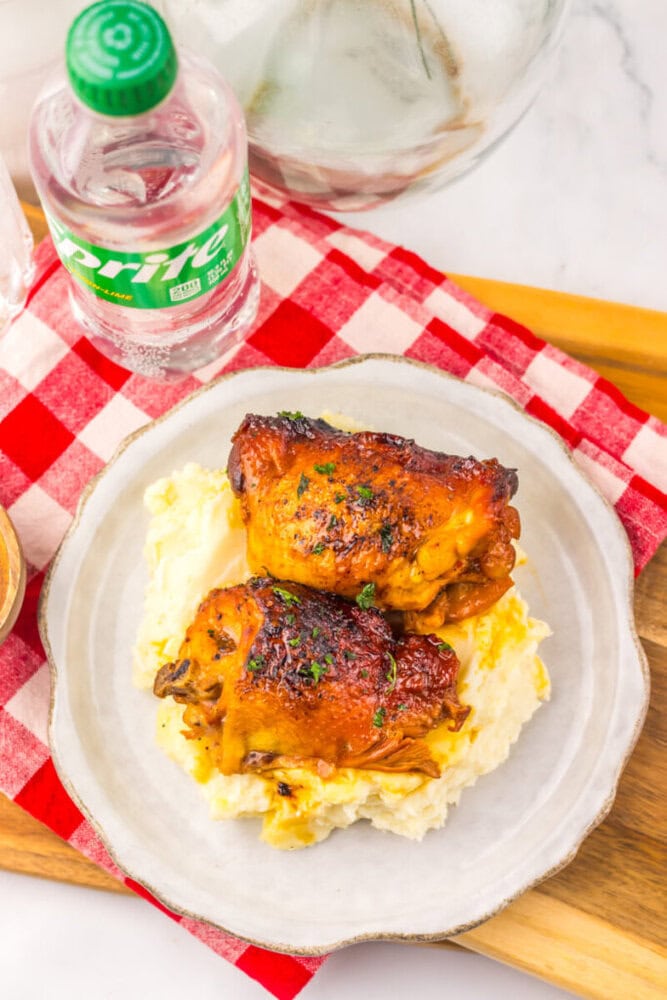
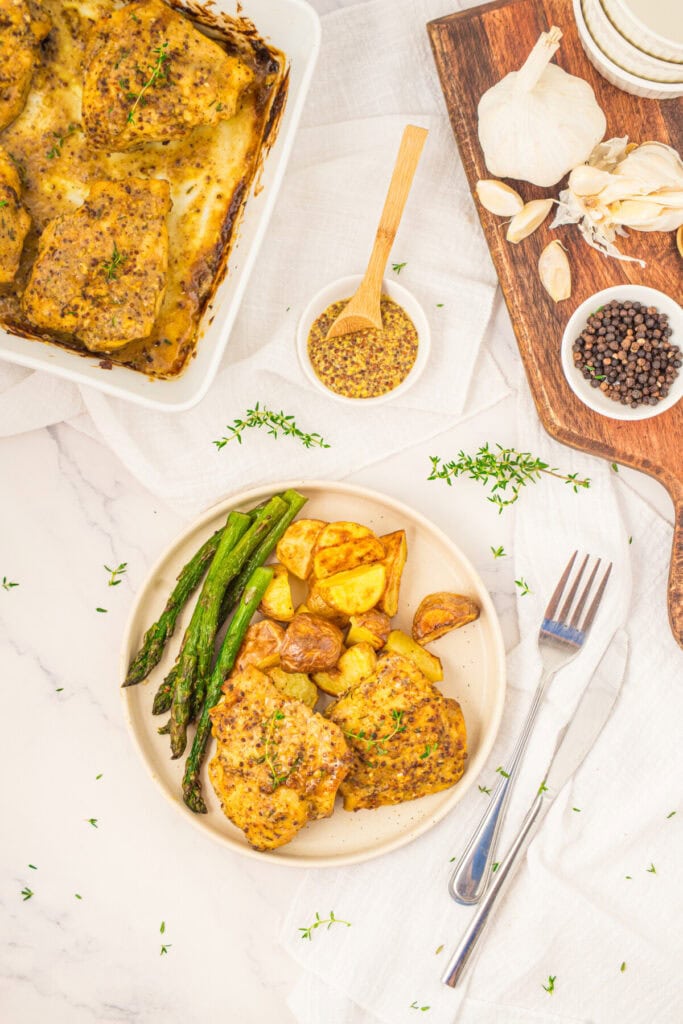
- Mashed potatoes: Spoon a little of the mustard scented pan juice over fluffy mashed potatoes and serve the chicken right beside them.
- Roasted vegetables: Carrots, broccoli, green beans, Brussels sprouts, or cauliflower make an easy vegetable side while keeping dinner simple.
- Steamed rice: A bowl of warm rice catches the savory juices from the chicken and turns a handful of ingredients into a filling family meal.
- Simple green salad: Crisp lettuce, cucumber, tomatoes, and a light vinaigrette make a fresh contrast to the rich chicken thighs.
- Buttered noodles: Plain noodles with a little butter give picky eaters something familiar and pair nicely with the mustard coated chicken.
- Roasted potatoes: Crispy roasted potatoes are especially good here because their browned edges play nicely with the tangy mustard coating.
- Crusty bread: A warm piece of bread is useful for soaking up every last spoonful of juice left in the casserole dish.
Storage and Make Ahead Tips
- Refrigerator storage: Let the cooked chicken cool, then store it in an airtight container in the refrigerator for 3 to 4 days.
- Make ahead preparation: Mix the mustard coating and toss it with the chicken several hours before dinner, then keep everything covered in the refrigerator until you are ready to bake.
- Reheating in the oven: Place the chicken in a covered baking dish and warm it at 350°F until heated through, adding a small spoonful of water or pan juices if it looks dry.
- Microwave reheating: Warm individual portions in short intervals and cover the chicken loosely so it retains more moisture.
- Lunch preparation: Slice leftover chicken and pack it with rice, greens, roasted vegetables, or potatoes for an easy next day lunch.
- Freezer option: Cooked chicken can be frozen in a tightly sealed freezer container, although the mustard coating may be slightly softer after thawing and reheating.
Mustard Chicken Thighs
Ingredients
- 3 tablespoons Dijon mustard
- 1 tablespoon whole grain Dijon mustard (regular Dijon mustard can be substituted)
- 1 teaspoon olive oil
- 1 teaspoon garlic (minced)
- ¼ teaspoon salt
- ¼ teaspoon black pepper
- 2 pounds skinless chicken thighs (about 6 chicken thighs)
- fresh thyme (for garnish)
✉ Never miss a recipe — grab Chicken Recipes Cookbook free
Drop your email and we’ll take care of the rest
Get It NowInstructions
- Step 1: Preheat the Oven – Set your oven to 350°F before you start mixing anything. Giving the oven time to heat fully matters because you want the chicken to begin cooking evenly as soon as the casserole dish goes inside. While the oven warms, grab a large mixing bowl and a casserole dish big enough to hold all six thighs in one layer. Having everything ready now keeps the rest of the process calm, which I appreciate when dinner hour already feels a little noisy.
- Step 2: Mix the Mustard Coating – Add the Dijon mustard, whole grain Dijon mustard, olive oil, minced garlic, salt, and black pepper to the large bowl. Stir everything together until the olive oil and seasonings are evenly worked into the mustard. You are looking for a thick, spoonable mixture with mustard seeds scattered throughout. Take a few extra seconds here to mix thoroughly because an even coating now means every piece of chicken gets the same tangy, garlicky flavor later.
- Step 3: Coat the Chicken Thoroughly – Add the skinless chicken thighs to the bowl with the mustard mixture. Use tongs or clean hands to turn each thigh through the mixture until the chicken is coated on every side. Do not just spoon mustard over the top and call it done. Getting the coating around the edges and underneath the chicken helps the flavor stay with each bite instead of sitting only on the surface. If the thighs are different sizes, that is completely normal.
- Step 4: Arrange the Chicken in the Dish – Transfer the coated chicken thighs to your casserole dish and arrange them in a single layer with the smoother side facing down. Give each thigh a little room instead of piling or overlapping the pieces. That space lets hot air move around the chicken and helps it roast instead of steaming. Scrape any useful mustard mixture toward one side of the bowl so you can use a little more after the chicken is flipped.
- Step 5: Bake the First Side – Place the casserole dish in the preheated oven and bake the chicken at 350°F for 20 minutes. During this first stretch, the thighs begin releasing their juices and the mustard coating starts settling onto the meat. The kitchen will gradually pick up that warm garlic and mustard smell, which is usually the moment somebody in my house wanders in to ask when dinner will be ready.
- Step 6: Flip and Brush the Chicken – After 20 minutes, carefully pull the casserole dish from the oven and place it on a heat safe surface. Use clean tongs to turn each chicken thigh so the smoother side is now facing up. Brush the tops with additional mustard mixture. For food safety, only use mixture that has not been saved for serving raw or that will continue cooking with the chicken. The goal is simply to refresh that coating so the top develops plenty of savory mustard flavor during the final bake.
- Step 7: Finish Baking Until Juicy – Return the casserole dish to the oven and bake for about 25 minutes more. Chicken thigh sizes vary, so begin checking the thickest piece near the end of the cooking time. Insert an instant read thermometer into the thickest part without pressing it against the dish. The chicken is ready when it reaches 165°F. Once it is cooked through, the meat should look juicy and tender, with the mustard coating clinging to the surface.
- Step 8: Garnish and Serve – Remove the casserole dish from the oven and let the chicken rest for a few minutes before serving. That short rest gives the juices inside the meat a chance to settle rather than immediately running onto the plate. Sprinkle fresh thyme over the top just before bringing it to the table. I like serving the chicken straight from the casserole dish on busy nights because those golden mustard coated thighs already look inviting without any extra fuss.
Notes
Substitutions
- Regular Dijon mustard: If you do not have whole grain mustard, use an extra tablespoon of smooth Dijon and the chicken will still have plenty of tangy mustard flavor.
- Yellow mustard: You can replace a small portion of the Dijon with yellow mustard for a milder, more familiar mustard taste, though the final flavor will be less complex.
- Boneless chicken thighs: Boneless thighs can work well, but they may cook faster, so begin checking their internal temperature earlier.
- Chicken breasts: Skinless chicken breasts can be used, although they are leaner and may need a shorter cooking time depending on thickness.
- Dried thyme: If fresh thyme is not available, a light sprinkle of dried thyme can be added to the mustard mixture before baking.
- Avocado oil: Avocado oil can replace the olive oil in the same amount if that is what you normally keep in your pantry.
Variations
- Honey mustard chicken: Stir a tablespoon of honey into the mustard mixture for a sweeter coating that still keeps the tangy Dijon character.
- Herb mustard chicken: Add chopped fresh rosemary or thyme to the mustard mixture before coating the chicken for a more aromatic dinner.
- Garlic lover’s version: Increase the minced garlic to 2 teaspoons if your family enjoys a stronger roasted garlic flavor.
- Smoky mustard chicken: Add a small pinch of smoked paprika to the coating for gentle smokiness and a warmer color.
- Lemon mustard chicken: Add a teaspoon of fresh lemon juice to brighten the coating and give the finished chicken a fresh, lightly citrusy edge.
- Creamy mustard serving sauce: Stir a spoonful of Dijon into warm cream in a separate saucepan and serve a little alongside the cooked chicken for an extra rich dinner.
Tips and Tricks
- Use a roomy casserole dish: Keeping the thighs in one layer helps them roast evenly and keeps them from sitting in too much trapped steam.
- Coat every surface: Turn the chicken thoroughly in the mustard mixture so the seasoning reaches more than just the tops.
- Watch the thermometer: Chicken thigh thickness can vary quite a bit, so internal temperature is more dependable than cooking time alone.
- Check the thickest thigh: The largest piece usually takes the longest, making it the best one to test when you think dinner is ready.
- Give the chicken a brief rest: A few minutes on the counter after baking helps the meat stay juicy when you cut into it.
- Do not crowd the dish: Space between the thighs promotes better roasting and keeps the coating from becoming watery.
- Use clean utensils after handling raw chicken: Wash or replace tongs, brushes, and utensils that touched uncooked chicken before using them with the finished meal.
- Save the pan juices: Spoon a little of the warm juice from the casserole dish over rice or mashed potatoes because there is plenty of mustard and chicken flavor hiding there.
Serving Ideas
- Mashed potatoes: Spoon a little of the mustard scented pan juice over fluffy mashed potatoes and serve the chicken right beside them.
- Roasted vegetables: Carrots, broccoli, green beans, Brussels sprouts, or cauliflower make an easy vegetable side while keeping dinner simple.
- Steamed rice: A bowl of warm rice catches the savory juices from the chicken and turns a handful of ingredients into a filling family meal.
- Simple green salad: Crisp lettuce, cucumber, tomatoes, and a light vinaigrette make a fresh contrast to the rich chicken thighs.
- Buttered noodles: Plain noodles with a little butter give picky eaters something familiar and pair nicely with the mustard coated chicken.
- Roasted potatoes: Crispy roasted potatoes are especially good here because their browned edges play nicely with the tangy mustard coating.
- Crusty bread: A warm piece of bread is useful for soaking up every last spoonful of juice left in the casserole dish.
Storage and Make Ahead Tips
- Refrigerator storage: Let the cooked chicken cool, then store it in an airtight container in the refrigerator for 3 to 4 days.
- Make ahead preparation: Mix the mustard coating and toss it with the chicken several hours before dinner, then keep everything covered in the refrigerator until you are ready to bake.
- Reheating in the oven: Place the chicken in a covered baking dish and warm it at 350°F until heated through, adding a small spoonful of water or pan juices if it looks dry.
- Microwave reheating: Warm individual portions in short intervals and cover the chicken loosely so it retains more moisture.
- Lunch preparation: Slice leftover chicken and pack it with rice, greens, roasted vegetables, or potatoes for an easy next day lunch.
- Freezer option: Cooked chicken can be frozen in a tightly sealed freezer container, although the mustard coating may be slightly softer after thawing and reheating.
Private Notes
✉ Never miss a recipe — grab Chicken Recipes Cookbook free
Drop your email and we’ll take care of the rest
Get It NowFinal Thoughts
There are dinners you make because you have plenty of time, a detailed plan, and the energy to enjoy every little step. Then there are dinners you make because it is 5:30, somebody is hungry, somebody else needs help finding a missing shoe, and you still want everyone sitting down to something warm.
These Mustard Chicken Thighs belong firmly in that second category for me, but they never feel like a compromise.
You get juicy chicken, a tangy Dijon coating, gentle garlic, those little whole grain mustard seeds, and a casserole dish that comes out of the oven smelling like you put serious thought into dinner. Meanwhile, the actual work was a bowl, a quick stir, a flip halfway through cooking, and a thermometer at the end.
That is my favorite kind of family recipe.
Serve it with potatoes when everybody needs comfort food. Add rice when you want something simple.
Throw a salad together when the refrigerator is looking a little empty. However it lands on your table, you have a warm homemade dinner that leaves you enough breathing room to actually sit down and eat it with the people you made it for.
And on a busy night, that feels pretty good.