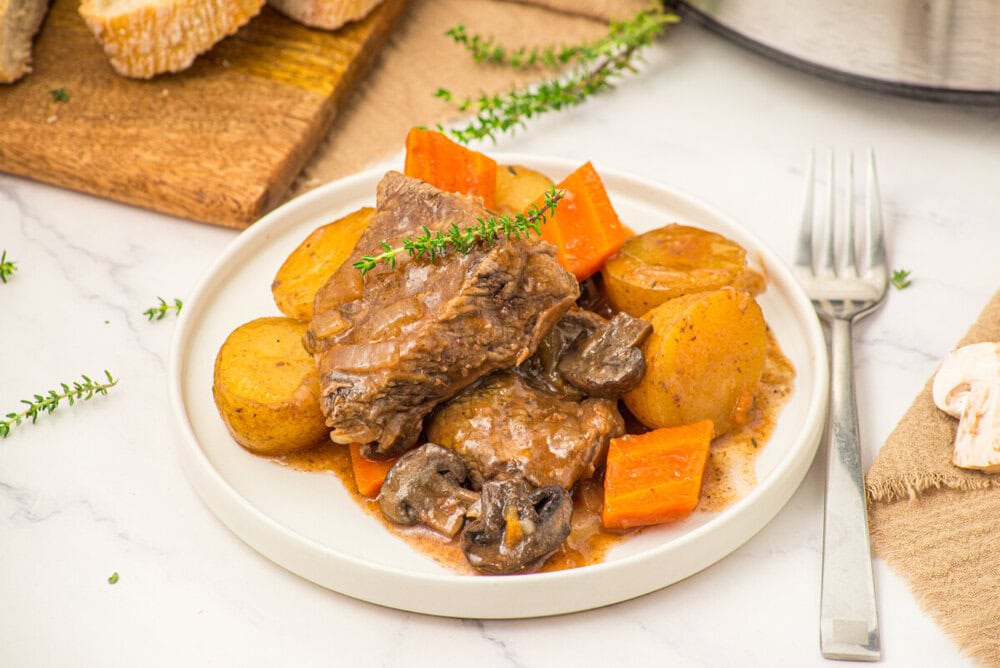
Slow Cooker Beef Pot Roast

There is something about a dinner that smells like it has been cooking all day that makes the whole house feel calmer. On those evenings when everyone is tired, backpacks are still on the floor, and somebody is already asking what is for dinner, that kind of comfort matters.
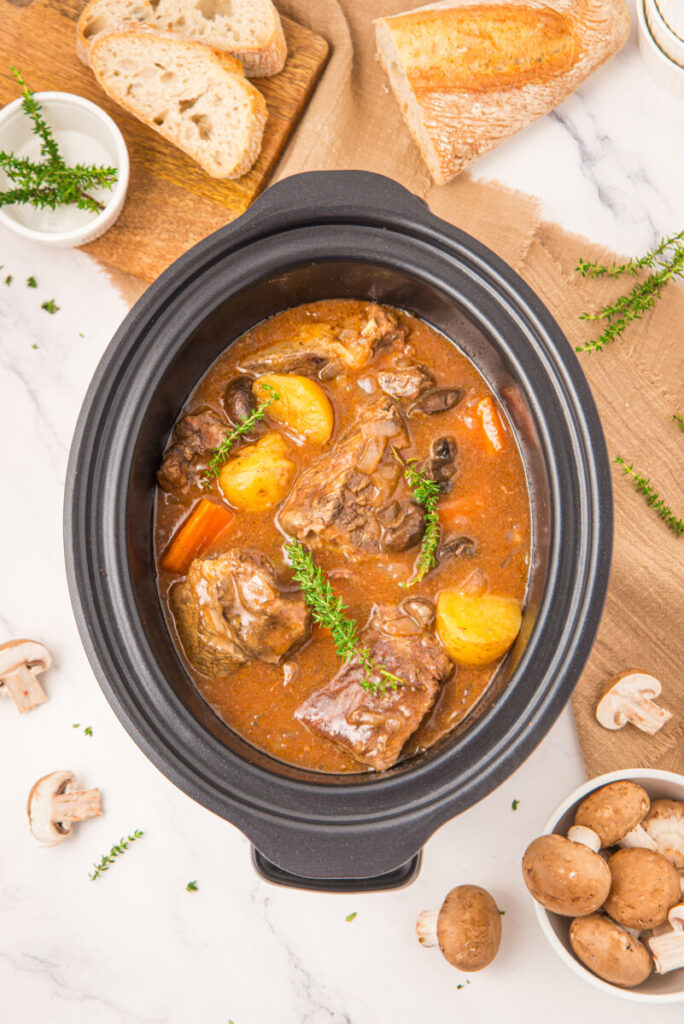
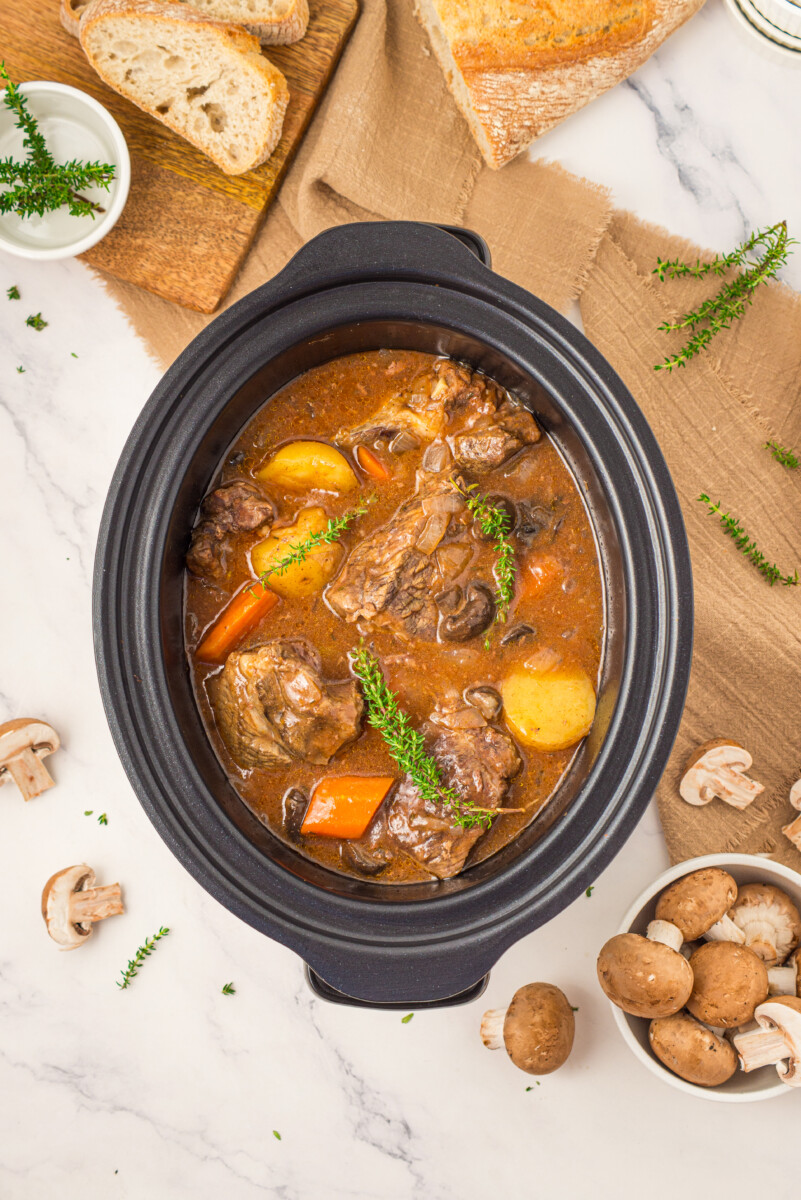
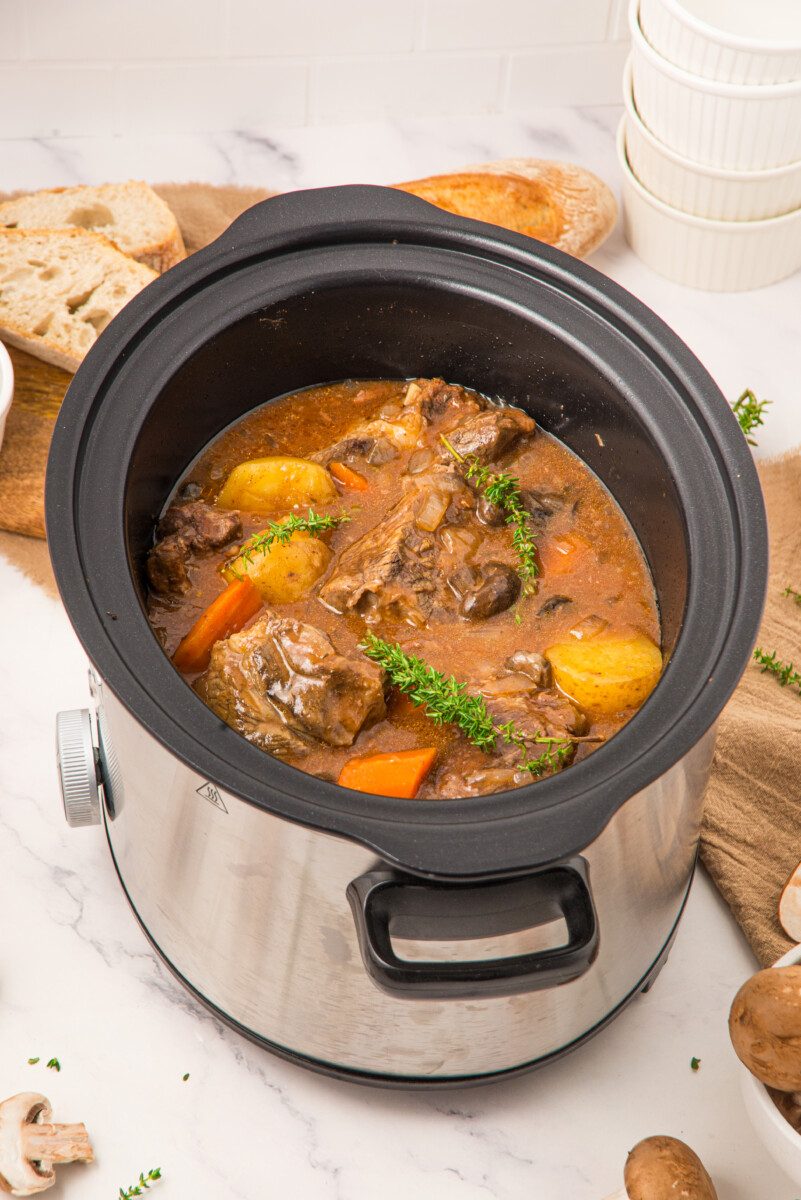
You lift the lid and get a cloud of savory beef, garlic, thyme, and rich broth rolling through the kitchen.
Slow Cooker Beef Pot Roast joined our regular dinner rotation during one of those stretches when the days felt too full and the kids seemed hungry the second they walked through the door. I wanted something hearty and familiar that did not need me standing at the stove while everything else was happening.
✉ Never miss a recipe — grab Beef Recipes Cookbook free
Drop your email and we’ll take care of the rest
Get It NowI needed dinner to mostly take care of itself.
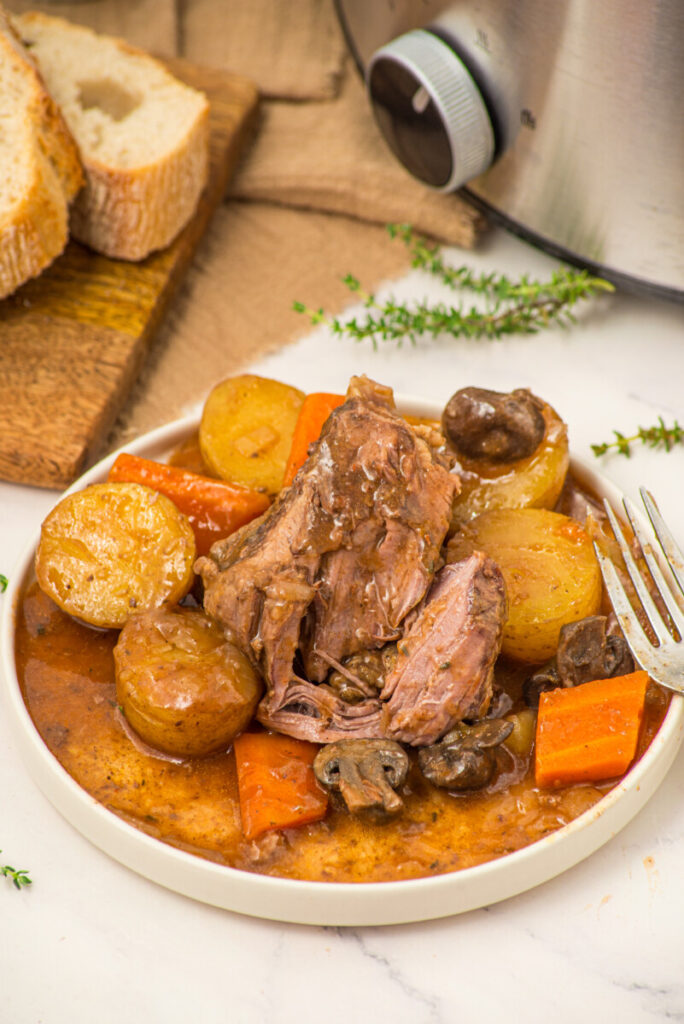
This recipe takes everything you love about an old fashioned pot roast dinner and turns it into one complete slow cooker meal. The beef becomes tender enough to pull apart with a fork, the potatoes turn soft and buttery, the carrots soak up that savory broth, and the mushrooms add a deep, earthy richness.
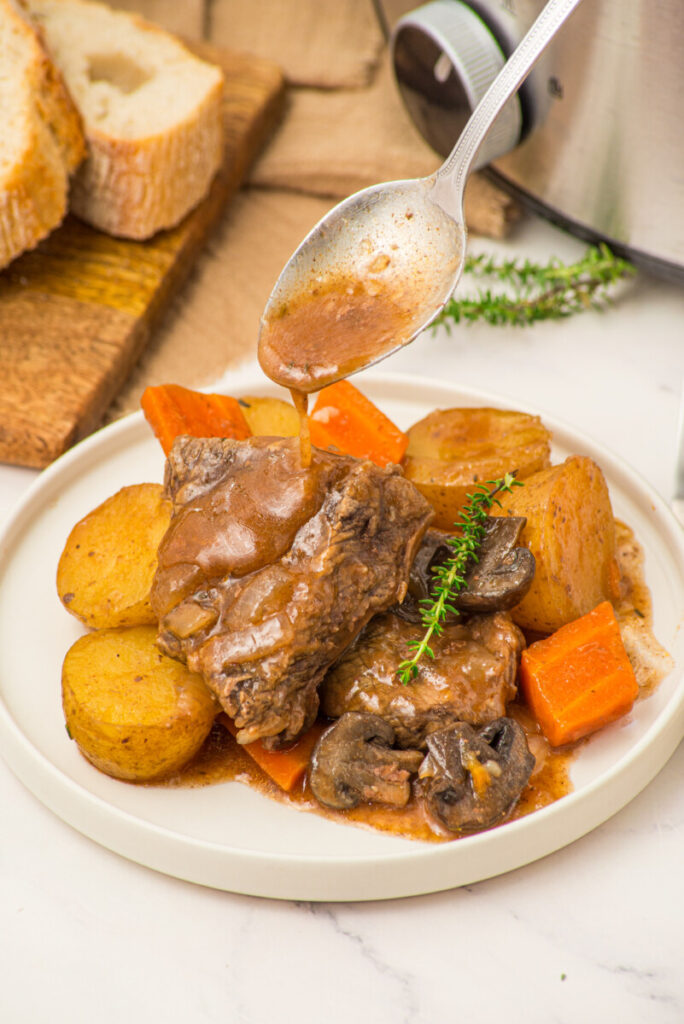
The thickened gravy wraps around every bite. It feels like Sunday dinner but works beautifully on a random Tuesday night.
That is the part I appreciate most as a dad. You load up the slow cooker, get on with your day, and let time handle the hard part while the kitchen slowly starts smelling like you have been working on dinner for hours.
It tastes like you tried a whole lot harder than you did, and I have a feeling it will earn a permanent spot in your rotation.
What Is Slow Cooker Beef Pot Roast?
Slow Cooker Beef Pot Roast is the kind of straightforward comfort food that generations of families have gathered around the table for. Beef chuck roast cooks gently with onion, carrots, mushrooms, potatoes, garlic, tomato paste, beef broth, and thyme until the meat becomes deeply savory and tender.
Chuck roast is especially well suited to the slow cooker because it has enough fat and connective tissue to become soft and succulent during a long cooking time. Instead of drying out, it gradually relaxes into the broth until a fork can pull it apart with very little effort.
The vegetables cook right alongside the beef, which means they absorb all those savory juices while also adding their own sweetness and flavor to the pot. At the end, a simple cornstarch slurry turns the cooking liquid into a silky gravy.

For me, that is what makes this meal so practical. You are not juggling a roast in one pan, potatoes in another, vegetables somewhere else, and gravy on the stove.
Dinner is already together, waiting for you in one warm pot.
This recipe serves about six people, takes roughly 10 minutes to prepare, and cooks for about 7 hours on Low or 4 hours on High.
Why You’ll Love This Recipe
- It is a complete family dinner: You get tender beef, potatoes, carrots, mushrooms, onions, and gravy all from the same slow cooker, so there is very little else you need to prepare.
- The prep is genuinely manageable: Most of the work is simply chopping the vegetables, adding everything to the cooker, and letting it cook while you get on with the rest of your day.
- Chuck roast becomes incredibly tender: The long cooking time gives the beef a chance to soften until it practically falls apart when you press it with a fork.
- The gravy tastes like it cooked all day: Beef broth, tomato paste, garlic, onion, thyme, and the juices from the roast come together into a rich sauce that tastes wonderfully deep and savory.
- It is friendly to hungry kids and adults: There are no complicated flavors here, just familiar meat and potatoes comfort food with enough richness to make the grownups happy too.
- Leftovers are worth getting excited about: The beef stays moist in its gravy, and I think the flavors become even more settled and satisfying after a night in the refrigerator.
When to Serve This Recipe
- Busy weekdays: Start it earlier in the day and dinner can be ready when everyone finally lands back at home.
- Cold evenings: Few meals hit the spot like tender beef, soft potatoes, carrots, and warm gravy when the weather outside has turned chilly.
- Sunday family dinner: It has that traditional Sunday roast feeling without asking you to spend the afternoon checking the oven.
- Casual company: This is a comfortable meal for feeding relatives or friends because you can do most of the work before anyone arrives.
- Meal prep days: Make a batch when you have time and portion the leftovers with plenty of gravy for satisfying lunches or dinners later in the week.
Ingredients
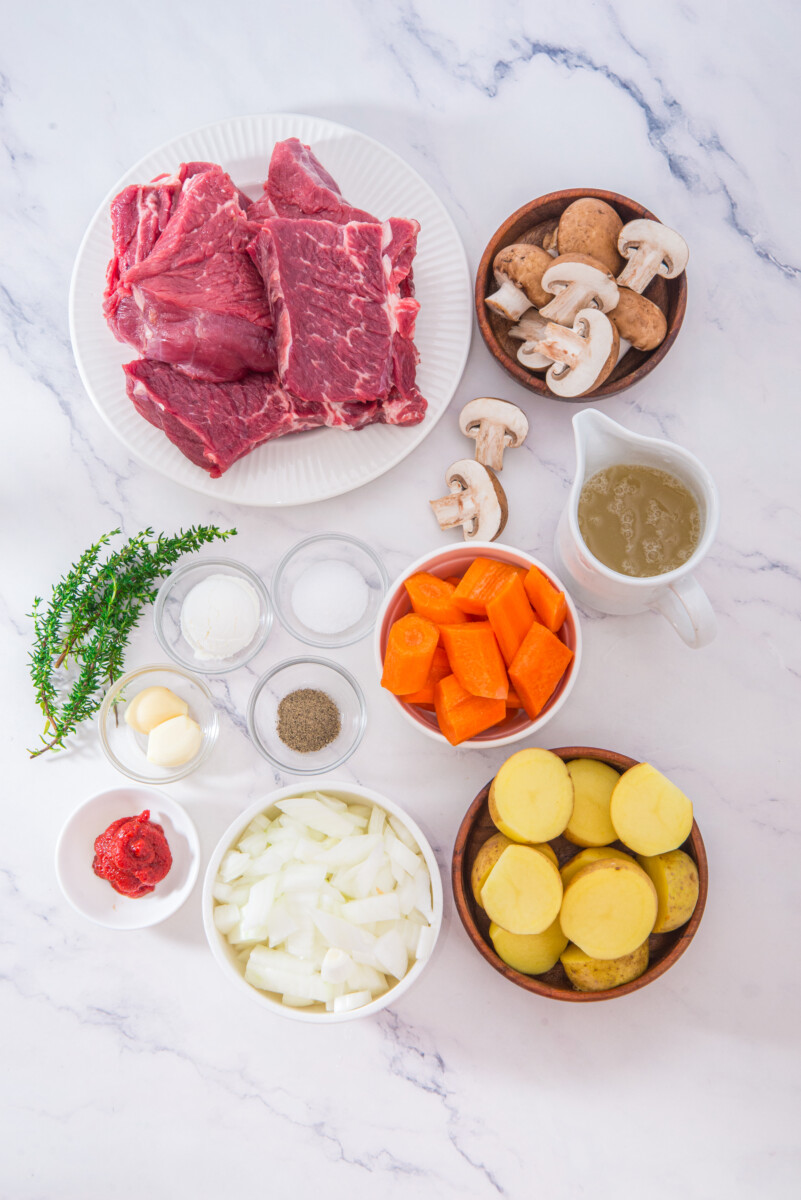
- 1 large onion, diced: Onion forms the savory base of the cooking liquid and becomes wonderfully soft during the long cook.
- 1 pound carrots, cut into chunks: Keep the pieces fairly substantial so they stay tender without disappearing into the sauce.
- 7 ounces mushrooms, halved: Mushrooms soak up the beef juices and give the finished gravy a deeper, earthy flavor.
- 1 pound baby potatoes, halved: Baby potatoes hold their shape nicely, but regular potatoes cut into similar sized pieces work too.
- 2 pounds beef chuck roast: Chuck is my choice here because its marbling and connective tissue become beautifully tender during slow cooking.
- 1 teaspoon salt: This seasons the beef from the beginning, but you can taste the finished gravy and add more before serving.
- 1/2 teaspoon black pepper: Freshly ground black pepper adds gentle warmth without making the dish spicy.
- 2 cloves garlic, minced: Garlic melts into the broth and gives the gravy another layer of savory flavor.
- 2 tablespoons tomato paste: Tomato paste adds richness, color, and a subtle sweetness that helps round out the beef broth.
- 1 cup beef broth: This creates the base of the gravy and provides enough moisture for the beef and vegetables to cook gently.
- Fresh thyme: A few sprigs add a classic herbal note that works especially well with beef, mushrooms, carrots, and potatoes.
- 3 tablespoons cornstarch: Cornstarch thickens the cooking liquid into a glossy gravy right before serving.
- 2 tablespoons cold water: Mixing the cornstarch with cold water first keeps it from forming little lumps in your gravy.
How to Make Slow Cooker Beef Pot Roast
Step 1: Build the Vegetable Base
Add the diced onion, carrot chunks, halved mushrooms, and halved baby potatoes to the bottom of your slow cooker. I like putting the vegetables underneath the roast because they sit right in the cooking liquid and collect all those wonderful beef juices as everything cooks.
Try to keep your potato and carrot pieces reasonably similar in size so they finish cooking at about the same time. There is no need to arrange everything neatly.
This is one of those dinners where a good rough chop and a quick toss into the pot are exactly what you want.
Step 2: Add and Season the Beef
Place the beef chuck roast on top of the vegetables. You can leave the roast whole or cut it into a few large pieces if that fits your slow cooker better.

Sprinkle the salt and black pepper evenly over the beef, then add the minced garlic and tomato paste. I like to spread the tomato paste over the top of the meat a little so it does not remain in one big spoonful.
As the roast cooks, the garlic and tomato paste will work their way into the broth and help create that rich, dark gravy you want with pot roast.
Step 3: Pour in the Broth and Thyme
Pour the beef broth over and around the roast, then tuck a few sprigs of fresh thyme into the slow cooker. Do not worry if the broth does not completely cover the beef.
A slow cooker traps moisture extremely well, and the roast itself will release additional juices as it cooks. The vegetables underneath also soften and contribute liquid.
At this point, you should already have everything you need for that familiar pot roast smell that eventually starts drifting out of the kitchen and making everybody suddenly very interested in when dinner will be ready.
Step 4: Let the Slow Cooker Do the Work
Cover the slow cooker and cook on Low for about 7 hours or on High for about 4 hours. If you have the time, I prefer the Low setting because the longer gentle cooking gives the chuck roast plenty of time to become tender.
Try not to keep lifting the lid to check on it. Every peek lets heat escape and can stretch out the cooking time.
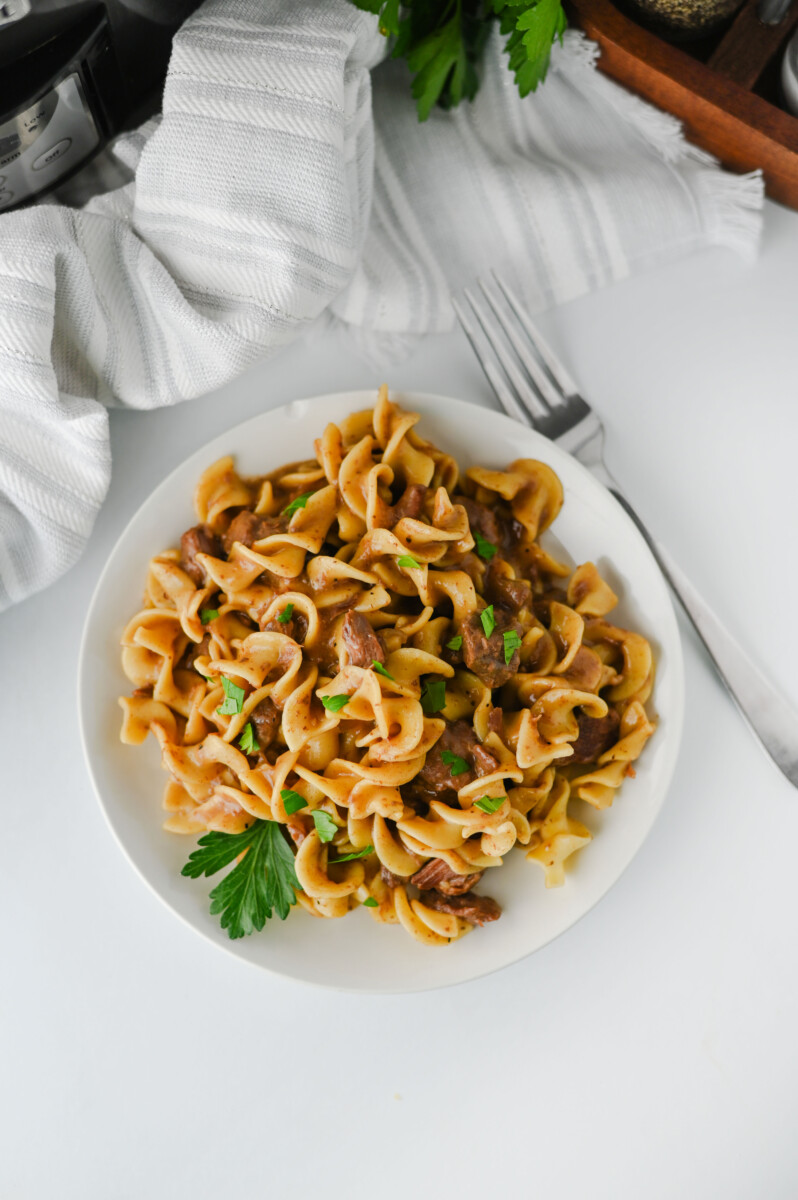
You can give everything a gentle stir around the halfway point if you want, but it is not necessary. I usually leave it alone and let the cooker earn its counter space.
Step 5: Check the Beef for Tenderness
When the cooking time is nearly finished, test the beef with a fork. You are looking for meat that gives easily and pulls apart without a fight.
If you cooked it on High for 4 hours and the roast still feels firm, give it more time. Pot roast can be funny that way.
A tough roast often does not mean it has cooked too long. It usually means the connective tissue has not had enough time to soften yet.
Depending on the thickness of your roast and your particular slow cooker, another 30 to 60 minutes can make a big difference.
Step 6: Thicken the Gravy
In a small bowl, whisk the cornstarch with the cold water until completely smooth. Pour that mixture into the slow cooker and gently stir it into the cooking liquid.
Try not to break up the potatoes too aggressively while you stir. Cover the slow cooker again and let everything cook for several more minutes, until the broth thickens into a glossy gravy that coats the beef and vegetables.
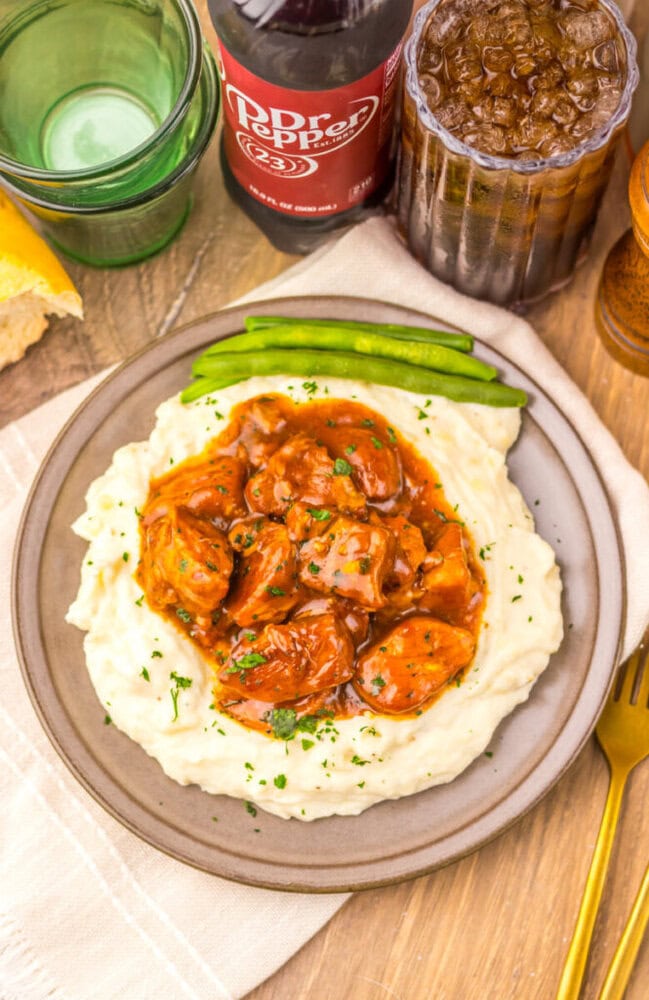
This final little step is worth doing because it changes the liquid from a flavorful broth into the kind of sauce you want to drag a piece of potato through before taking a bite.
Step 7: Finish With Fresh Thyme and Serve
Taste the gravy and adjust the salt and black pepper if needed. Remove any woody thyme stems you can easily see, then sprinkle a little fresh thyme over the pot before serving.
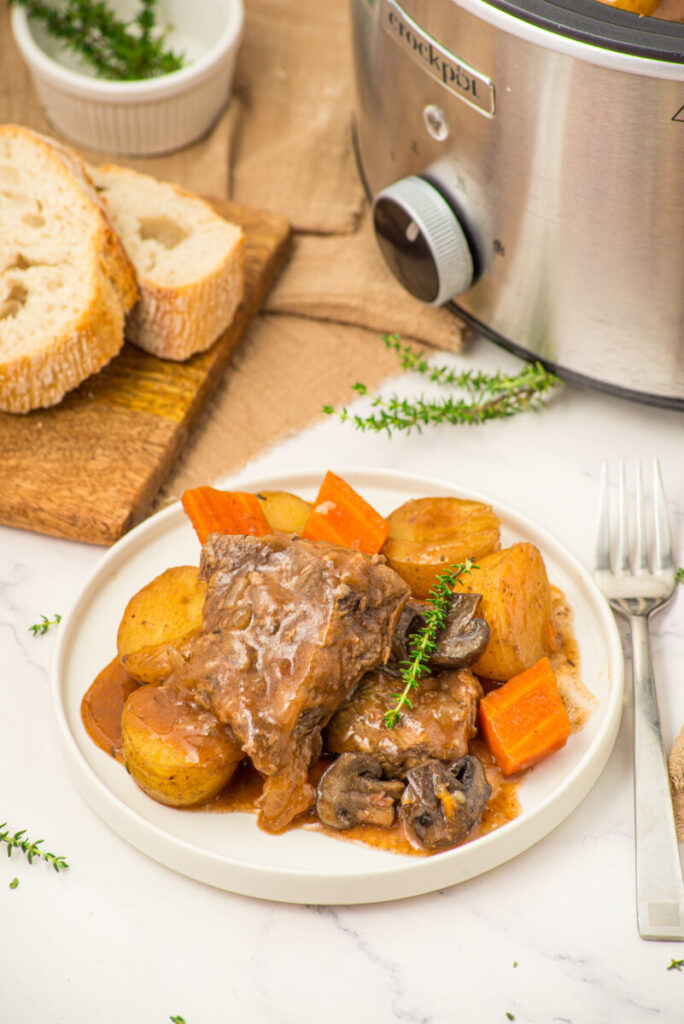
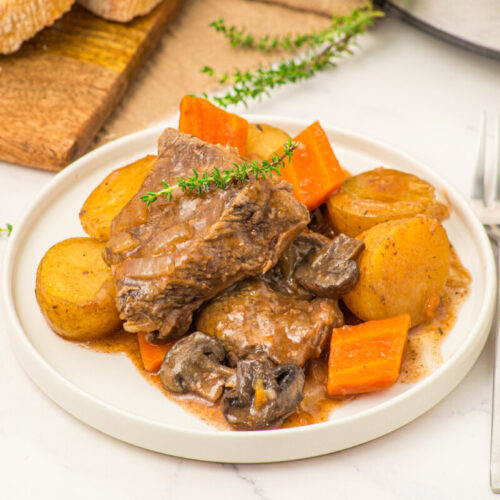
I like to break the beef into generous chunks rather than shredding it completely because those tender pieces look and feel more like a classic pot roast dinner. Spoon the beef into bowls or onto plates with plenty of potatoes, carrots, mushrooms, and onion, then ladle that thick gravy right over everything.
This is the point where my family usually gets noticeably quieter for a few minutes, which I take as a very good review.
Substitutions
- Regular potatoes for baby potatoes: Yukon Gold or red potatoes work nicely as long as you cut them into evenly sized chunks so they cook at the same rate.
- Dried thyme for fresh thyme: If fresh thyme is not available, use about 1 teaspoon dried thyme and stir it into the broth before cooking.
- Extra carrots for mushrooms: If your family does not care for mushrooms, leave them out and add a little more carrot or potato instead.
- Low sodium beef broth for regular broth: This is a good option if you prefer to have more control over the salt level at the end of cooking.
- Arrowroot for cornstarch: Arrowroot can also thicken the gravy, although the texture may be slightly different, so add it gradually until the sauce reaches the consistency you like.
Variations
- Add celery: Cut two or three celery stalks into chunks and add them with the onion for another traditional pot roast flavor.
- Make it extra garlicky: Add one or two additional cloves of minced garlic if your family likes a stronger garlic presence.
- Use pearl onions: Small pearl onions make the finished dish feel a little special and turn sweet and tender as they cook.
- Add peas at the end: Stir in a cup of frozen peas during the final few minutes for a pop of color and a little extra sweetness.
- Give the gravy more herb flavor: Add rosemary along with the thyme for a woodsy flavor that pairs beautifully with beef and potatoes.
Tips and Tricks
- Choose chuck roast: A lean beef cut may sound appealing, but chuck roast is much more forgiving in a slow cooker because the marbling helps the meat stay juicy and tender.
- Cut vegetables generously: Small pieces can become too soft during several hours of cooking, so give your potatoes and carrots enough size to hold up.
- Keep the lid closed: I know that smell makes it tempting to check dinner every hour, but every time you lift the lid you lose heat and moisture.
- Cook until tender, not just until the timer rings: Slow cookers and roasts vary, so use the suggested cooking time as a guide and let the texture of the beef tell you when dinner is really ready.
- Use cold water for the slurry: Cornstarch mixes much more smoothly with cold water, which helps you avoid little white lumps floating through the gravy.
- Season again before serving: Potatoes and carrots absorb seasoning as they cook, so always taste the gravy at the end and add another pinch of salt or pepper if it needs it.
- Keep the beef with the gravy: Whether you are refrigerating leftovers or freezing them, storing the meat in some of its sauce helps keep it moist when you warm it again.
FAQs
Can I Put Raw Beef Straight Into the Slow Cooker?
Yes, you can put the raw chuck roast directly into the slow cooker for this recipe. There is no need to brown it first.
Browning beef in a skillet can add another layer of roasted flavor, so you can certainly do that if you have the time, but I designed this version for the days when getting dinner started quickly matters more. Once the beef has cooked for several hours with the broth, tomato paste, garlic, onion, and thyme, you will still have plenty of savory flavor.
Should the Pot Roast Be Covered With Liquid?
No. You do not need to completely submerge the roast in beef broth.
The slow cooker holds onto steam and moisture, and the beef, mushrooms, onions, and other vegetables release more liquid while they cook. One cup of beef broth gives you a good starting point without turning the finished pot roast into soup.
Once the cornstarch slurry goes in at the end, those cooking juices become a rich gravy.
Why Is My Slow Cooker Pot Roast Still Tough?
It probably needs more cooking time. Chuck roast contains connective tissue that takes time to soften.
Before that process is complete, the beef can feel surprisingly firm even though it has been cooking for hours. Keep cooking until a fork slides in easily and the meat pulls apart with very little pressure.
On Low, this commonly takes around 7 to 8 hours. On High, it may need longer than 4 hours if your roast is particularly thick.
Can I Leave the Chuck Roast Whole?
Absolutely. I often leave it whole when it fits comfortably inside my slow cooker.
Cutting the roast into large pieces can help it cook a little faster and gives you more surface area for the seasoning, but either approach works. If you cook the roast whole, be prepared to give it some additional time if needed.
The important thing is not the exact shape of the meat. You want it tender enough to pull apart easily before serving.
How Do I Keep the Potatoes From Getting Too Soft?
Use baby potatoes or a waxy potato variety and keep the pieces on the larger side. If you are halving baby potatoes, try to choose potatoes that are fairly similar in size.
That gives you a more even result. Very small potato pieces can become soft enough to break apart when you stir in the cornstarch slurry, so I always stir gently during that final step.
Can I Make Slow Cooker Beef Pot Roast Ahead of Time?
Yes, and it reheats very well. You can cook the entire meal, let it cool, and refrigerate the beef, vegetables, and gravy together in an airtight container.
When you are ready to serve it, warm everything gently until hot throughout. Keeping the beef in the gravy is important because that moisture helps protect the meat from drying out.
It is a handy option when you know tomorrow evening is going to be even busier than today.
Serving Ideas
- Warm dinner rolls: A soft roll is excellent for wiping up the last bit of gravy left on the plate.
- Crusty bread: Thick slices of bread give everyone something sturdy to dip into the beef gravy.
- Simple green salad: A crisp salad with a bright vinaigrette gives you a fresh contrast to the rich roast and potatoes.
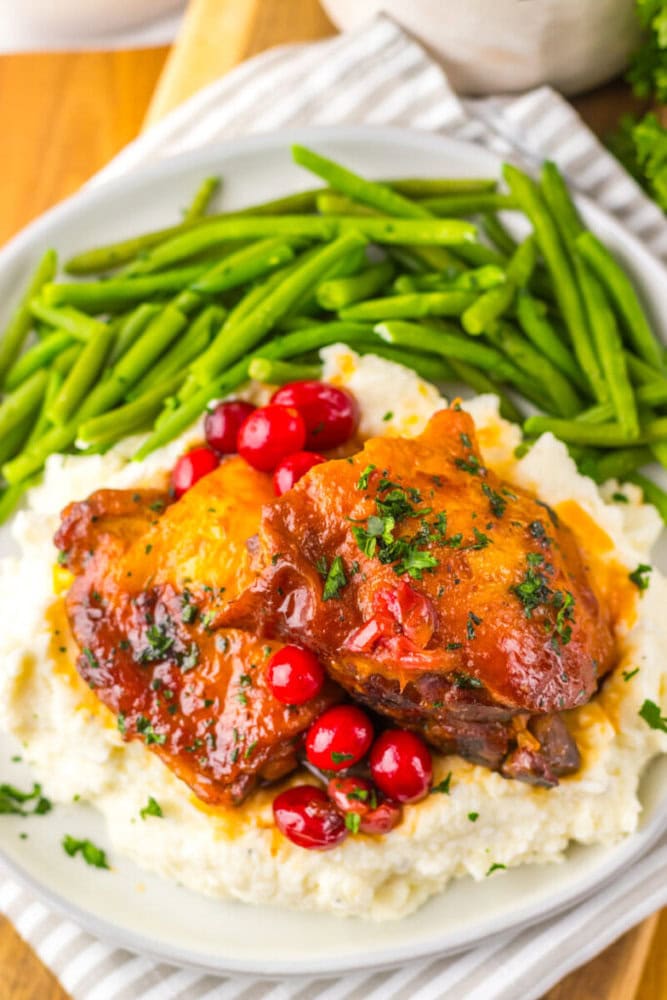
- Green beans: Steamed or roasted green beans are an easy vegetable side that feels right at home next to pot roast.
- Mashed potatoes: There are already potatoes in the slow cooker, but if your family believes there is no such thing as too many potatoes, mashed potatoes underneath the beef and gravy are hard to beat.
Storage and Make Ahead Tips
- Refrigerate leftovers promptly: Let the pot roast cool, then transfer the beef, vegetables, and gravy to an airtight container and refrigerate for up to 4 days.
- Store meat in the sauce: Keep leftover beef surrounded by some gravy so it stays moist instead of drying out in the refrigerator.
- Reheat gently: Warm leftovers on the stove over medium low heat or in the microwave until hot throughout, adding a small splash of beef broth if the gravy has become too thick.
- Freeze for longer storage: The cooked beef and gravy can be frozen for about 2 to 3 months in a freezer safe container.
- Freeze in useful portions: I like dividing leftovers into meal sized containers before freezing so I can thaw only what the family needs.
- Prepare vegetables ahead: If mornings are hectic, chop the onion, carrots, mushrooms, and potatoes the night before and refrigerate them so loading the slow cooker takes only a few minutes the next day.
Slow Cooker Beef Pot Roast
Ingredients
- 1 large onion diced
- 1 lb carrots cut into chunks
- 7 oz mushrooms halved
- 1 lb baby potatoes halved
- 2 lb beef chuck roast
- 1 tsp salt plus more to taste if needed
- ½ tsp black pepper plus more to taste if needed
- 2 cloves garlic minced
- 2 tbsp tomato paste
- 1 cup beef broth
- fresh thyme a few sprigs, plus more for serving
- 3 tbsp cornstarch
- 2 tbsp cold water for mixing with the cornstarch
Instructions
- Step 1: Build the Vegetable Base – Add the diced onion, carrot chunks, halved mushrooms, and halved baby potatoes to the bottom of your slow cooker. I like putting the vegetables underneath the roast because they sit right in the cooking liquid and collect all those wonderful beef juices as everything cooks. Try to keep your potato and carrot pieces reasonably similar in size so they finish cooking at about the same time. There is no need to arrange everything neatly. This is one of those dinners where a good rough chop and a quick toss into the pot are exactly what you want.
- Step 2: Add and Season the Beef – Place the beef chuck roast on top of the vegetables. You can leave the roast whole or cut it into a few large pieces if that fits your slow cooker better. Sprinkle the salt and black pepper evenly over the beef, then add the minced garlic and tomato paste. I like to spread the tomato paste over the top of the meat a little so it does not remain in one big spoonful. As the roast cooks, the garlic and tomato paste will work their way into the broth and help create that rich, dark gravy you want with pot roast.
- Step 3: Pour in the Broth and Thyme – Pour the beef broth over and around the roast, then tuck a few sprigs of fresh thyme into the slow cooker. Do not worry if the broth does not completely cover the beef. A slow cooker traps moisture extremely well, and the roast itself will release additional juices as it cooks. The vegetables underneath also soften and contribute liquid. At this point, you should already have everything you need for that familiar pot roast smell that eventually starts drifting out of the kitchen and making everybody suddenly very interested in when dinner will be ready.
- Step 4: Let the Slow Cooker Do the Work – Cover the slow cooker and cook on Low for about 7 hours or on High for about 4 hours. If you have the time, I prefer the Low setting because the longer gentle cooking gives the chuck roast plenty of time to become tender. Try not to keep lifting the lid to check on it. Every peek lets heat escape and can stretch out the cooking time. You can give everything a gentle stir around the halfway point if you want, but it is not necessary. I usually leave it alone and let the cooker earn its counter space.
- Step 5: Check the Beef for Tenderness – When the cooking time is nearly finished, test the beef with a fork. You are looking for meat that gives easily and pulls apart without a fight. If you cooked it on High for 4 hours and the roast still feels firm, give it more time. Pot roast can be funny that way. A tough roast often does not mean it has cooked too long. It usually means the connective tissue has not had enough time to soften yet. Depending on the thickness of your roast and your particular slow cooker, another 30 to 60 minutes can make a big difference.
- Step 6: Thicken the Gravy – In a small bowl, whisk the cornstarch with the cold water until completely smooth. Pour that mixture into the slow cooker and gently stir it into the cooking liquid. Try not to break up the potatoes too aggressively while you stir. Cover the slow cooker again and let everything cook for several more minutes, until the broth thickens into a glossy gravy that coats the beef and vegetables. This final little step is worth doing because it changes the liquid from a flavorful broth into the kind of sauce you want to drag a piece of potato through before taking a bite.
- Step 7: Finish With Fresh Thyme and Serve – Taste the gravy and adjust the salt and black pepper if needed. Remove any woody thyme stems you can easily see, then sprinkle a little fresh thyme over the pot before serving. I like to break the beef into generous chunks rather than shredding it completely because those tender pieces look and feel more like a classic pot roast dinner. Spoon the beef into bowls or onto plates with plenty of potatoes, carrots, mushrooms, and onion, then ladle that thick gravy right over everything. This is the point where my family usually gets noticeably quieter for a few minutes, which I take as a very good review.
Notes
Substitutions
- Regular potatoes for baby potatoes: Yukon Gold or red potatoes work nicely as long as you cut them into evenly sized chunks so they cook at the same rate.
- Dried thyme for fresh thyme: If fresh thyme is not available, use about 1 teaspoon dried thyme and stir it into the broth before cooking.
- Extra carrots for mushrooms: If your family does not care for mushrooms, leave them out and add a little more carrot or potato instead.
- Low sodium beef broth for regular broth: This is a good option if you prefer to have more control over the salt level at the end of cooking.
- Arrowroot for cornstarch: Arrowroot can also thicken the gravy, although the texture may be slightly different, so add it gradually until the sauce reaches the consistency you like.
Variations
- Add celery: Cut two or three celery stalks into chunks and add them with the onion for another traditional pot roast flavor.
- Make it extra garlicky: Add one or two additional cloves of minced garlic if your family likes a stronger garlic presence.
- Use pearl onions: Small pearl onions make the finished dish feel a little special and turn sweet and tender as they cook.
- Add peas at the end: Stir in a cup of frozen peas during the final few minutes for a pop of color and a little extra sweetness.
- Give the gravy more herb flavor: Add rosemary along with the thyme for a woodsy flavor that pairs beautifully with beef and potatoes.
Tips and Tricks
- Choose chuck roast: A lean beef cut may sound appealing, but chuck roast is much more forgiving in a slow cooker because the marbling helps the meat stay juicy and tender.
- Cut vegetables generously: Small pieces can become too soft during several hours of cooking, so give your potatoes and carrots enough size to hold up.
- Keep the lid closed: I know that smell makes it tempting to check dinner every hour, but every time you lift the lid you lose heat and moisture.
- Cook until tender, not just until the timer rings: Slow cookers and roasts vary, so use the suggested cooking time as a guide and let the texture of the beef tell you when dinner is really ready.
- Use cold water for the slurry: Cornstarch mixes much more smoothly with cold water, which helps you avoid little white lumps floating through the gravy.
- Season again before serving: Potatoes and carrots absorb seasoning as they cook, so always taste the gravy at the end and add another pinch of salt or pepper if it needs it.
- Keep the beef with the gravy: Whether you are refrigerating leftovers or freezing them, storing the meat in some of its sauce helps keep it moist when you warm it again.
Serving Ideas
- Warm dinner rolls: A soft roll is excellent for wiping up the last bit of gravy left on the plate.
- Crusty bread: Thick slices of bread give everyone something sturdy to dip into the beef gravy.
- Simple green salad: A crisp salad with a bright vinaigrette gives you a fresh contrast to the rich roast and potatoes.
- Green beans: Steamed or roasted green beans are an easy vegetable side that feels right at home next to pot roast.
- Mashed potatoes: There are already potatoes in the slow cooker, but if your family believes there is no such thing as too many potatoes, mashed potatoes underneath the beef and gravy are hard to beat.
Storage and Make Ahead Tips
- Refrigerate leftovers promptly: Let the pot roast cool, then transfer the beef, vegetables, and gravy to an airtight container and refrigerate for up to 4 days.
- Store meat in the sauce: Keep leftover beef surrounded by some gravy so it stays moist instead of drying out in the refrigerator.
- Reheat gently: Warm leftovers on the stove over medium low heat or in the microwave until hot throughout, adding a small splash of beef broth if the gravy has become too thick.
- Freeze for longer storage: The cooked beef and gravy can be frozen for about 2 to 3 months in a freezer safe container.
- Freeze in useful portions: I like dividing leftovers into meal sized containers before freezing so I can thaw only what the family needs.
- Prepare vegetables ahead: If mornings are hectic, chop the onion, carrots, mushrooms, and potatoes the night before and refrigerate them so loading the slow cooker takes only a few minutes the next day.
Private Notes
Final Thoughts
Slow Cooker Beef Pot Roast is one of those dinners that reminds me why I keep coming back to simple family food. Nobody at the table needs an explanation.
They see tender beef, potatoes, carrots, mushrooms, and gravy, and they know exactly what kind of meal they are getting.
As a dad, I also appreciate that the slow cooker carries most of the workload. There are plenty of nights when I want to put a comforting dinner on the table but do not have the energy for three pans, a stack of prep bowls, and constant stirring.
With this recipe, you do a little chopping, season the beef, pour in the broth, and move on with your day.
Then dinner time rolls around and the house smells wonderful.
Spoon that tender beef onto the plate with plenty of vegetables and enough gravy to find its way into every little space between the potatoes. Put some bread on the table if you have it.
Sit down while everything is still warm.
It is not complicated food, and that is exactly why I love it. It is dependable, filling, familiar, and generous.
When the day has already asked enough of you, a dinner like this has a way of making the evening feel just a little easier.