Asian Beef Short Ribs (Slow Cooker)
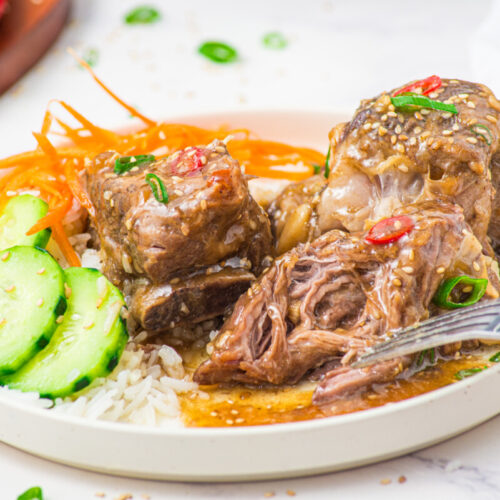
These Asian Beef Short Ribs are a comforting, family friendly dinner made with tender beef short ribs simmered in a rich, savory sauce of soy sauce, garlic, fresh ginger, sesame oil, and brown sugar. With just 10 minutes of preparation, the slow cooker does most of the work, transforming simple ingredients into succulent beef coated in a deliciously glossy sauce. Serve over fluffy rice with sesame seeds and green onions for a satisfying dinner that feels special enough for Sunday but is simple enough for a busy weeknights.
Print Recipe
Instructions
- Step 1: Mix the Savory Ginger Garlic Sauce - Start by adding the beef broth, soy sauce, rice vinegar, sesame oil, freshly grated ginger, minced garlic, brown sugar, and red chili flakes directly into your slow cooker. Give everything a good stir until the brown sugar begins to dissolve and the ingredients are evenly mixed. There is no need to dirty a separate mixing bowl unless you prefer to. I like getting the sauce ready first because it means the beef goes straight into a flavorful mixture. The sauce will look fairly thin at this stage, which is exactly what you want. It will develop a deeper flavor as the ribs cook.
- Step 2: Add the Beef Short Ribs - Take a moment to look over your short ribs and trim away any particularly large pieces of exterior fat. You do not need to remove all the fat because some marbling helps the meat stay rich and tender. Place the ribs into the slow cooker, arranging them in an even layer as much as possible. Turn them gently so they get coated in the sauce. Do not worry if the liquid does not completely cover the beef. The ribs will release their own juices while cooking, adding even more richness to the sauce.
- Step 3: Let the Slow Cooker Do the Work - Place the lid on the slow cooker and cook the short ribs on Low for approximately 6 hours or on High for approximately 4 hours. I prefer the Low setting when our schedule allows because gentle cooking gives the connective tissue plenty of time to soften. The important thing is to keep the lid closed as much as possible. Every time you lift it, heat escapes and cooking can take longer. As the hours pass, the garlic, ginger, and beef aromas will start filling the kitchen. It is one of those wonderful reminders that dinner is already being taken care of.
- Step 4: Gently Stir the Ribs Near the End - About 1 hour before the cooking time is finished, carefully remove the slow cooker lid and give the contents a gentle stir. By this point, the beef should be noticeably softer, so avoid stirring too aggressively or the ribs may begin falling apart. Spoon some of the cooking liquid over any exposed pieces of meat. You will probably notice that the sauce has become darker and richer, with the beef juices blending into the original mixture. This is also a good opportunity to see how the meat is progressing without disturbing it too much.
- Step 5: Thicken the Sauce With Cornstarch - In a small bowl, whisk together the cornstarch and cold water until the mixture is completely smooth. You want it to resemble thin milk, with no dry cornstarch hiding at the bottom. Pour this mixture into the slow cooker, stirring gently to distribute it throughout the warm liquid. Using cold water is important because adding dry cornstarch directly to hot sauce can create stubborn lumps. The sauce may still look thin immediately after stirring, but give it time. As it continues heating, it will gradually thicken into that lovely glossy coating that makes these ribs so satisfying.
- Step 6: Finish Cooking Until Fork Tender - Replace the lid and continue cooking for the remaining hour, allowing the sauce to thicken and the beef to become completely tender. When the ribs are ready, a fork should slide into the meat easily, and the beef should pull apart with very little effort. If your ribs are particularly thick or still feel firm, give them additional cooking time until they soften. Bone in ribs may release their bones naturally, so check carefully before serving. Taste the sauce and adjust the seasoning if necessary. If you notice excess fat floating on the surface, skim a little off with a spoon.
- Step 7: Add the Garnishes and Serve - Once the beef is tender and the sauce has thickened, it is time for the part that always gets everyone interested in dinner. Carefully transfer the ribs to serving plates or a large platter, then spoon that rich sauce generously over the top. Sprinkle with sesame seeds and freshly sliced green onion. Add a few thin slices of fresh red chili if you like a little extra heat. I usually serve the ribs over warm white rice because it catches all that wonderful sauce. Set everything on the table while it is hot and let everyone dig in.
Notes
Substitutions
One thing I have learned from cooking for a family is that you cannot always count on having every ingredient in the pantry. Thankfully, this slow cooker beef short ribs recipe is pretty forgiving.- Boneless beef short ribs: You can use boneless short ribs instead of bone in ribs, although the cooking time may vary slightly depending on their thickness.
- Beef chuck roast: If short ribs are unavailable or a little expensive, cut a well marbled chuck roast into large chunks for a similar comforting beef dinner.
- Chicken broth: Chicken broth can replace beef broth when needed, although the finished sauce will have a slightly lighter flavor.
- Tamari: Use tamari instead of soy sauce if you need a gluten free option, making sure the bottle is certified gluten free.
- Apple cider vinegar: If you are out of rice vinegar, apple cider vinegar works as an alternative, though its tanginess is a little sharper.
- Honey: Honey can replace brown sugar for a slightly different sweetness, but start with a smaller amount and adjust to taste.
- Ground ginger: Fresh ginger is my preference, but about 1 teaspoon of ground ginger can work when fresh ginger is unavailable.
- Arrowroot powder: Arrowroot can replace cornstarch as a thickener, although it may work best when stirred in closer to serving time.
Variations
Once you have made these Asian beef short ribs a couple of times, you might find yourself wanting to change things up. I do that all the time, especially when the kids start asking for their favorite flavors.- Spicy Asian short ribs: Increase the red chili flakes or add a little chili garlic sauce to the cooking liquid for a stronger kick.
- Extra sweet and sticky ribs: Add another tablespoon of brown sugar for a sweeter sauce that feels a little more like a takeout favorite.
- Garlic lover's version: Add another two or three cloves of minced garlic if your family enjoys a pronounced garlic flavor.
- Ginger forward ribs: Increase the freshly grated ginger slightly for a brighter, more aromatic sauce.
- Vegetable packed dinner: Add mushrooms during the final hour of cooking so they can soak up the sauce without becoming overly soft.
- Citrus finish: Add a small squeeze of fresh lime juice just before serving to brighten the rich sauce.
- Rice bowl version: Shred the cooked beef, remove any bones, and spoon it over rice with cucumber, shredded carrots, and green onion for a colorful family dinner.
Tips and Tricks
These are the little details that help turn a good slow cooker dinner into one everyone remembers.- Choose well marbled beef: Short ribs with good marbling become especially tender and rich during slow cooking, but trim away large pieces of excess exterior fat.
- Do not rush the tenderness: If your beef still feels tough at the end of the suggested cooking time, it probably needs additional cooking rather than more sauce.
- Keep the lid closed: Try not to peek too often because slow cookers rely on steady, trapped heat to cook the beef evenly.
- Use fresh ginger: Freshly grated ginger gives the sauce a wonderful fragrance that is difficult to duplicate with dried ginger.
- Mix the cornstarch thoroughly: Always whisk cornstarch with cold water before adding it to the hot sauce to prevent lumps.
- Adjust the thickness carefully: If you want an even thicker sauce, mix an additional teaspoon of cornstarch with a little cold water and stir it in toward the end of cooking.
- Taste before adding salt: Soy sauce already contributes plenty of saltiness, so I rarely add extra salt until I have tasted the finished sauce.
- Save the garnishes for last: Sesame seeds, fresh chili, and green onion taste and look their best when added immediately before serving.
- Remove excess fat: Short ribs naturally release fat as they cook, so skim the surface of the sauce if it appears too oily.
- Check for bones: If you use bone in short ribs, the meat may separate from the bones as it becomes tender, so remove any loose bones before serving children.
Serving Ideas
I think one of the nicest things about these Asian Beef Short Ribs is how easily you can build a complete dinner around them. You do not need complicated side dishes because the beef already brings so much flavor to the table.- Steamed jasmine rice: Fluffy jasmine rice is my favorite pairing because it absorbs the savory sauce beautifully.
- Brown rice: Brown rice adds a slightly nutty flavor and a heartier texture that works well with the tender beef.
- Garlic noodles: Toss warm noodles with a little garlic and sesame oil, then serve the short ribs and sauce over the top.
- Steamed broccoli: Bright green broccoli adds freshness and a pleasant bite that balances the rich meat.
- Roasted green beans: Green beans with lightly browned edges are a simple vegetable side that the whole family can enjoy.
- Cucumber salad: A crisp cucumber salad with rice vinegar provides a cool, refreshing contrast to the warm beef.
- Mashed potatoes: It might not be the traditional pairing, but creamy mashed potatoes are wonderful underneath this savory sauce.
- Stir fried vegetables: A mixture of carrots, bell peppers, and snap peas adds color and makes dinner feel especially satisfying.
Storage and Make Ahead Tips
Leftovers are one of my favorite benefits of making slow cooker dinners. There is something reassuring about opening the refrigerator and knowing tomorrow's lunch is already handled.- Refrigerator storage: Allow the cooked beef to cool slightly, then transfer it to an airtight container and refrigerate within 2 hours. It will keep for up to 4 days.
- Freezer storage: Place the cooled beef and sauce in freezer safe containers or bags and freeze for up to 3 months for the best quality.
- Reheating on the stovetop: Warm the beef gently in a covered saucepan over medium low heat, adding a splash of water or beef broth if the sauce has become too thick.
- Reheating in the microwave: Place a portion in a microwave safe dish, cover loosely, and heat in short intervals, stirring between intervals until thoroughly heated.
- Safe reheating: Reheat leftovers to an internal temperature of 165°F before serving.
- Preparing the sauce ahead: Mix the broth, soy sauce, vinegar, sesame oil, ginger, garlic, brown sugar, and chili flakes up to a day ahead and store the mixture in the refrigerator.
- Thawing frozen leftovers: Thaw frozen cooked short ribs overnight in the refrigerator before reheating for the most even results.
- Portioning family meals: Divide leftovers into individual containers with rice and vegetables so weekday lunches are ready to grab.
Private Notes
