Chicken Cacciatore Skillet Recipe
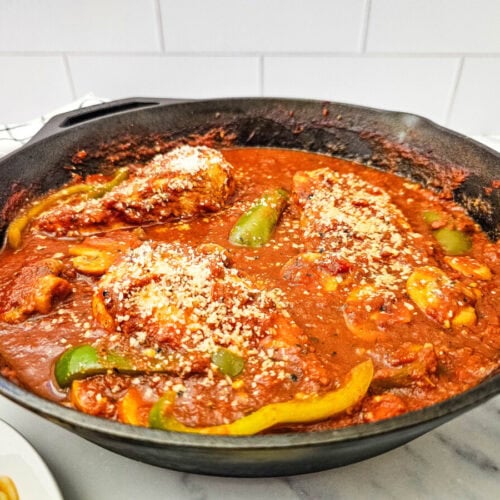
This Chicken Cacciatore Skillet is a hearty, comforting family dinner made with tender chicken breasts simmered in a rich tomato sauce with green peppers, mushrooms, garlic, Italian seasoning, and Parmesan cheese. Everything comes together in one skillet in about 50 minutes, making it a wonderful choice for busy weeknights when you want something homemade without a lot of fuss. Serve it over pasta, rice, or mashed potatoes for a satisfying meal the whole family can enjoy.
Print Recipe
Ingredients
- 2 tbsp olive oil (For browning the chicken and sautéing the vegetables.)
- 2 tbsp minced garlic (Divided. Use 1 tablespoon when browning the chicken and the remaining tablespoon in the tomato sauce.)
- 2 large boneless skinless chicken breasts (Cut each breast in half horizontally to create 4 evenly sized portions.)
- 1 whole green bell pepper (Sliced into thin strips.)
- 8 oz mushrooms (Sliced. White button mushrooms or baby bella mushrooms work well.)
- 28 oz crushed tomatoes (One 28 ounce can, forming the base of the rich tomato sauce.)
- 1 cup pasta sauce (Use your favorite marinara, tomato basil, or roasted garlic pasta sauce.)
- 1 tbsp Italian seasoning (A blend of dried Italian herbs such as oregano, basil, and thyme.)
- ¼ cup grated Parmesan cheese (Divided. Use 2 tablespoons in the sauce and the remaining 2 tablespoons for finishing.)
Instructions
- Step 1: Prepare the Chicken and Vegetables - Start by slicing the green bell pepper into thin strips. If your mushrooms are not already sliced, give those a quick slice too. Next, cut each large chicken breast in half horizontally to create four thinner pieces. Try to keep them fairly even in thickness so they cook at about the same rate. I like getting all the chopping finished before turning on the stove because it makes the rest of dinner feel much more relaxed.
- Step 2: Brown the Chicken With Garlic - Place your large skillet over medium heat and add the olive oil along with 1 tablespoon of minced garlic. Let the garlic warm briefly until fragrant, stirring so it does not burn. Add the chicken pieces in a single layer and cook for about 3 to 4 minutes on each side. You are looking for a little golden color on the outside, not fully cooked chicken just yet. The chicken will finish cooking in the tomato sauce. Transfer the pieces to a clean plate and set them aside.
- Step 3: Sauté the Mushrooms and Peppers - Add the sliced mushrooms and green pepper to the same skillet. Cook for about 5 minutes, stirring occasionally, until the mushrooms begin to darken and the peppers start softening. Those browned bits left behind from the chicken add flavor to the vegetables, so there is no need to wash the skillet between steps. Once the vegetables have softened slightly, transfer them to a separate plate or bowl.
- Step 4: Build the Tomato Sauce - Pour the crushed tomatoes into the skillet, gently stirring to loosen any flavorful bits from the bottom. Add the remaining tablespoon of minced garlic and bring the tomatoes to a gentle simmer. Return the browned chicken pieces to the pan, nestling them into the tomato mixture. I like spooning a little sauce over each piece so the chicken starts soaking up all that delicious tomato and garlic flavor right away.
- Step 5: Add the Vegetables and Seasonings - Return the mushrooms and green peppers to the skillet, arranging them around the chicken. Pour in the pasta sauce, sprinkle in the Italian seasoning, and add 2 tablespoons of the grated Parmesan cheese. Gently stir the sauce and vegetables together, taking care not to break apart the chicken. Everything should be coated in that rich red sauce. At this point, the kitchen should start smelling like a cozy little Italian restaurant.
- Step 6: Simmer Until the Chicken Is Tender - Reduce the heat to maintain a gentle simmer and let everything cook for approximately 25 to 30 minutes. Stir the sauce occasionally and spoon some over the chicken to keep everything coated. The peppers should become tender, the mushrooms should soften, and the sauce should thicken slightly. Check the thickest part of the chicken with a meat thermometer to make sure it has reached an internal temperature of 165°F. If the sauce becomes too thick, stir in a small splash of water.
- Step 7: Finish With Parmesan and Serve - Once the chicken is fully cooked, sprinkle the remaining 2 tablespoons of grated Parmesan cheese over the skillet. Let the cheese settle into the warm sauce, then serve the chicken with generous spoonfuls of vegetables and tomatoes. We especially enjoy this over a big plate of pasta because the noodles catch all that wonderful sauce. Rice works beautifully too, especially when you want something simple that the whole family will enjoy.
Notes
Substitutions
Sometimes dinner plans change because you realize you are missing an ingredient. I have been there plenty of times, and thankfully this Chicken Cacciatore Skillet gives you some room to work with what you have.- Chicken thighs: Substitute boneless, skinless chicken thighs for the breasts if your family prefers darker, richer meat, adjusting the cooking time as needed.
- Red or yellow bell peppers: Swap the green pepper for a sweeter variety if your kids prefer a milder vegetable flavor.
- Fresh mushrooms: Baby bella mushrooms are a wonderful alternative to white button mushrooms and add a slightly deeper flavor.
- Diced tomatoes: Use canned diced tomatoes instead of crushed tomatoes for a chunkier sauce, although the texture will be less smooth.
- Different pasta sauce: Marinara, tomato basil, or roasted garlic pasta sauce all work nicely depending on what is in your pantry.
- Different hard cheese: Pecorino Romano can replace Parmesan if you want a slightly sharper, saltier finish.
Variations
Once you have made the original recipe, there are a few fun ways to change things up depending on what your family enjoys.- Spicy chicken cacciatore: Add a pinch of crushed red pepper flakes to the tomato sauce for a little extra heat.
- Extra vegetable skillet: Stir in sliced zucchini or a handful of spinach during the final part of cooking for more vegetables.
- Olive lover's version: Add a small handful of sliced black or green olives for a briny flavor that works beautifully with the tomatoes.
- Cheesy chicken cacciatore: Sprinkle shredded mozzarella over the finished chicken and cover the skillet briefly until the cheese melts.
- Creamier tomato sauce: Stir in a small splash of heavy cream near the end of cooking for a softer, richer sauce.
- Herb garden version: Finish the skillet with freshly chopped basil or parsley for a bright, fresh flavor.
Tips and Tricks
After making skillet dinners for family meals, I have learned that a few small details can make a big difference.- Cut the chicken evenly: Pieces that are similar in thickness will cook more consistently and help prevent some portions from drying out.
- Avoid overcrowding the pan: If your skillet is smaller, brown the chicken in batches so it develops a little color instead of steaming.
- Watch the garlic carefully: Garlic can burn quickly, so keep it moving and avoid letting it turn dark brown.
- Give the mushrooms some time: Letting the mushrooms soften before adding the tomatoes helps develop their savory flavor.
- Keep the simmer gentle: A slow bubble is all you need to finish the chicken and bring the sauce together.
- Check the chicken temperature: A meat thermometer removes the guesswork and helps you serve chicken that is safely cooked without going unnecessarily dry.
- Taste the sauce before serving: Different pasta sauces contain different amounts of salt, so taste the finished sauce before adding any extra seasoning.
- Use a deep skillet: A large skillet with higher sides makes it easier to simmer the chicken and sauce without splatters covering your stovetop.
Serving Ideas
The nice thing about this Chicken Cacciatore Skillet is that you can change the side dishes without changing the main recipe. That is helpful when you want dinner to feel a little different the next time you make it.- Spaghetti or linguine: Spoon the chicken and tomato sauce over warm noodles for a comforting Italian inspired dinner.
- Fluffy white rice: Rice soaks up the savory tomato sauce beautifully and is often an easy choice for younger family members.
- Creamy mashed potatoes: Serve the chicken over buttery mashed potatoes for an especially cozy, filling meal.
- Garlic bread: Add warm, toasted garlic bread to the table for soaking up every last spoonful of sauce.
- Simple green salad: A crisp salad with a light vinaigrette balances the richness of the chicken and tomatoes.
- Steamed green beans: Keep the side dish simple with tender green beans and a little butter.
- Roasted broccoli: The slightly crisp edges of roasted broccoli add a nice contrast to the tender chicken and soft vegetables.
Storage and Make Ahead Tips
One thing I always appreciate is a dinner that makes tomorrow a little easier too. This recipe is especially useful when you are trying to get ahead of a busy family week.- Refrigerator storage: Place leftover chicken and sauce in an airtight container and refrigerate within 2 hours of cooking for up to 3 to 4 days.
- Freezer storage: Freeze cooled portions in airtight, freezer safe containers for up to 3 months for the best flavor and texture.
- Stovetop reheating: Warm leftovers in a covered skillet over medium low heat, adding a small splash of water if the sauce has become too thick, until heated thoroughly to 165°F.
- Microwave reheating: Place a portion in a microwave safe dish, cover loosely, and heat in short intervals, stirring the sauce between intervals until evenly hot.
- Prepare vegetables early: Slice the peppers and mushrooms the night before and refrigerate them separately so dinner preparation moves faster.
- Prepare the chicken early: Cut the chicken into portions ahead of time and keep it covered in the refrigerator, separate from the vegetables, until you are ready to cook.
- Store sides separately: Keep cooked pasta or rice in separate containers so they do not absorb all the sauce while sitting in the refrigerator.
- Make extra sauce: If you enjoy having plenty of sauce for pasta, add a little additional marinara when cooking and adjust the seasoning to taste.
Private Notes
Servings: 4 servings
