Honey Balsamic Chicken Thighs
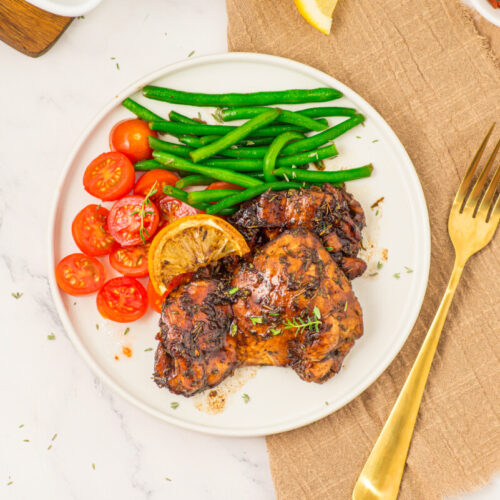
Honey Balsamic Chicken Thighs are tender, juicy chicken thighs baked in a sweet and tangy balsamic sauce with honey, garlic, herbs, and fresh lemon. With just a few minutes of prep and a simple oven method, this cozy family dinner delivers plenty of flavor without keeping you tied to the kitchen.
Print Recipe
Ingredients
- ⅓ cup balsamic vinegar
- 2 tbsp honey
- 2 cloves garlic (minced)
- 2 tsp dried thyme
- 2 tsp dried oregano
- ¼ tsp chili pepper (use less for milder heat)
- ¼ tsp salt
- ¼ tsp black pepper
- 1 lemon (divided)
- 1 lb boneless, skinless chicken thighs (about 6 thighs)
- fresh thyme or fresh basil (optional, for garnish)
Instructions
- Step 1: Heat the Oven - Preheat your oven to 400°F. I like to get the oven fully hot before I start mixing anything because the rest of the prep moves quickly. Once the chicken is ready to bake, reduce the oven temperature to 350°F. This follows the original cooking method while giving the oven plenty of time to heat evenly before the casserole dish goes in.
- Step 2: Mix the Honey Balsamic Marinade - Grab a large mixing bowl and add the balsamic vinegar, honey, minced garlic, dried thyme, dried oregano, chili pepper, salt, and black pepper. Cut the lemon and squeeze a little fresh juice into the bowl. Stir everything well until the honey has loosened into the vinegar and the herbs and garlic are spread throughout the mixture. You want the marinade to look dark, glossy, and evenly mixed so every piece of chicken gets the same balance of sweet, tangy, and savory flavor.
- Step 3: Coat the Chicken Thoroughly - Add the boneless chicken thighs directly to the bowl with the marinade. Toss them well, turning each thigh several times so the balsamic mixture reaches every surface and gets into all those little folds. If you have extra time, cover the bowl and refrigerate the chicken for up to two hours. I usually make it right away on weeknights, but that short marinating time does give the herbs and garlic a chance to settle more deeply into the meat.
- Step 4: Arrange the Chicken and Lemon - Reduce the oven temperature to 350°F, then transfer the chicken thighs to a casserole dish in a single layer. Pour the marinade from the bowl over the chicken so none of that good sauce gets left behind. Cut the rest of the lemon into wedges and tuck them around and over the chicken. Give the thighs a little room instead of packing them tightly together. That extra space helps the exposed edges roast rather than simply steam.
- Step 5: Bake Until Tender - Place the casserole dish in the oven and bake for about 30 to 35 minutes. The exact cooking time can vary depending on the thickness of your chicken thighs, so use an instant read thermometer if you have one. The chicken is safely cooked when the thickest part reaches 165°F. By this point, the kitchen should smell sweet and garlicky, and the sauce around the chicken will have darkened and thickened slightly.
- Step 6: Baste With the Pan Juices - About five minutes before the chicken is finished, carefully pull the dish partway out of the oven and spoon some of those hot balsamic pan juices over each thigh. This is a small step, but it makes a real difference. The extra coating keeps the surface moist and gives the honey another chance to become glossy and lightly caramelized as the chicken finishes baking.
- Step 7: Rest, Garnish, and Serve - Take the chicken out of the oven once it has reached 165°F and let it sit for a few minutes before serving. Spoon a little more of the warm sauce from the bottom of the dish over each piece. If you have fresh thyme or basil around, scatter some over the top. Then bring the whole dish to the table while it is still warm and fragrant, with those roasted lemon wedges tucked between the chicken.
Notes
Substitutions
- Chicken breasts: You can use boneless chicken breasts, but watch the cooking time closely because lean breast meat can dry out more quickly than thighs.
- Maple syrup: Pure maple syrup can replace the honey for a slightly deeper sweetness that still pairs nicely with balsamic vinegar.
- Fresh herbs: Fresh thyme or oregano can replace dried herbs if that is what you have, though you will generally want to use a little more.
- Red pepper flakes: A small pinch of red pepper flakes can stand in for the chili pepper and gives you an easy way to control the heat.
- Garlic paste: Prepared garlic paste can replace fresh minced garlic on nights when saving a minute matters more than pulling out the cutting board.
Variations
- Extra garlicky chicken: Add one or two additional cloves of minced garlic if your family loves a stronger savory bite.
- Sweeter balsamic chicken: Add another teaspoon or two of honey for kids or adults who prefer a softer, sweeter sauce.
- Tangier balsamic chicken: Reduce the honey slightly if you like the sharper character of balsamic vinegar to come through more clearly.
- Spicier chicken: Increase the chili pepper or add a pinch of red pepper flakes for a little more heat at the table.
- Vegetable bake: Add quick cooking vegetables around the chicken during the later part of baking so they can soak up some of the balsamic pan juices.
Tips and Tricks
- Keep the chicken in one layer: Giving each thigh its own space helps the edges brown and keeps the chicken from steaming in a crowded dish.
- Do not marinate all day: Balsamic vinegar and lemon are both acidic, so keeping the marinating time to about two hours protects the texture of the chicken.
- Mix the marinade well: Honey likes to settle, so give the sauce a thorough stir before adding the chicken.
- Use a thermometer: Checking for 165°F in the thickest part takes away the guesswork and helps you avoid overcooking the thighs.
- Save those pan juices: Spoon the sauce over the chicken before serving because that glossy mixture at the bottom of the dish is one of the best parts of the meal.
- Taste for sweetness next time: If your family likes a sweeter sauce, add a touch more honey on the next batch. If they like more tang, pull it back slightly.
Serving Ideas
- Mashed potatoes: Creamy mashed potatoes soak up the sweet balsamic pan juices and turn this into the kind of dinner everybody settles into.
- Steamed rice: A simple bowl of white or brown rice gives the sauce somewhere to go and keeps the rest of the meal uncomplicated.
- Roasted vegetables: Broccoli, carrots, green beans, or Brussels sprouts add color and a savory contrast to the honey in the chicken.
- Simple salad: A crisp green salad with a light vinaigrette keeps the plate fresh and works especially well when the weather is warmer.
- Crusty bread: A few warm slices of bread are great for catching the balsamic juices left on the plate.
- Buttered noodles: Plain noodles with a little butter make a very kid friendly side and let the chicken remain the star.
Storage and Make Ahead Tips
- Refrigerate leftovers: Let the chicken cool, then store it in an airtight container in the refrigerator for up to three or four days.
- Store with the sauce: Spoon some of the balsamic pan juices into the container with the chicken so the meat stays moist while it sits.
- Reheat gently: Warm leftovers in a covered baking dish at 350°F until heated through, or use the microwave in short intervals so the chicken does not become tough.
- Prep the marinade early: You can mix the balsamic vinegar, honey, garlic, herbs, seasonings, and lemon juice earlier in the day and refrigerate it until you are ready to cook.
- Marinate only when needed: If you want to combine the chicken with the marinade ahead of time, keep that window to about two hours because of the acidity.
- Use leftovers for lunch: Slice cold or gently reheated chicken over salad, tuck it into a wrap, or serve it over leftover rice for an easy next day meal.
Private Notes
Servings: 4 servings
