Sheet Pan Chicken Caprese
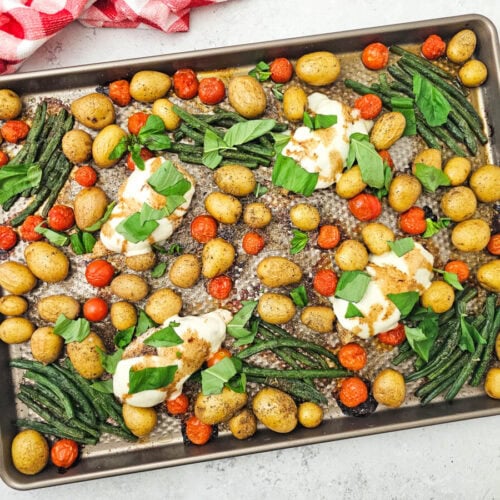
Sheet Pan Chicken Caprese is a warm, satisfying family dinner made with tender chicken breasts, roasted baby potatoes, fresh green beans, juicy cherry tomatoes, and creamy melted mozzarella. Finished with balsamic vinegar and fresh basil, this colorful one pan meal brings classic Italian inspired flavors to your weeknight table. With just 10 minutes of prep and approximately 25 minutes in the oven, it is a convenient dinner for busy families who want something homemade, comforting, and delicious.
Print Recipe
Ingredients
- 2 large chicken breasts (Cut each breast in half horizontally to make 4 thinner portions.)
- 1 ½ lbs baby potatoes (Halve larger potatoes and leave very small potatoes whole.)
- 2 cups fresh green beans (Trim the ends before cooking.)
- 1 pint cherry tomatoes (Rinse and leave whole.)
- 2 tbsp olive oil (For coating the chicken and vegetables.)
- 1 tsp garlic powder
- 1 tsp Italian seasoning
- ½ tsp salt
- ½ tsp black pepper
- 8 slices fresh mozzarella cheese (Use 2 slices per chicken portion. Pat dry if particularly moist.)
- 1 tbsp balsamic vinegar (For drizzling over the finished dish.)
- ¼ to ½ cup fresh basil (Chopped and added after cooking.)
Instructions
- Step 1: Preheat the Oven and Prepare Your Pan - Start by preheating your oven to 400°F. While it heats, take out a large, rimmed sheet pan. I like using a pan with enough room to spread the ingredients into an even layer, because crowded vegetables tend to steam rather than develop those lovely roasted edges. If your pan is small, using two pans is better than piling everything together. A light coating of oil or a piece of parchment paper can also make cleanup easier.
- Step 2: Prepare the Chicken, Potatoes, and Basil - Place your chicken breasts on a cutting board and carefully slice each one horizontally into two thinner portions. You should end up with four pieces of chicken, which makes serving dinner much easier. Wash the baby potatoes and cut any larger ones in half, leaving very tiny potatoes whole. Trim the green beans, rinse the cherry tomatoes, and chop your fresh basil. Set the basil aside for later because you want to add it after cooking, when its fragrance and bright color really shine.
- Step 3: Arrange Everything on the Sheet Pan - Place the chicken pieces on the sheet pan, leaving some space between them. Arrange the potatoes, green beans, and cherry tomatoes around the chicken, spreading everything out as evenly as possible. Drizzle the olive oil over the ingredients, then sprinkle on the garlic powder, Italian seasoning, salt, and black pepper. Use clean hands or a spoon to gently toss the vegetables so they get a light coating of oil and seasoning. Make sure the chicken is seasoned on both sides as well. I usually put the potatoes cut side down when possible because those golden, roasted surfaces are always a favorite at our table.
- Step 4: Roast the Chicken and Vegetables - Slide the sheet pan into your preheated oven and roast for about 20 minutes. During this time, the tomatoes will begin softening, the potatoes will develop some color, and the chicken will start cooking through. You will notice the kitchen filling with that wonderful combination of roasted garlic and herbs. Check the potatoes with a fork and keep an eye on the chicken. The size and thickness of your ingredients can affect cooking time, so the original timing is a guide rather than a guarantee.
- Step 5: Add the Fresh Mozzarella - Carefully remove the sheet pan from the oven and place two slices of fresh mozzarella on top of each chicken portion. This is the part my kids always get excited about because they know dinner is almost ready. Try to keep the cheese centered over the chicken so it melts into a creamy topping instead of sliding onto the pan. If your mozzarella is very moist, gently pat the slices with a paper towel before adding them. This helps prevent too much extra liquid from collecting around the chicken.
- Step 6: Return to the Oven and Melt the Cheese - Put the sheet pan back into the oven for approximately 5 more minutes, or until the mozzarella looks soft and beautifully melted. Before serving, check that the thickest part of each chicken piece has reached an internal temperature of 165°F and that the potatoes are fork tender. If either needs more time, continue cooking and check again. If the chicken finishes before the potatoes, transfer the chicken to a plate and let the potatoes roast a little longer. That way, you get juicy chicken and properly cooked potatoes without sacrificing either one.
- Step 7: Finish with Balsamic and Fresh Basil - Remove the pan from the oven and drizzle the balsamic vinegar over the chicken and vegetables. Sprinkle the chopped fresh basil across the top, using as much as your family enjoys. The warmth from the food will release the basil's fragrance almost immediately. I like letting everything rest for a couple of minutes before serving, which gives the juices a chance to settle. Then bring the pan to the table or transfer everything to a big serving platter. Do not forget to spoon some of those sweet roasted tomato juices over the chicken.
Notes
Substitutions
- Chicken thighs: Boneless, skinless chicken thighs can replace chicken breasts for a richer, juicier result, but adjust the cooking time and check the internal temperature.
- Regular potatoes: Yukon Gold or red potatoes work nicely when cut into small, evenly sized pieces.
- Asparagus: Replace the green beans with asparagus for a lovely springtime version, adding it later if the spears are thin.
- Grape tomatoes: These work just as well as cherry tomatoes and become wonderfully sweet during roasting.
- Shredded mozzarella: If fresh mozzarella is unavailable, shredded mozzarella will melt nicely, although the texture will be less creamy.
- Dried basil: Fresh basil is best for the finishing touch, but a small pinch of dried basil can provide some herbal flavor when fresh is unavailable.
Variations
- Extra garlic version: Add a couple of minced garlic cloves to the vegetables for an even deeper roasted garlic aroma.
- Balsamic glaze finish: Swap the balsamic vinegar for a small drizzle of balsamic glaze if your family enjoys a sweeter, thicker topping.
- More vegetables: Add sliced zucchini or bell peppers for extra color and a few more vegetables on everyone's plate.
- Spicy Caprese chicken: Sprinkle a small amount of crushed red pepper flakes over the chicken if you enjoy a little heat.
- Pesto chicken Caprese: Spread a thin layer of basil pesto over the cooked chicken before adding the mozzarella for a richer herbal flavor.
- Parmesan potatoes: Toss the potatoes with a little grated Parmesan before roasting to add a savory, cheesy crust.
Tips and Tricks
- Cut chicken evenly: Pieces with similar thickness cook at a more consistent rate, helping prevent one portion from drying out while another is still cooking.
- Give the ingredients room: A crowded pan traps moisture, so use a large sheet pan or divide the ingredients between two pans.
- Choose small potatoes: Baby potatoes are ideal for the short roasting time, but larger pieces may need a head start in the oven.
- Check with a thermometer: Chicken should reach 165°F at its thickest point, and checking is more reliable than judging by appearance alone.
- Dry the mozzarella: Blotting fresh mozzarella with a paper towel removes excess moisture and gives you a creamier topping.
- Add basil at the end: Fresh basil loses its bright color and delicate aroma when roasted for too long.
- Save the pan juices: The juices from the tomatoes, chicken, and balsamic vinegar make a lovely light sauce for spooning over each serving.
- Keep an eye on the vegetables: If your beans are thin or your tomatoes are particularly small, add them partway through roasting to prevent overcooking.
Serving Ideas
- Crusty Italian bread: Serve warm bread alongside the chicken to soak up the delicious roasted tomato juices and balsamic.
- Simple green salad: A bowl of mixed greens with a light vinaigrette adds freshness without making dinner more complicated.
- Garlic bread: If your family loves garlic bread as much as mine does, it makes a comforting addition to this meal.
- Steamed broccoli: Add a little extra green to the table with lightly steamed broccoli and a squeeze of lemon.
- Fresh fruit: A bowl of sliced melon, grapes, or berries makes a refreshing finish that kids can enjoy.
- Family style platter: Arrange the chicken in the center of a large platter with the roasted vegetables around it, then scatter extra basil over the top.
Storage and Make Ahead Tips
- Refrigerating leftovers: Allow the food to cool slightly, then transfer it into airtight containers and refrigerate within two hours of cooking. Enjoy leftovers within 3 to 4 days.
- Reheating in the oven: Place leftovers in an oven safe dish, cover loosely with foil, and warm at 350°F until heated through to 165°F.
- Microwave reheating: Warm individual servings in short intervals, checking between each one so the chicken heats evenly without becoming too dry. Reheat to 165°F.
- Freezing leftovers: The cooked chicken can be frozen for up to 3 months for best quality, although fresh mozzarella and roasted tomatoes may become watery after thawing.
- Preparing vegetables ahead: Wash and trim the green beans, rinse the tomatoes, and cut the potatoes in advance. Keep cut potatoes refrigerated in cold water, then drain and dry them thoroughly before roasting.
- Packing lunch portions: Divide leftover chicken, potatoes, and vegetables into individual containers for convenient lunches the following day.
- Keeping basil fresh: Store extra chopped basil separately and add it after reheating, since fresh basil has a much nicer texture and aroma than reheated basil.
Private Notes
Servings: 4 servings
